There is no universally safe tank mate
Some bettas tolerate tank mates, while others should live alone. Individual temperament, tank size, cover, and a backup plan matter more than any simple compatibility list.
Tank size changes the options
A 5 gallon tank is usually best kept as a single-betta setup. Larger planted tanks give more space, more hiding places, and more realistic options.
Safer categories to consider
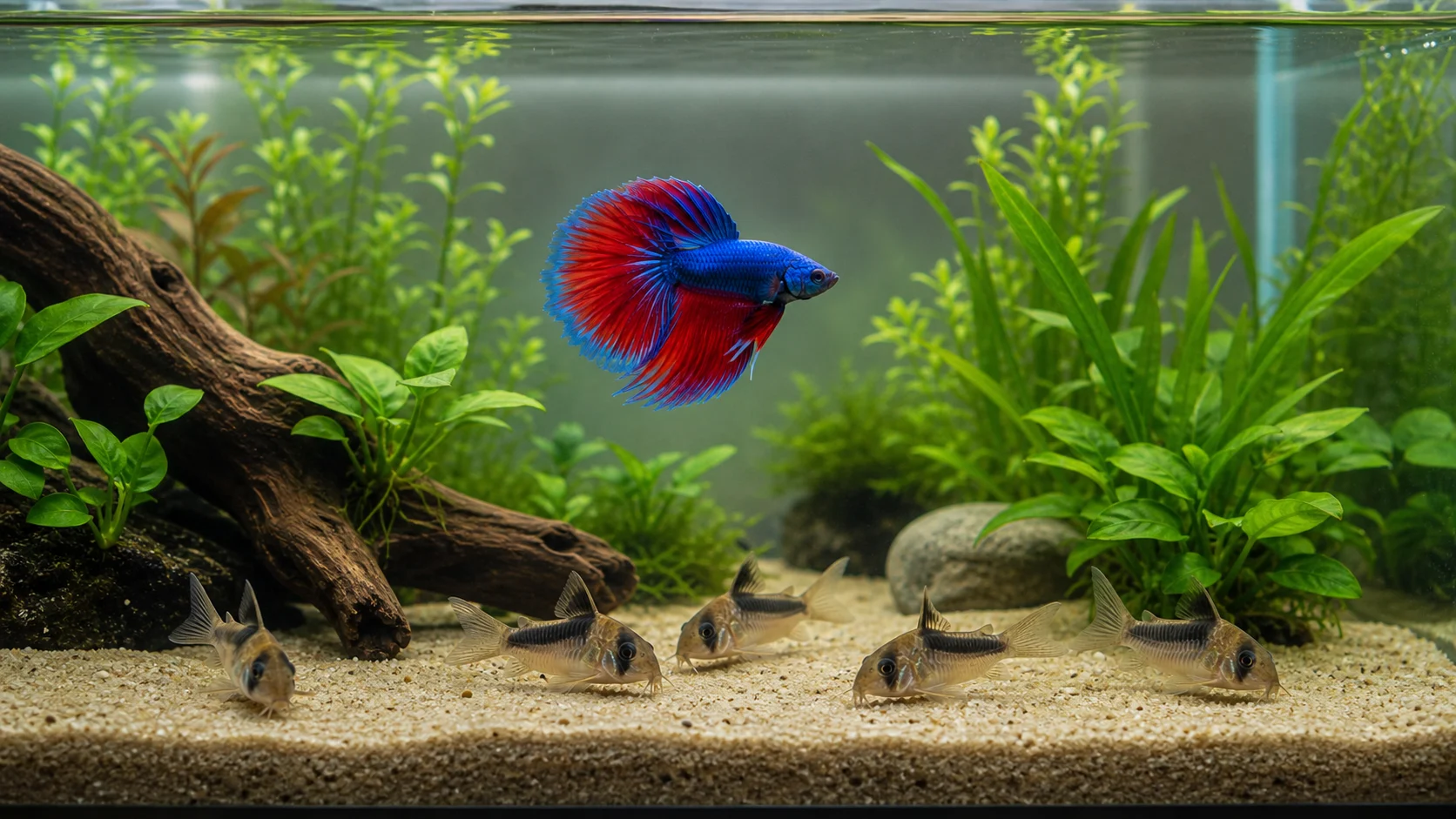
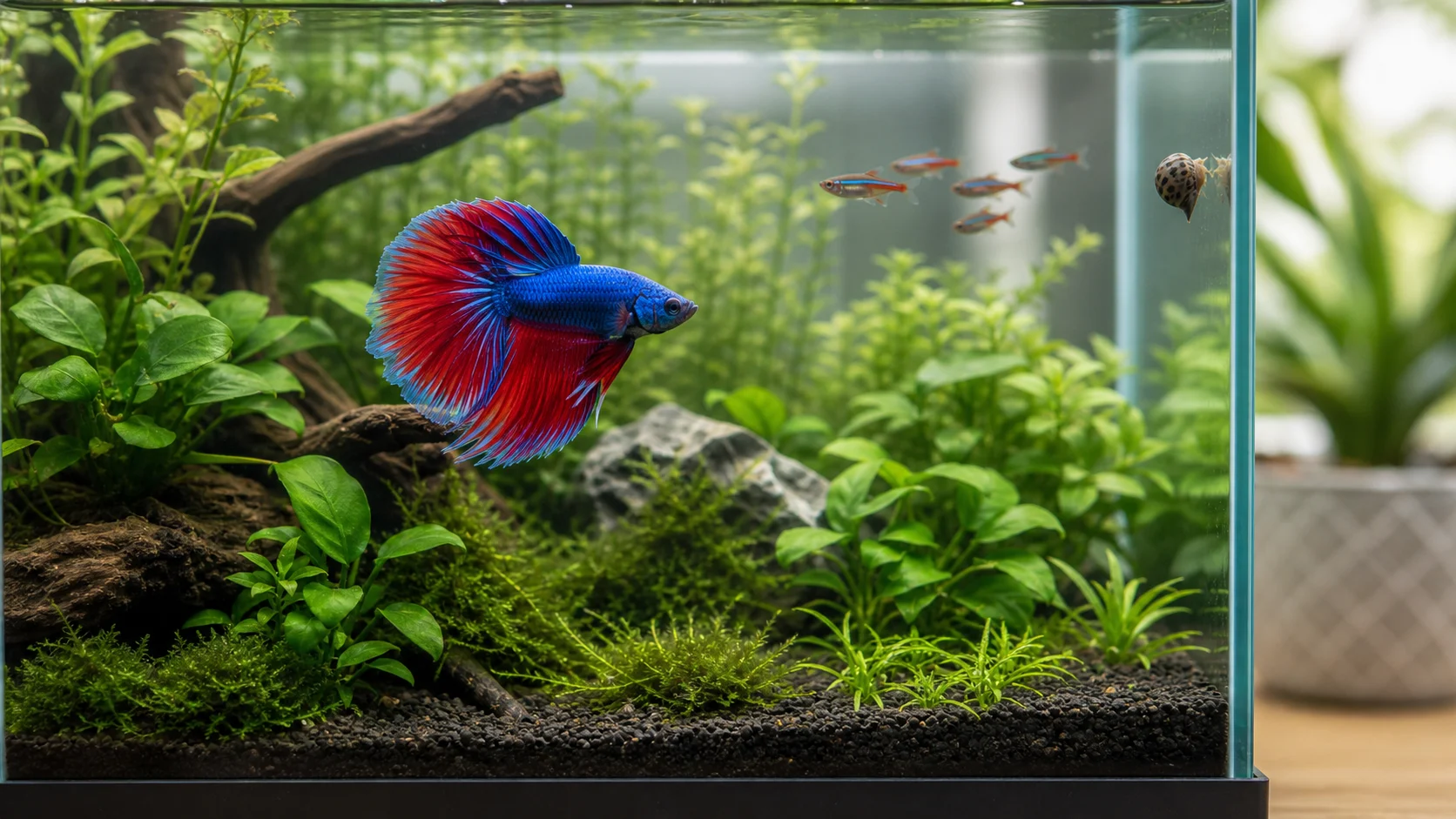
snails are often less risky than active fish or shrimp, but even snails can be harassed. Bottom-dwelling fish may work only in larger, carefully planned tanks.
Riskier choices
Avoid fin nippers, aggressive fish, very colorful long-finned fish, and animals that need different water conditions. Guppies and flashy fish can trigger aggression in some bettas.
Always have a backup plan
Watch for chasing, hiding, clamped fins, fin damage, missed meals, or constant stress. If aggression continues, separate the animals instead of hoping it will settle.
Best betta tank mates by risk level
The lowest-risk tank mates are usually peaceful snails in a properly sized, stable tank. Shrimp can work with some bettas, but many bettas hunt or harass them. Other fish are the highest-risk category and need more space, cover, and planning.
Think in risk levels instead of guarantees. A tank mate that works with one betta can fail with another.
What can live with a betta fish?
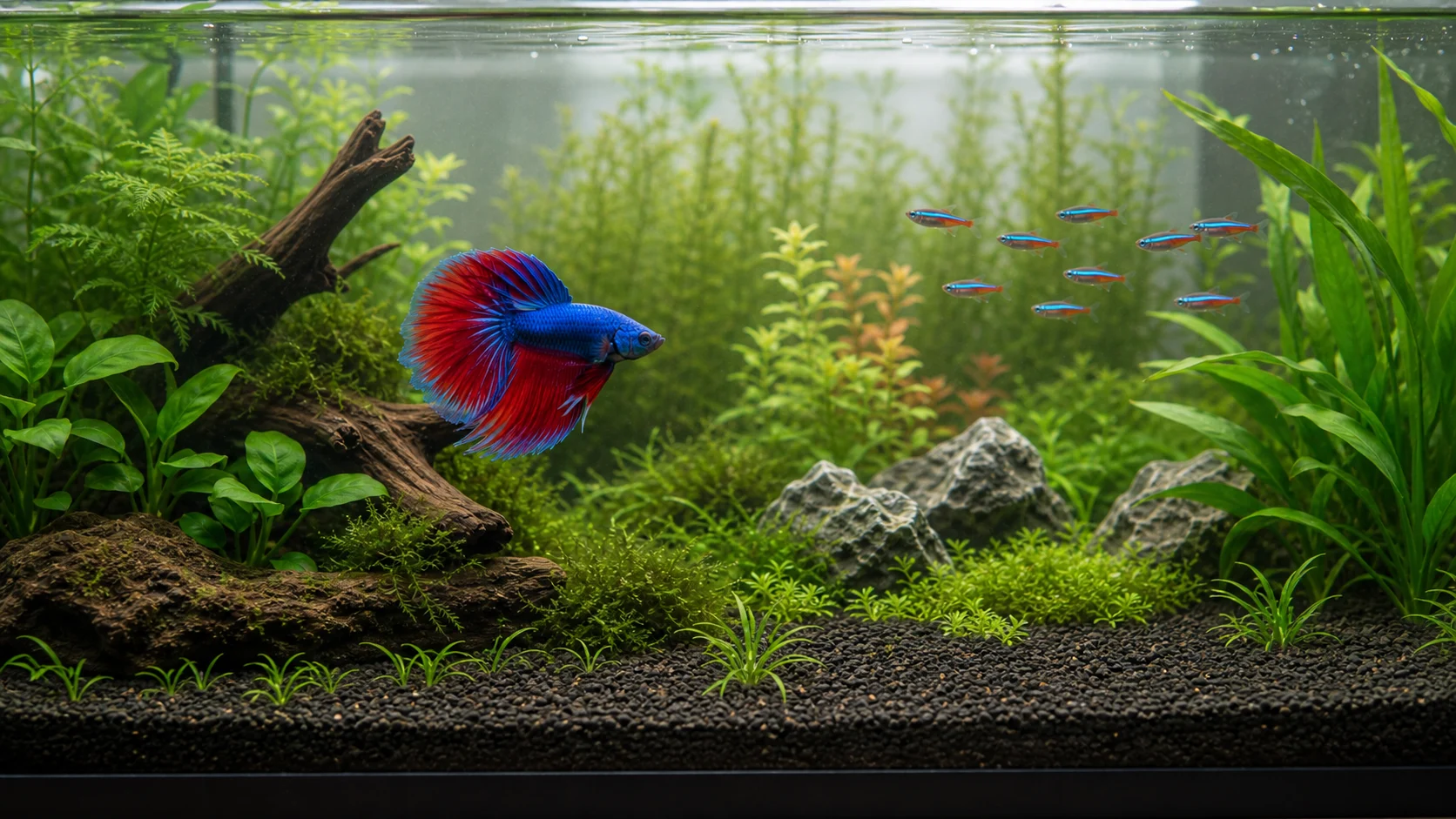
Possible options include nerite snails, mystery snails in suitable tank sizes, amano shrimp, some larger shrimp, and carefully selected calm community fish in larger aquariums. The exact choice depends on tank size and temperament.
Avoid small flashy fish, fin nippers, aggressive species, and fish that need cooler or very different water conditions. If the betta chases, flares constantly, guards food, or causes hiding, the setup is not working.
5 gallon vs 10 gallon tank mates
A 5 gallon betta tank is usually best as a single-betta setup, sometimes with a snail if water quality can handle the added waste. A 10 gallon tank gives more room for plants, hiding spots, and a more realistic backup plan.
Do not add tank mates only because the tank looks empty. Stable water, swimming room, and low stress are more important than activity.
Tank mate warning signs
Separate animals if you see repeated chasing, torn fins, clamped fins, hiding, missed meals, stress stripes, glass surfing, or a tank mate being cornered. Waiting too long can turn a compatibility problem into an injury or water-quality problem.