
Quick answer: choose smooth, usable cover
The best betta fish hiding places are smooth, stable, easy to leave, and safe for delicate fins. A good tank gives the fish secure cover without filling every inch with decor.
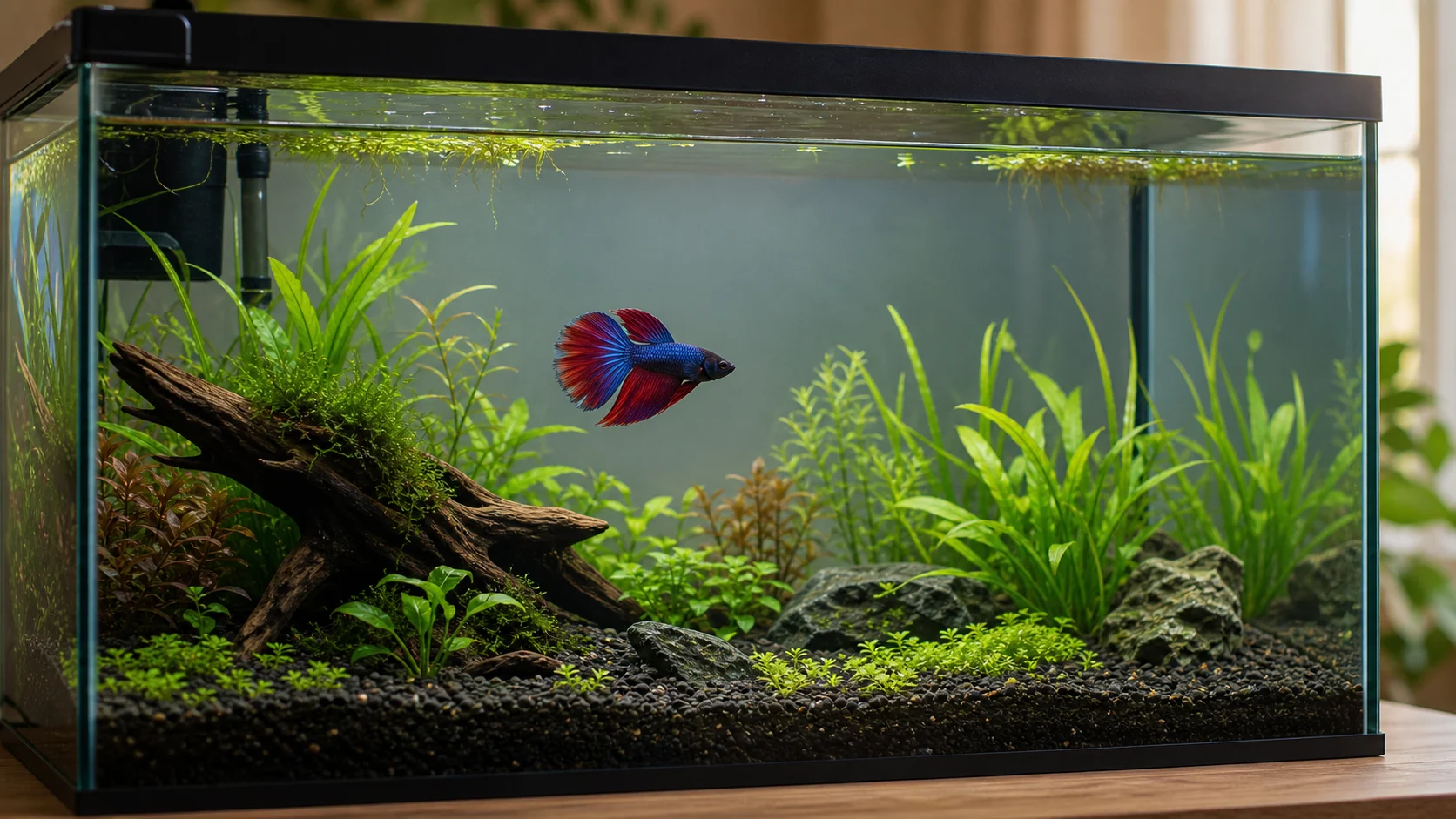
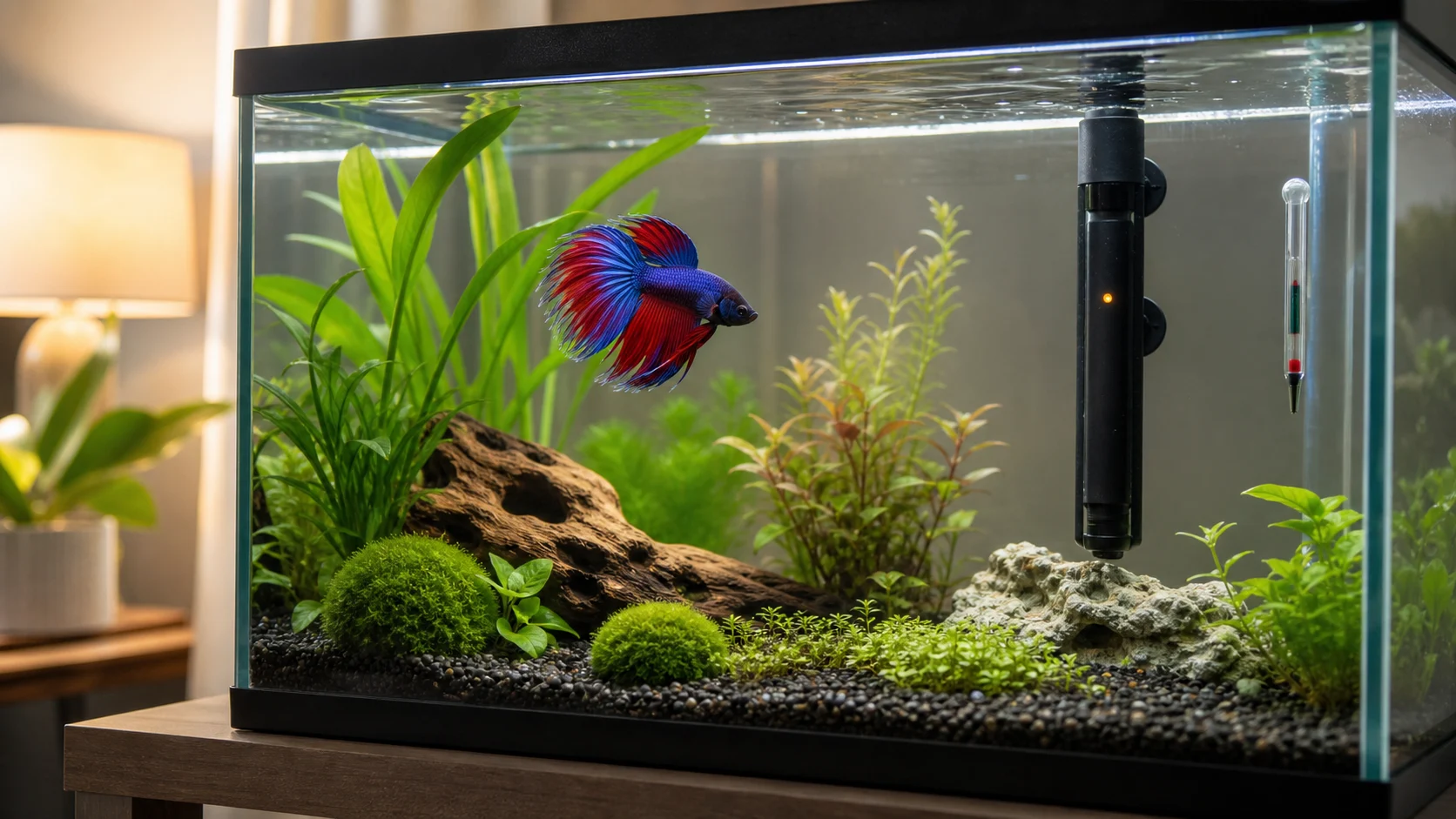
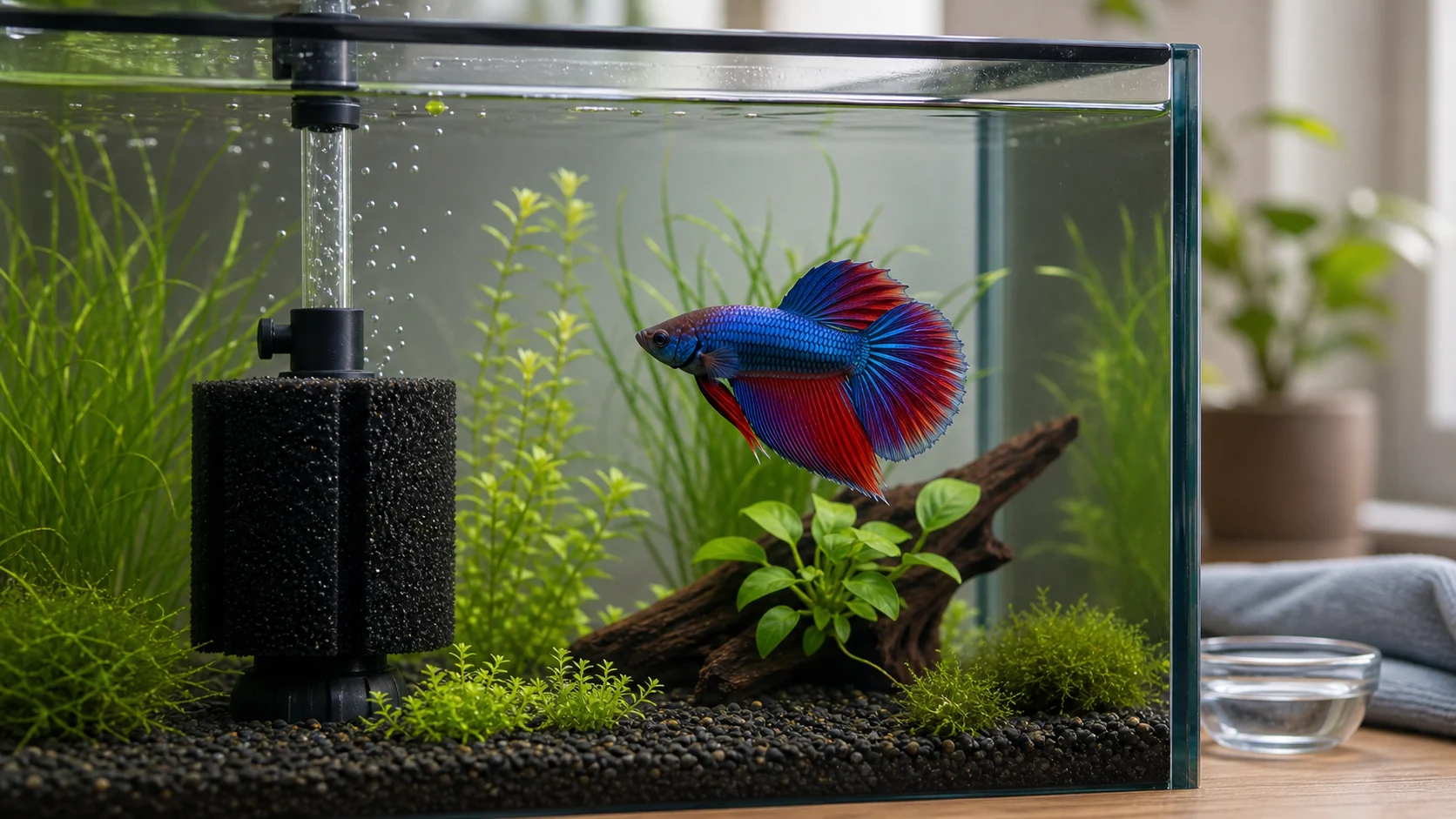
Useful cover can include smooth caves, broad live plants, floating plant roots, silk plants, smooth driftwood, and resting spots near the surface.
Why hiding places matter
Bettas are curious, but they also need security. In a bare tank, a betta may feel exposed, glass surf, flare at reflections, or stay stressed because there is nowhere to retreat.
Cover gives the fish choices. A healthy betta may explore, rest in plants, use a cave, and come out when it feels safe.
Best hiding place options
Good options include smooth ceramic caves, aquarium-safe hides, broad live plants, floating plant roots, silk plants, smooth driftwood, and resting leaves near the surface.
Live plants such as Anubias, Java fern, Java moss, and floating plants can provide cover without making the tank feel cluttered.
What to avoid
Avoid sharp plastic plants, rough resin decor, chipped ceramic, tiny holes, narrow tunnels, unstable ornaments, and anything with peeling paint or unknown materials.
Long-finned bettas are especially vulnerable to torn fins. If a decoration can snag pantyhose or feel rough to your fingers, it may be risky for delicate fins.
Hiding vs stress hiding
Normal hiding is occasional. The betta still comes out, eats, explores, responds to you, and uses different areas of the tank.
Stress hiding is more constant. The fish may refuse food, clamp fins, breathe heavily, fade in color, stay behind equipment, or hide after sudden tank changes.
Check water if hiding suddenly increases
If a betta suddenly hides much more than usual, test ammonia and nitrite and confirm temperature. Poor water quality, cold water, strong current, aggressive tank mates, reflections, or sudden changes can all make hiding worse.
Do not assume the fish is shy until basic tank conditions have been checked.
How many hiding places should a betta have?
A small tank can use one main hide plus plants or surface cover. A larger tank can use several cover zones so the betta can move between secure areas.
Leave open swimming room. A tank packed with decor can trap debris, restrict movement, and make maintenance harder.
What to check first
- Are hides smooth inside and outside?
- Can the betta turn around and leave easily?
- Are plant edges soft or broad?
- Is there cover near the surface?
- Is there still open swimming room?
- Has hiding suddenly increased?
- Are water tests and temperature stable?
Common mistakes
Common mistakes include using sharp plastic plants, choosing decor with tiny holes, filling the tank with ornaments instead of usable cover, and ignoring sudden hiding because the tank looks nice.
The best hiding places are simple, smooth, stable, and easy for the betta to use.