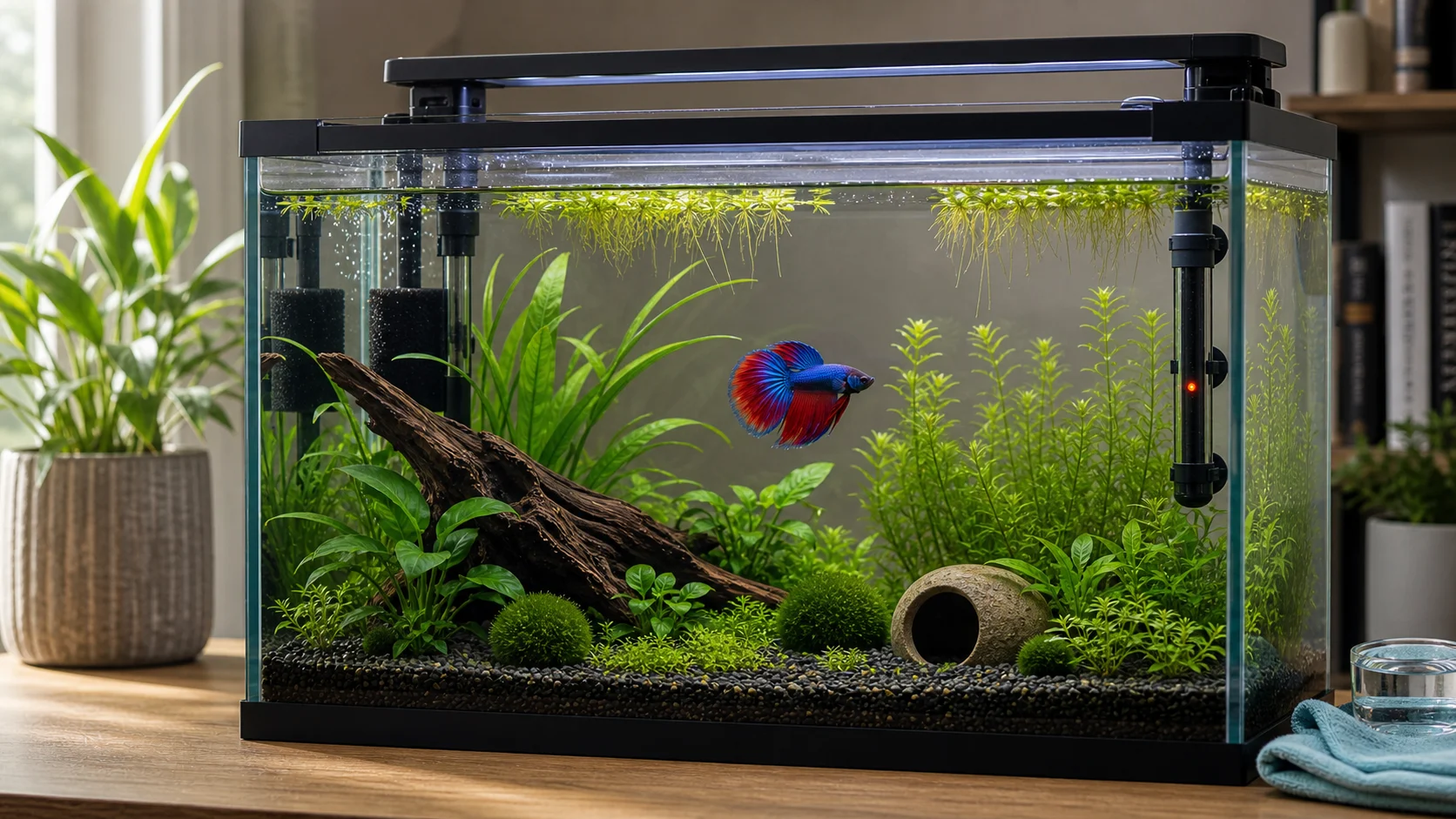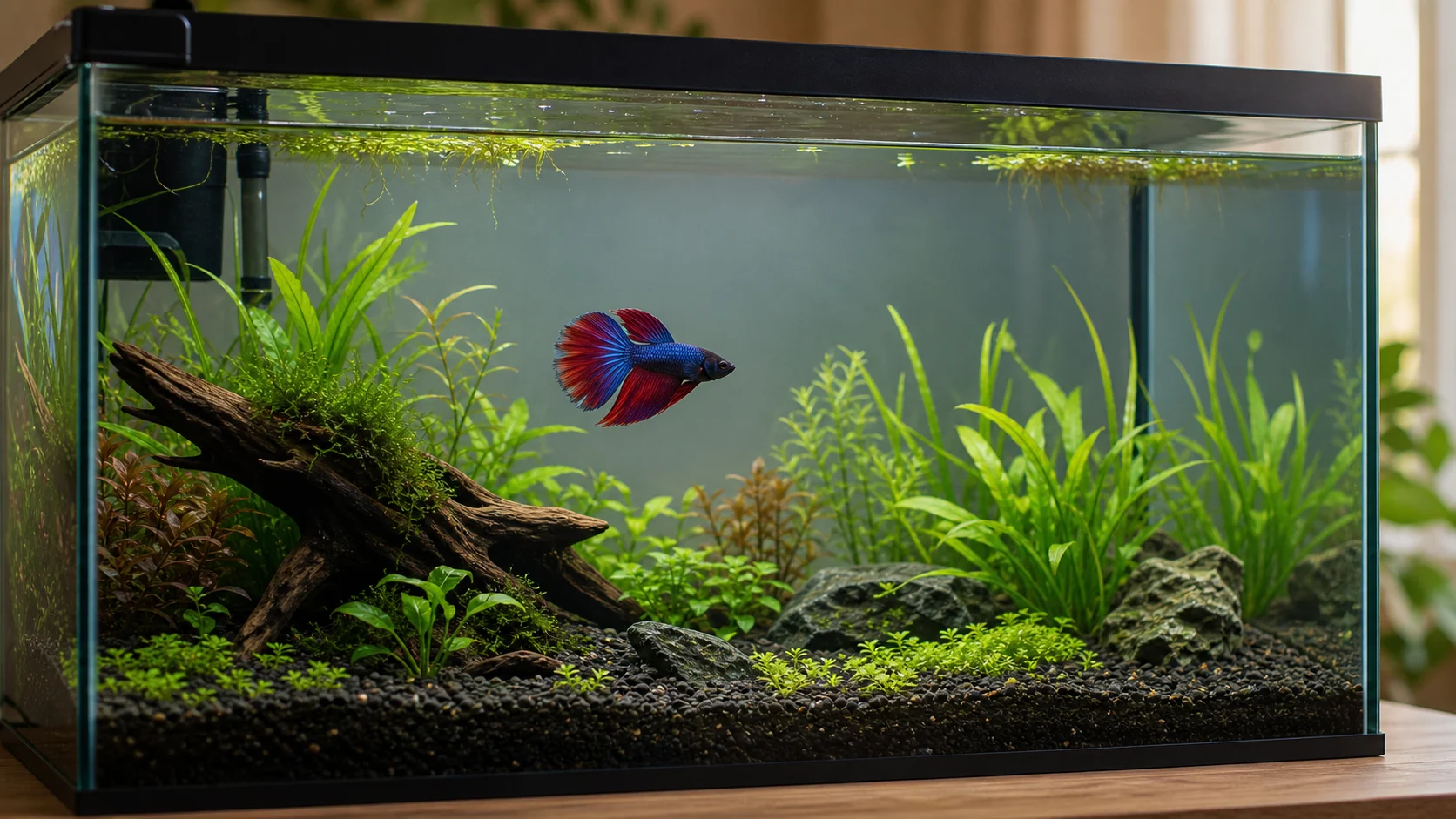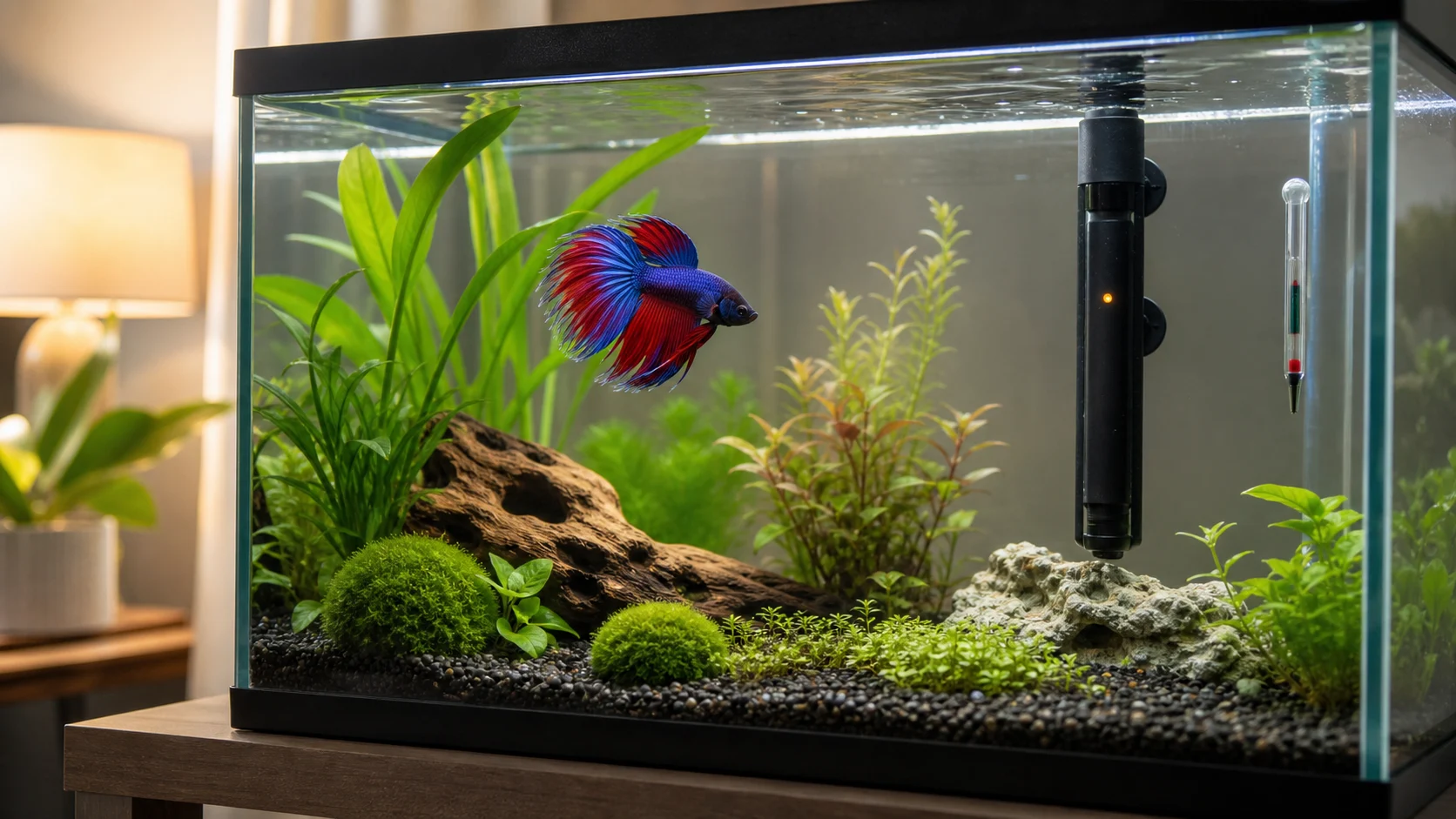
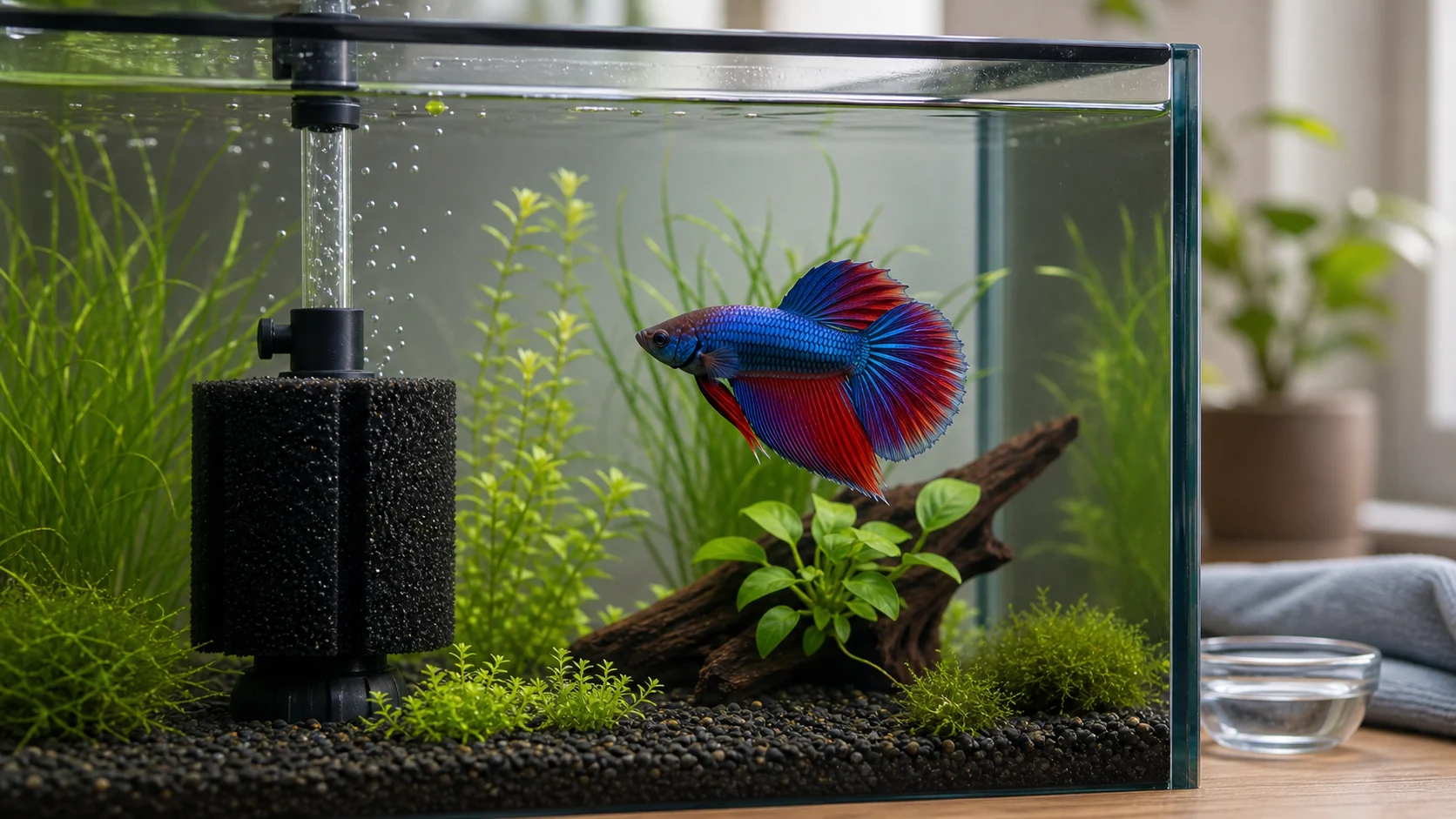
A filter is strongly recommended
Most betta tanks should have a filter because filtration supports stable water quality. The most important job is not polishing the water, but giving beneficial bacteria a place to process waste.
Biological filtration matters
Fish waste and uneaten food can lead to ammonia and nitrite. A cycled filter helps support the nitrogen cycle, which makes the tank safer and more stable.
Keep the flow gentle
Bettas can struggle in strong current, especially long-finned varieties. Use a sponge filter, adjustable filter, pre-filter sponge, or baffle if the fish is being pushed around.
A filter does not replace water changes
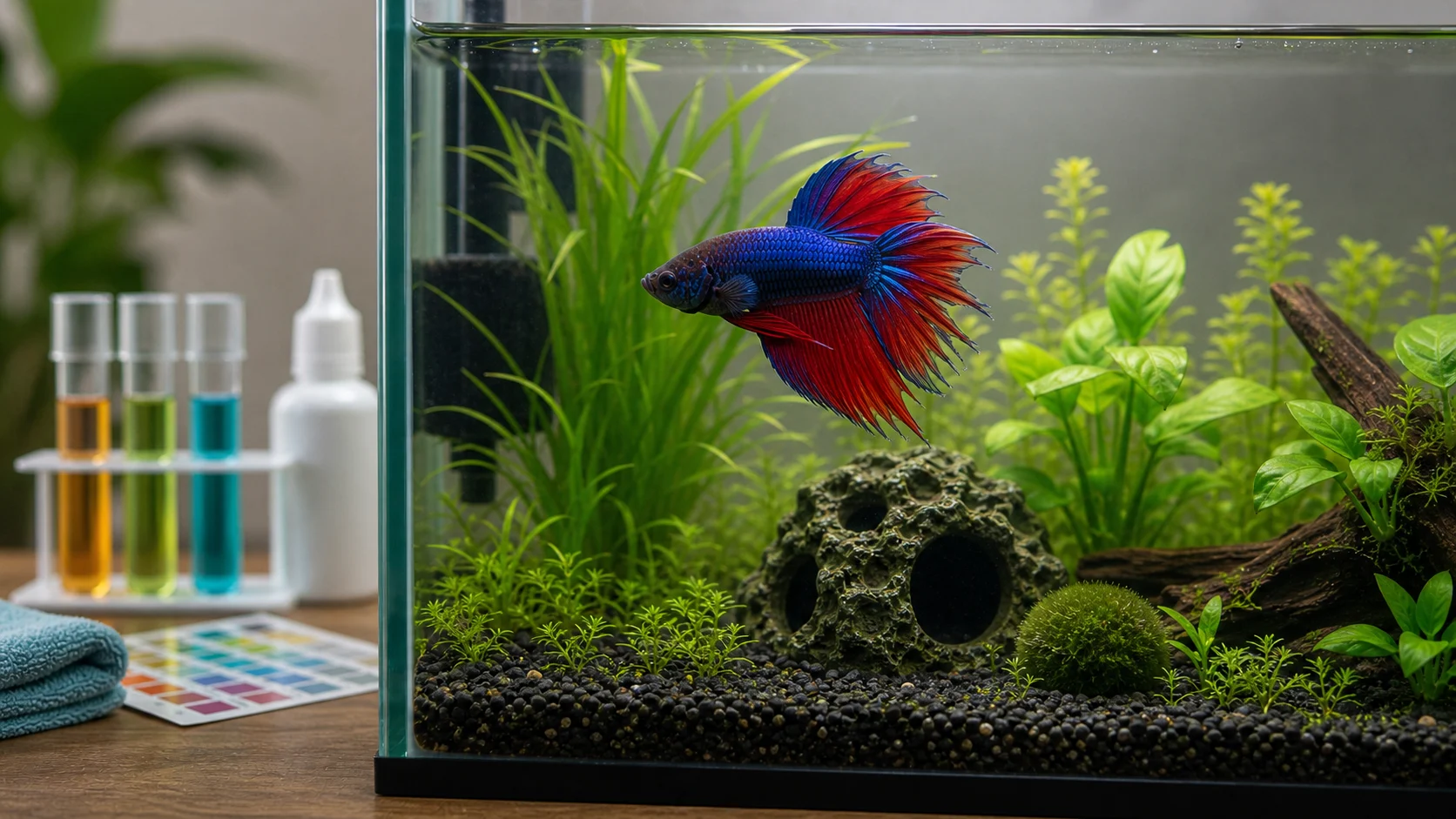
Filtered tanks still need testing, partial water changes, and controlled feeding. Clear water can still have unsafe ammonia, nitrite, or nitrate.
Filter choices for beginners
Sponge filters and adjustable low-flow filters are common beginner options. Choose based on tank size, maintenance needs, and whether the flow can stay betta-friendly.
Can a betta live without a filter?
A betta may survive without a filter in some carefully managed setups, but no-filter tanks leave less margin for beginner mistakes. Waste can build quickly, especially in small tanks.
If a tank has no filter, water testing and maintenance become more important, not less. Ammonia and nitrite should still read 0.
Sponge filters for bettas
Sponge filters are popular for bettas because they provide biological filtration with gentle flow. They are simple, inexpensive, and easier to protect from strong current than many hang-on-back filters.
The sponge should not be thrown away every week. It holds beneficial bacteria that help process waste.
Signs filter flow is too strong
Flow may be too strong if the betta hides constantly, avoids open water, gets pushed sideways, rests more than usual, or struggles to reach food. Use a lower-flow setting, sponge filter, pre-filter sponge, or baffle.