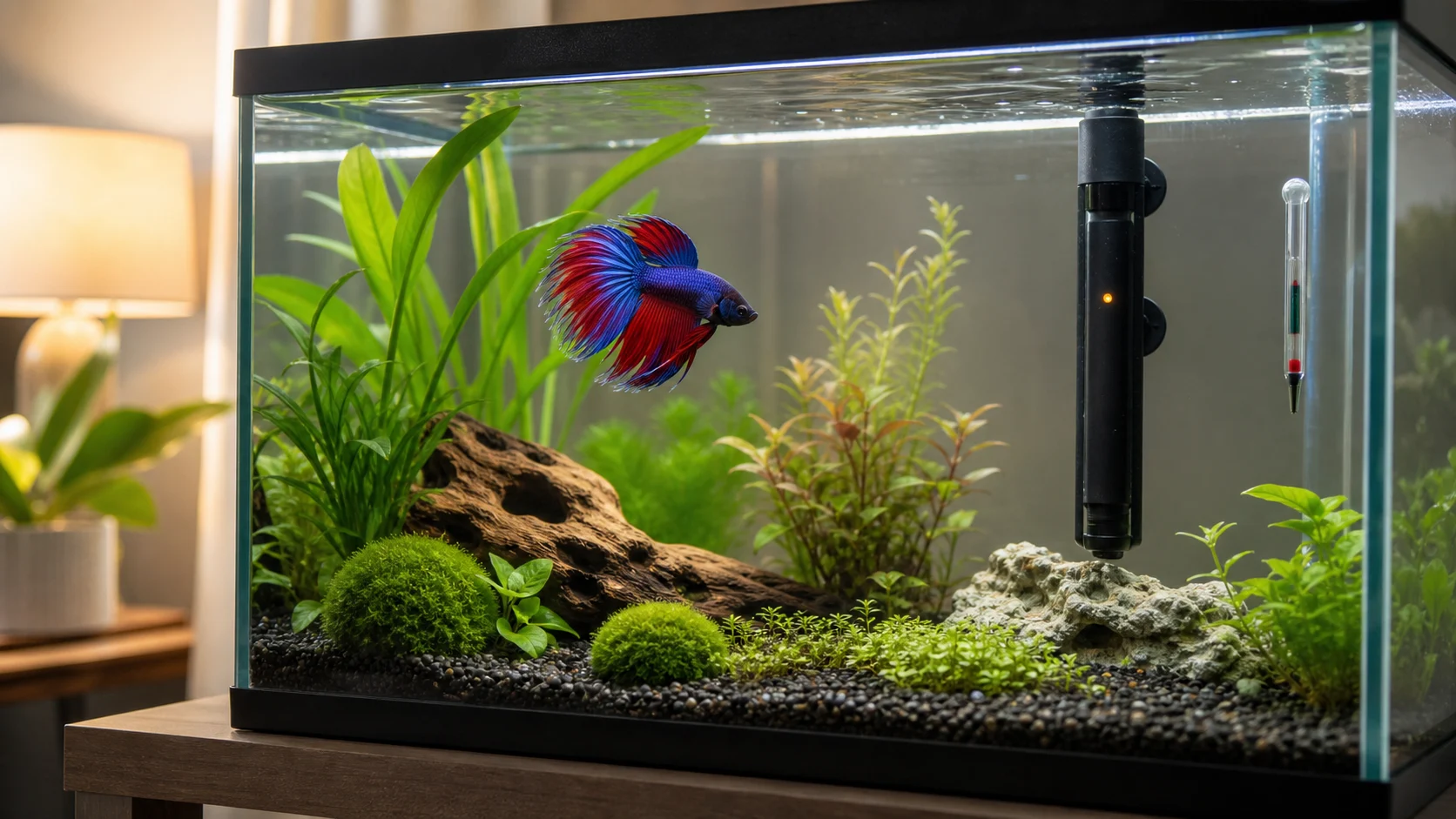
Bettas need warmth and stability
Bettas are tropical fish, so the issue is not only whether the room feels warm to people. Stable warm water supports normal appetite, digestion, immune function, and activity.
Small aquariums can cool down quickly overnight. A tank may be warm in the afternoon and too cool early the next morning, especially near windows, exterior walls, vents, or air conditioning.
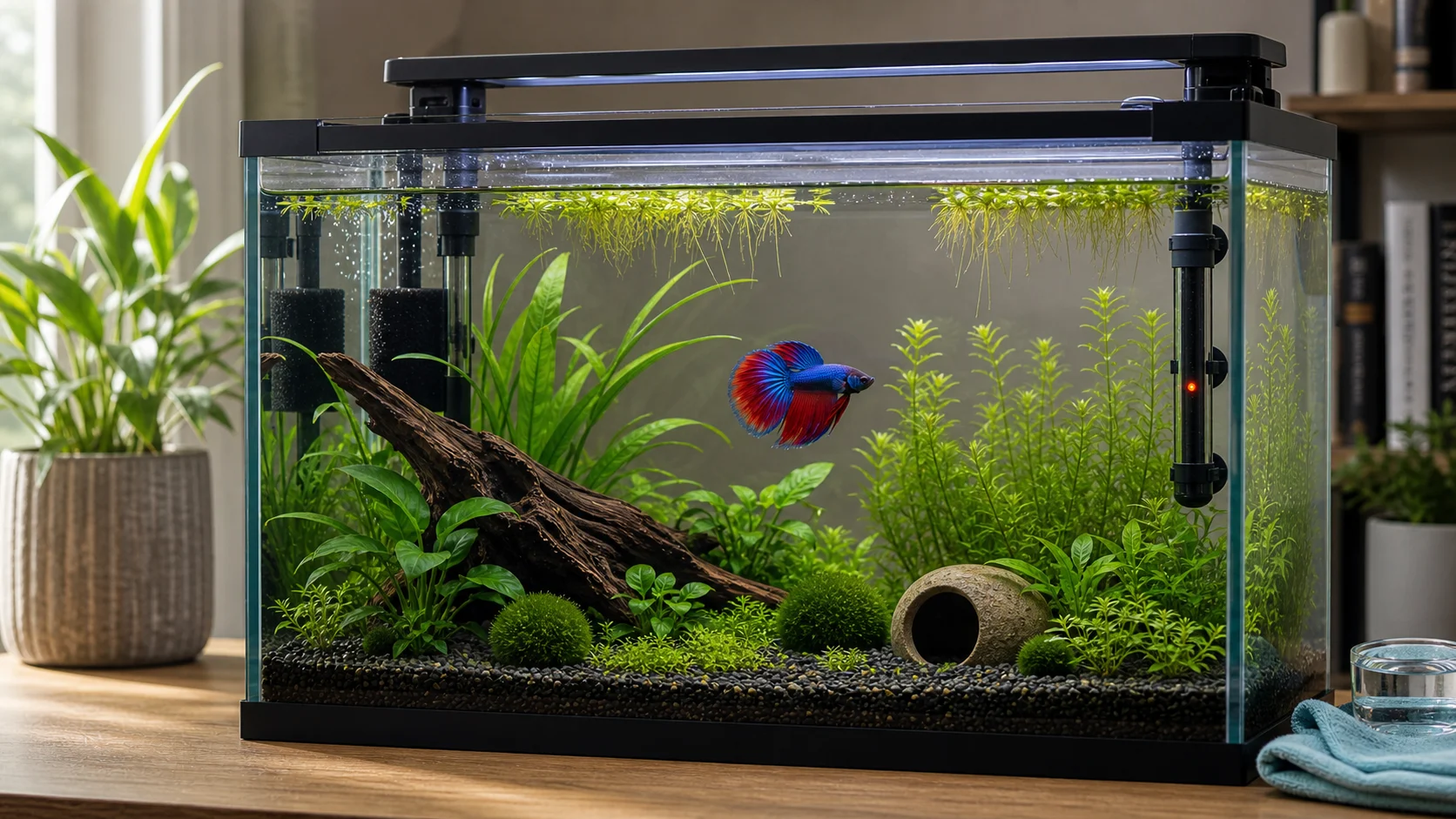
Most indoor tanks need a heater
Many betta tanks need a heater unless the water itself stays in a safe, stable range all day and night. A comfortable house can still produce aquarium water that is too cool or too unstable.
This is especially true for 5 gallon and smaller tanks because low water volume changes temperature faster. Larger tanks are more stable but may still need a heater.
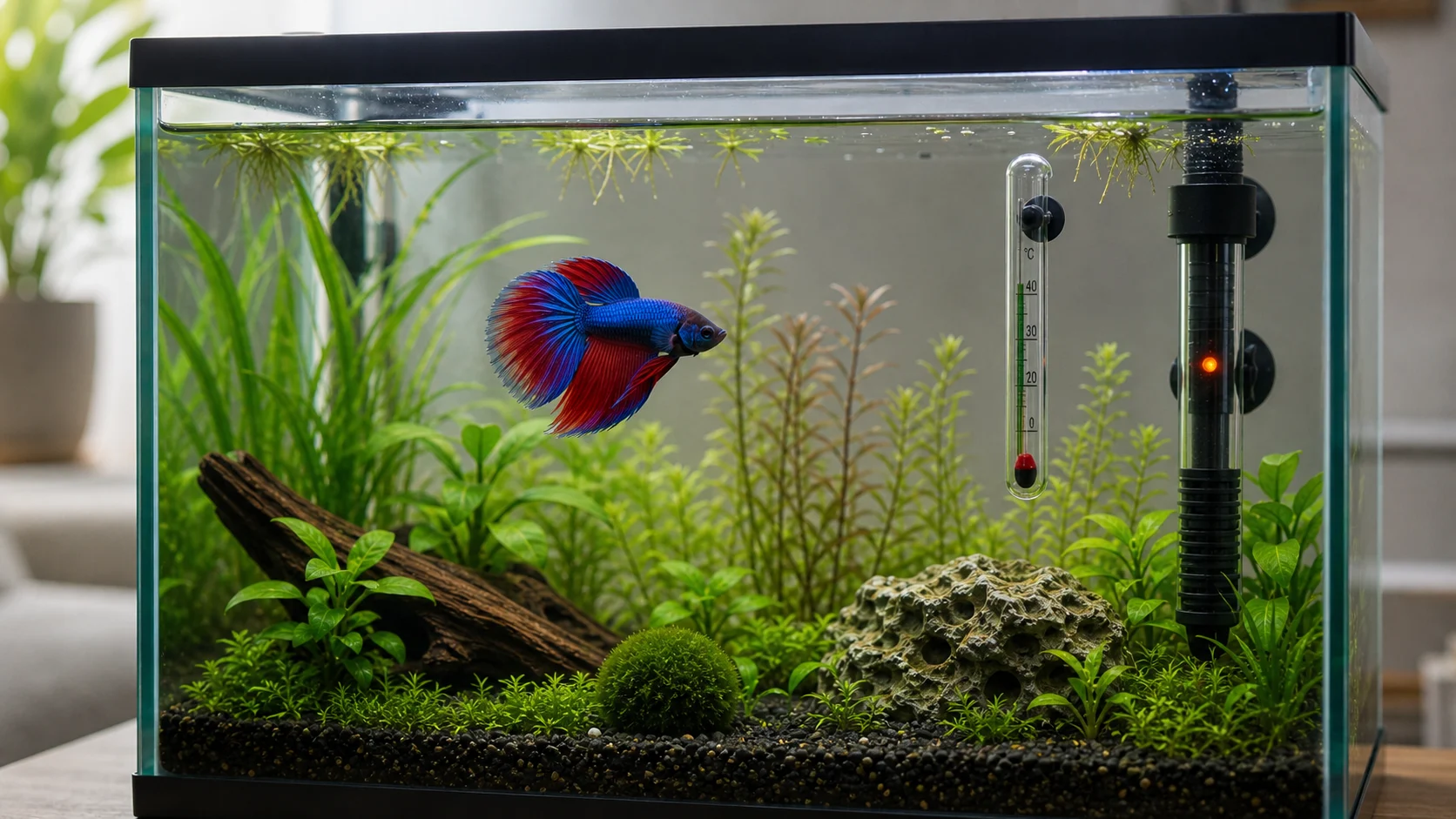
Use a thermometer, not a guess
Do not estimate aquarium temperature from room temperature. Put a thermometer in the tank and check it at different times of day.
The most useful checks are often early morning, after lights have been off, and during the warmest part of the day. You are looking for both the number and the amount of swing.
What temperature should you aim for?
Many betta keepers target about 78 to 80 degrees Fahrenheit. Avoid sudden changes. If the tank is too cool or too warm, adjust gradually and monitor the fish.
Temperature problems can show up as low appetite, lethargy, slow digestion, or stress. If a betta is not eating, temperature should be one of the first checks.
Heater safety mistakes
Use a heater sized for the aquarium and place it where water circulates. Monitor carefully after installing or changing a heater. Overheating can be just as dangerous as cold water.
Avoid using a heater without a thermometer. The dial on a heater is not a substitute for measuring the actual water.
Can a betta fish live without a heater?
A betta can live without a heater only if the aquarium water stays warm and stable around the clock. Many homes feel comfortable to people but still let small aquariums cool too much overnight.
The only way to know is to measure the tank water early in the morning and later in the day. If the temperature drops or swings, a heater is the safer long-term setup.
Heater signs to watch for
Cold bettas may become less active, eat less, rest more, or digest food slowly. Warmth should still be changed gradually, because sudden temperature jumps can stress fish.
Use a separate thermometer even with an adjustable heater. The heater setting is a target, not proof of the actual water temperature.