Target temperature range
Many betta keepers aim for about 78 to 80 degrees Fahrenheit. The exact number matters less than keeping the water warm and stable instead of letting it swing through the day.
Use a thermometer
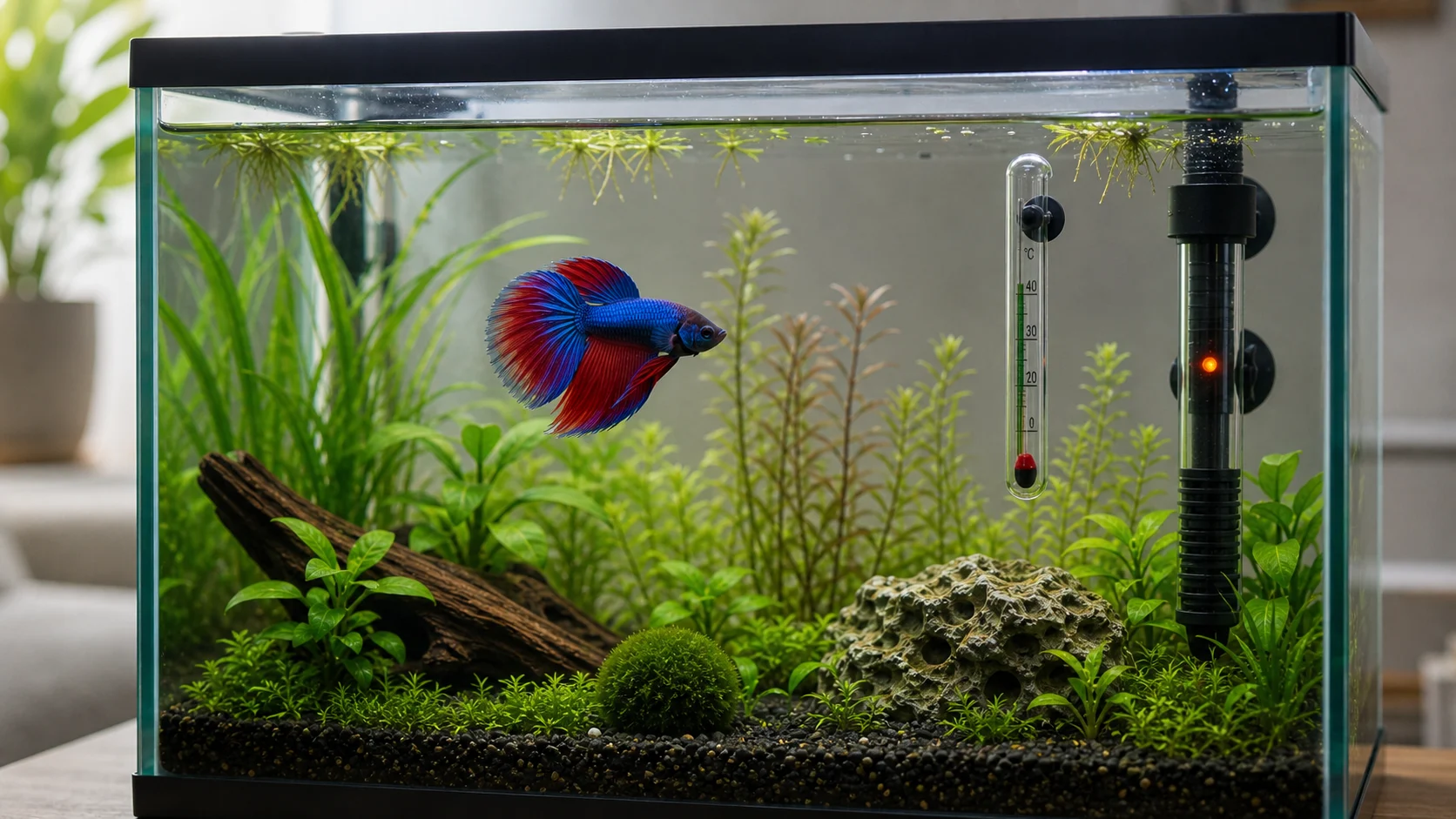
Do not rely on room temperature or heater settings alone. Place a thermometer in the aquarium and check the actual water temperature, especially in the morning and after room temperature changes.
Why cold water is a problem
Cold water can make bettas sluggish, reduce appetite, slow digestion, and add stress. If a betta is not eating or resting more than usual, temperature should be one of the first checks.
Avoid sudden changes
Rapid temperature shifts can stress fish even when the final temperature is within a normal range. Adjust heaters gradually and monitor after water changes.
Tank size affects stability
Small bowls and tiny tanks cool down faster than larger aquariums. A heated, filtered 5 gallon or larger tank is much easier to keep stable.
Cold water signs in betta fish
Cold water can make a betta sluggish, less interested in food, slower to digest meals, or more likely to rest near the bottom. These signs can overlap with illness, so check temperature along with ammonia and nitrite.
If appetite loss or bottom-sitting appears after a cold night, room change, or water change, measure the actual aquarium water before changing foods or guessing at treatment.
Temperature during water changes
New water should be conditioned and close to the tank temperature before it is added. A sudden temperature swing can stress a betta even when the new water is clean.
For small tanks, add replacement water slowly and recheck the thermometer afterward. Small volumes can shift faster than expected.
Heater and thermometer routine
Use the heater to keep the tank stable, but use a thermometer to confirm the result. Check early morning and after water changes because those are common times for hidden temperature problems.
Betta temperature in Celsius
The common 78 to 80 degrees Fahrenheit target is about 25.5 to 26.5 degrees Celsius. Many keepers round this to roughly 25 to 27 degrees Celsius for practical aquarium care.
Do not chase tiny decimal changes. A stable, warm tank is safer than a tank that swings up and down because the heater is adjusted too often.
Best temperature for feeding and activity
Temperature affects appetite, digestion, and activity. When water is too cool, a betta may eat less, rest more, or sit near the bottom. That is why temperature and feeding problems often appear together in search data.
If your betta stops eating after a cold night, room change, or water change, check the thermometer before changing foods.
Heater troubleshooting
If the heater setting and thermometer disagree, trust the thermometer and monitor over time. In small tanks, temperature can swing faster, especially during water changes or when the room cools overnight.
Use gentle adjustments and recheck after several hours. Sudden temperature corrections can stress a fish even when the final number is in the safe range.
What temperature is too cold for a betta?
Water below the usual warm tropical range can make a betta less active, less hungry, and more stressed. A single reading matters less than the pattern: if the tank keeps dropping overnight, the fish may be living with daily temperature swings.
Check the actual water with a thermometer. Room temperature and heater dial numbers can be misleading.
Betta staying near the heater
A betta that stays near the heater may be using the warmest part of the tank. This can happen when the room is cool, the heater is undersized, or circulation leaves colder areas in the aquarium.
Compare temperature in different parts of the tank if possible. Also check filter flow, hiding places, and signs of illness because heater-hugging is not a diagnosis by itself.
Water changes and temperature shock
New water should be conditioned and close to the aquarium temperature before it enters the tank. Even clean water can stress a betta if the temperature difference is sudden.
After a water change, watch for clamped fins, hiding, heavy breathing, bottom-sitting, or sudden darting. If those signs appear, check temperature and ammonia/nitrite before guessing at disease.