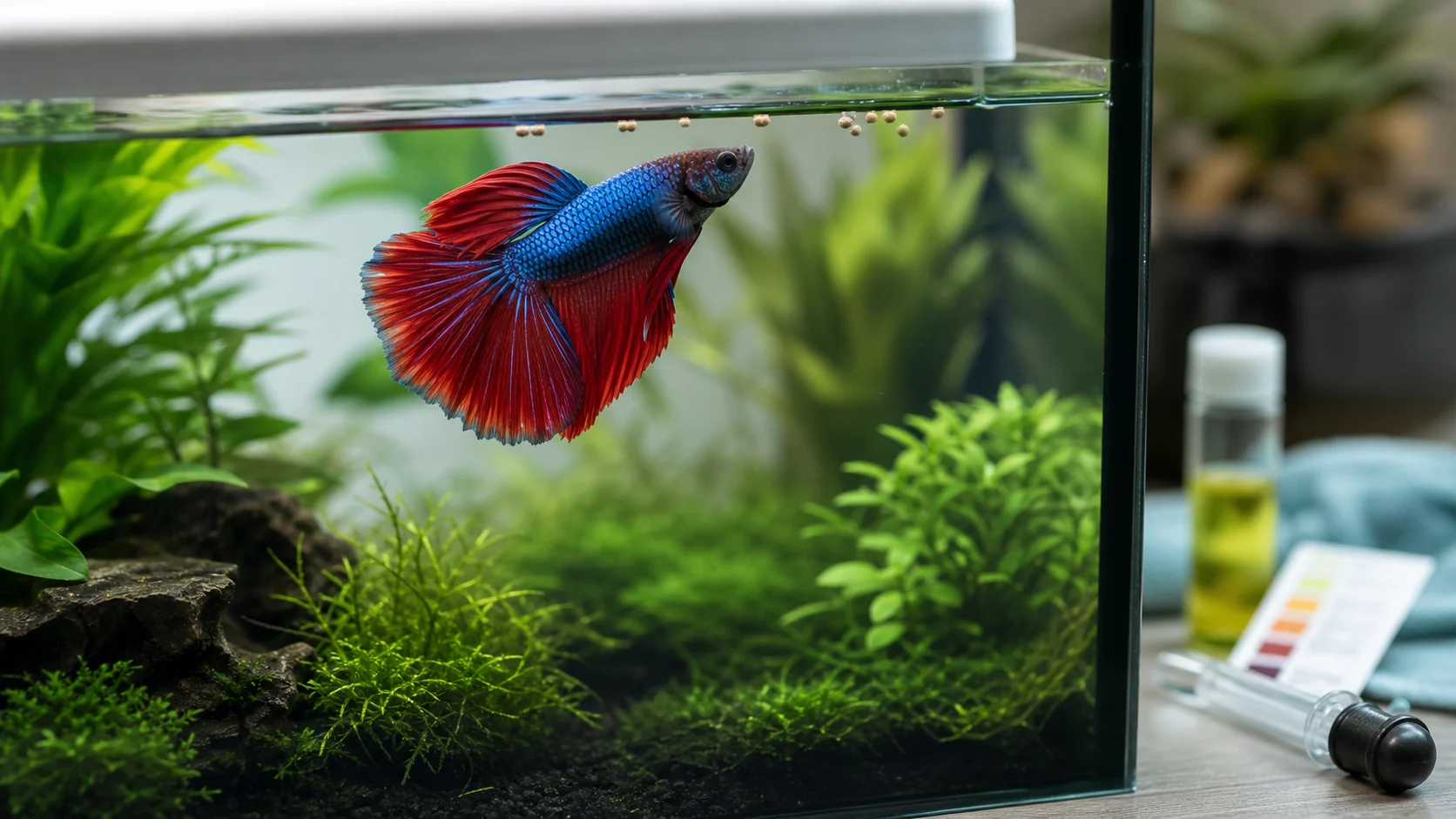
Quick answer: check the tank before changing food
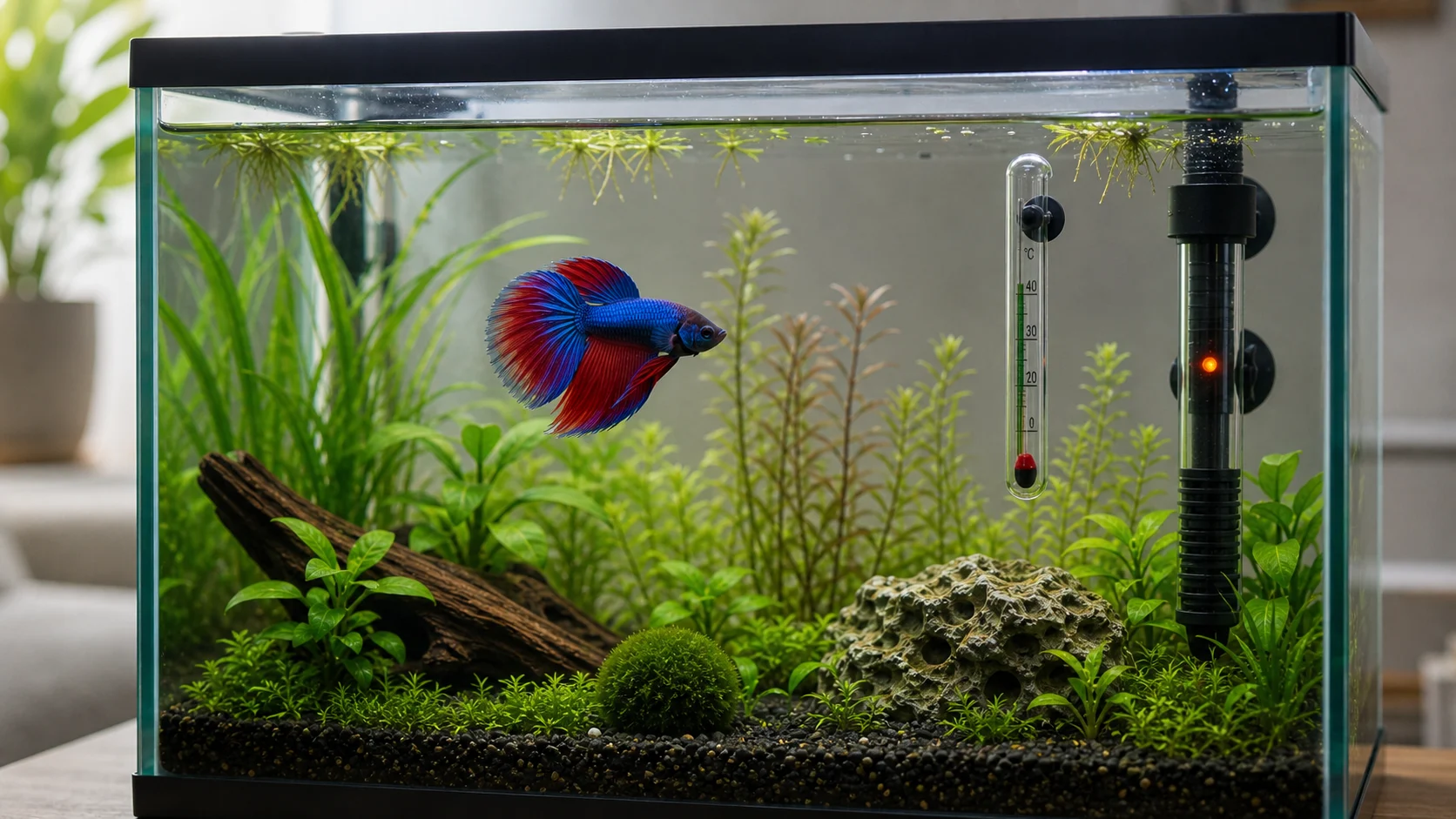
When a betta fish is not eating, the food is only one possible cause. Start with water temperature, ammonia, nitrite, recent stress, overfeeding, food size or freshness, and whether the fish has other symptoms.
A betta that is active, balanced, breathing normally, and curious is different from a betta that is hiding, clamped, bloated, gasping, pale, or laying on the bottom.
The 7 first checks
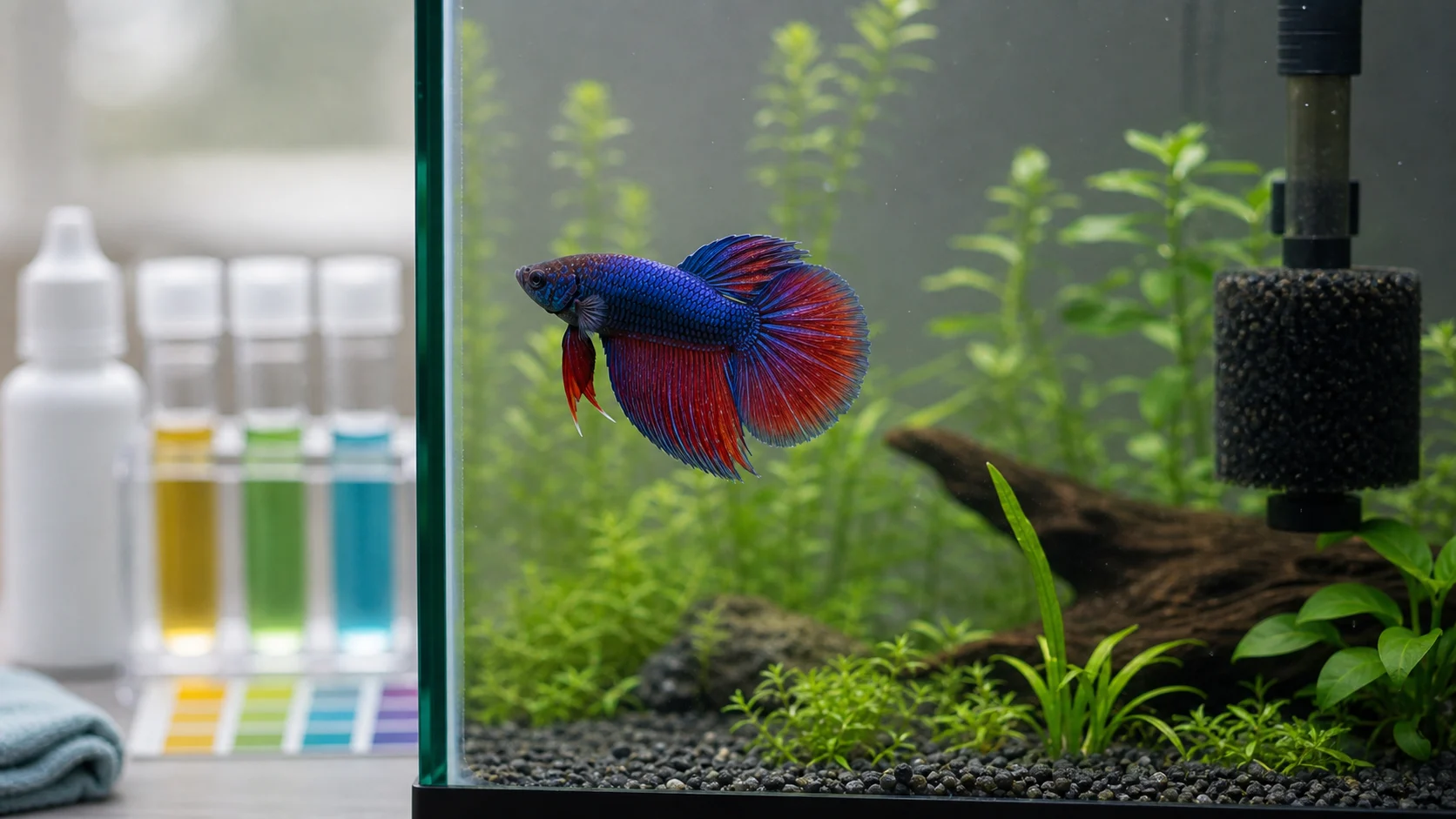
1. Check the actual water temperature with a thermometer. 2. Test ammonia; it should read 0. 3. Test nitrite; it should read 0. 4. Review recent stress such as transport, a new tank, a water change, filter cleaning, strong lights, or tank mates. 5. Consider overfeeding or a recent large meal. 6. Check whether pellets are too large, stale, hard, or unfamiliar. 7. Look for warning signs such as bloating, clamped fins, white spots, gasping, bottom-sitting, pineconing, or severe lethargy.
If your betta is not eating but acting normal
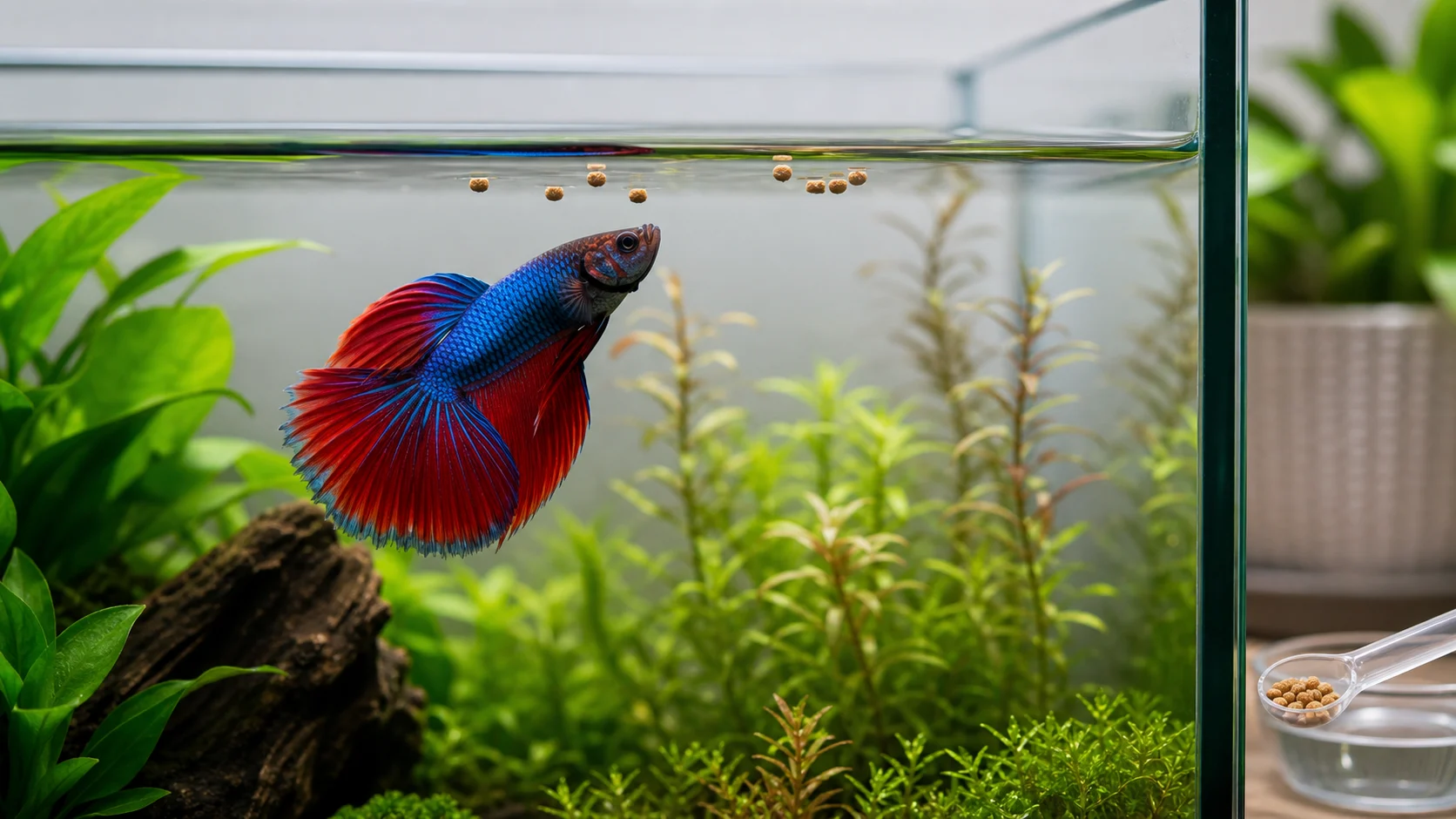
If the betta is swimming normally, reacting to you, breathing calmly, and keeping balance, it may be adjusting, full, picky, or refusing unfamiliar food. Offer a tiny portion and remove leftovers.
Do not keep adding food to tempt the fish. Uneaten food can decay and make water quality worse, which can turn a small appetite issue into a bigger tank problem.
New betta fish not eating
A new betta may skip food for a day or two because of transport, new lighting, unfamiliar food, or a new environment. Keep the tank calm, avoid repeated changes, and offer very small portions.
If a new betta is also gasping, laying on the bottom, clamping fins, breathing heavily, or hiding constantly, check temperature, ammonia, and nitrite right away.
Betta will not eat pellets
Some bettas refuse pellets that are too large, hard, stale, or unfamiliar. Try a smaller pellet or soften one briefly, but remove rejected food quickly.
If the fish refuses every food and also acts weak, the issue is probably not simple pellet preference. Move back to water tests and symptom checks.
Betta not eating and hiding
Not eating plus hiding can happen after a move, bright light, strong flow, tank mate stress, poor water quality, or illness. Give the fish cover, reduce obvious stress, and check water before changing several things at once.
The more symptoms you see together, the less likely it is to be simple pickiness.
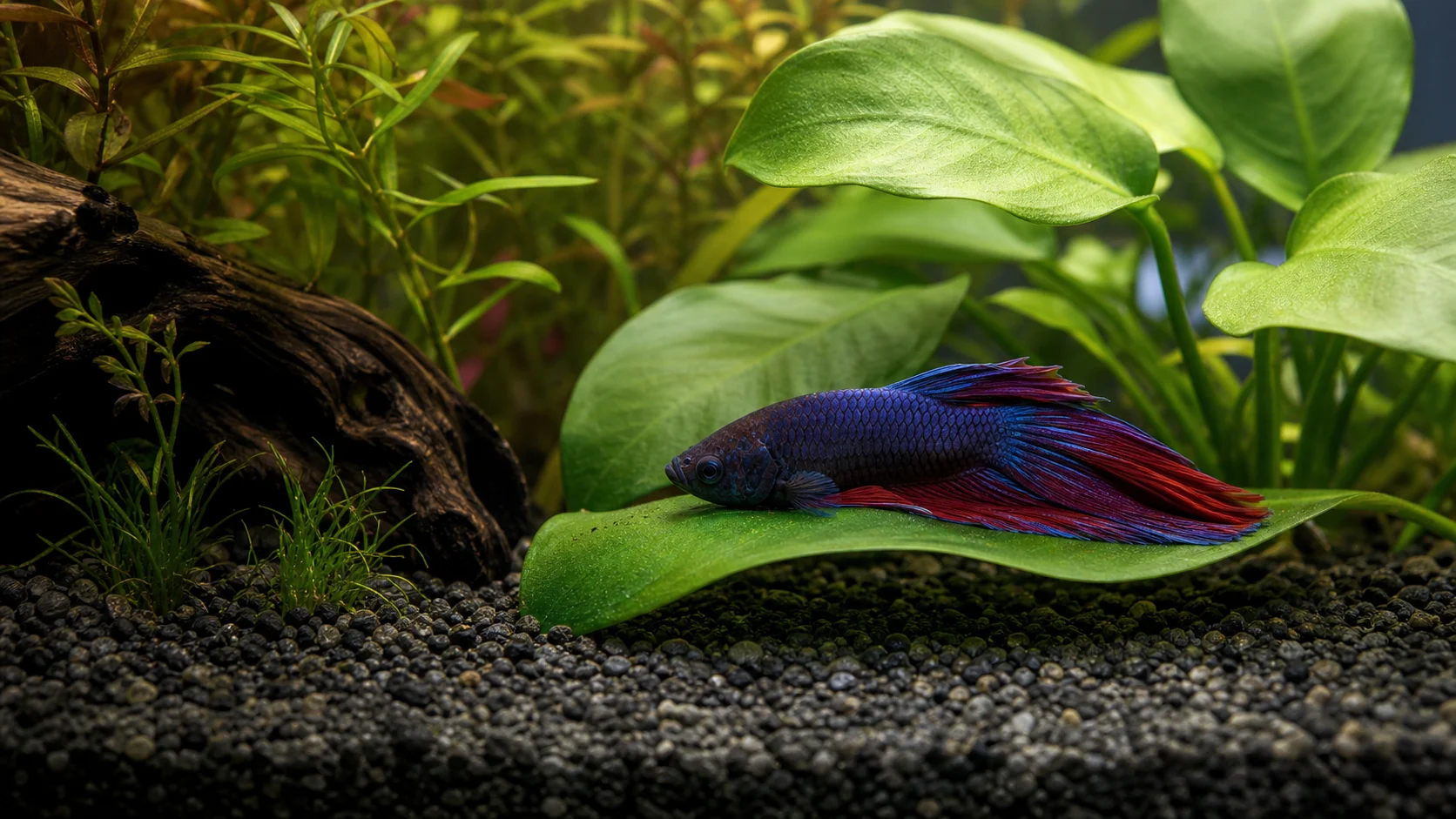
Betta not eating and laying on the bottom
Appetite loss plus bottom-sitting is more concerning than either sign alone. Check temperature, ammonia, nitrite, breathing rate, belly shape, color, fin position, and recent tank changes.
Do not treat it as laziness if the fish is also weak, gasping, pale, pineconing, rolling, or unable to stay upright.
Food problems that can cause refusal
Food can be too large, stale, too hard, or unfamiliar. Overfeeding can also make a betta refuse the next meal, especially if the belly looks rounded.
Keep the response simple: tiny portions, remove leftovers, avoid rapid food switching, and do not use treats as a substitute for fixing water or temperature problems.
When not eating is more urgent
Not eating becomes more urgent when it comes with heavy breathing, gasping at the surface, clamped fins, severe lethargy, bloating, pineconing scales, white spots, red gills, bottom-sitting, or ammonia/nitrite above 0.
Those signs do not prove one specific disease, but they mean appetite loss should be treated as part of a broader health check.
Common mistakes
Common mistakes include assuming the fish is picky before testing water, leaving rejected food in the tank, trying many foods in one day, feeding extra after a skipped meal, and medicating before checking temperature, ammonia, and nitrite.
Use the whole picture: appetite, breathing, posture, activity, belly shape, fins, water tests, temperature, and recent changes.