Quick answer: bottom-sitting is about the pattern
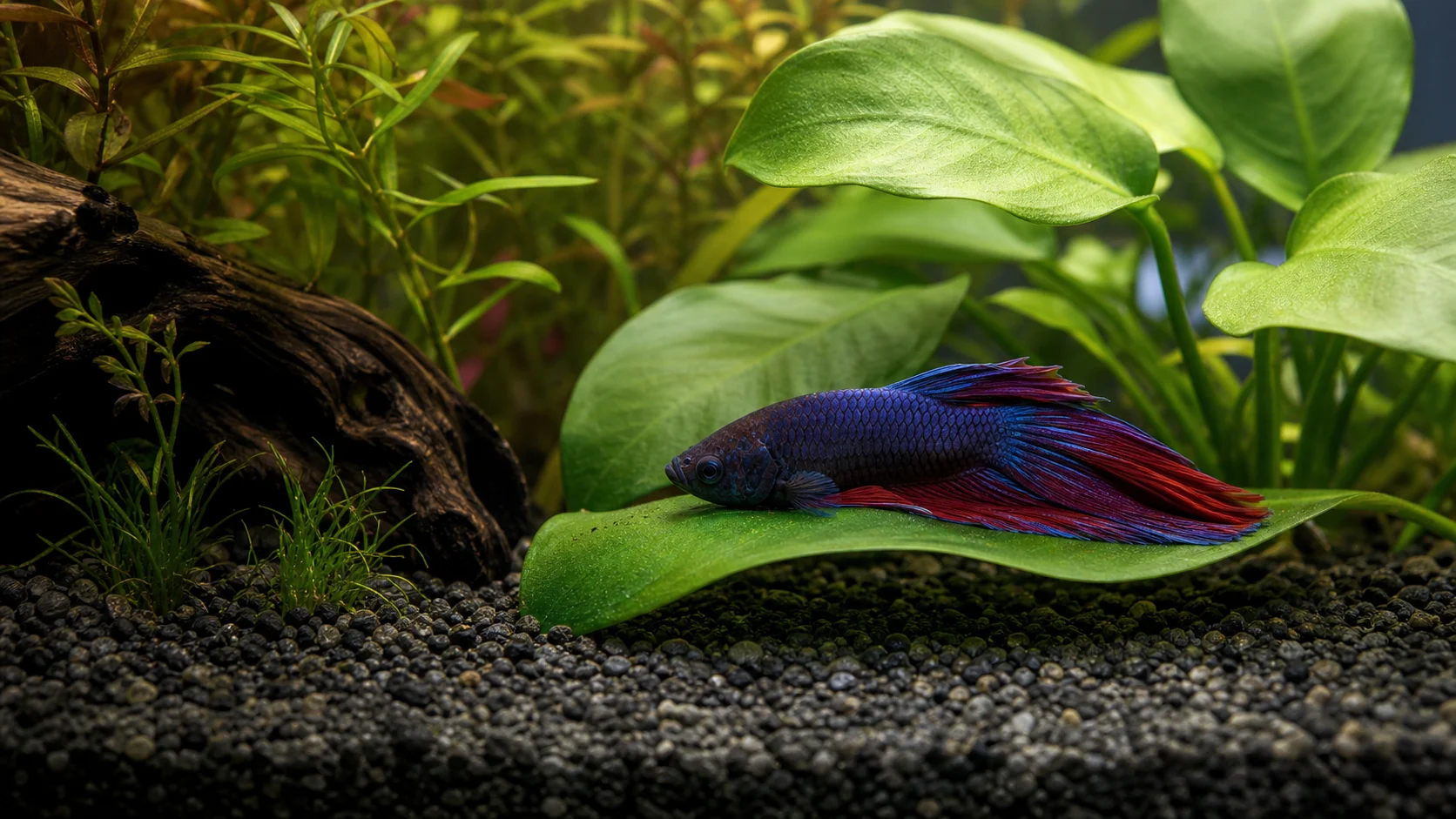
A betta fish laying on the bottom is not always sick. Bettas do rest, and some choose leaves, smooth substrate, decor, or quiet corners. It is less concerning when the fish still eats, swims up easily, reacts normally, keeps balance, and breathes calmly.
Bottom-sitting becomes more concerning when it is new, constant, or paired with breathing heavy, not eating, clamped fins, bloating, gasping, rolling, white spots, red gills, or ammonia/nitrite above 0.
Normal resting vs warning signs
Normal resting is usually brief and relaxed. The betta can swim away, hold itself upright, and return to normal activity.
Warning signs include heavy breathing, gasping at the surface, lying on the side, loss of balance, refusing food, pale color, clamped fins, bloating, pineconing scales, white spots, torn fins, or staying on the bottom for long periods.
Check water and temperature first
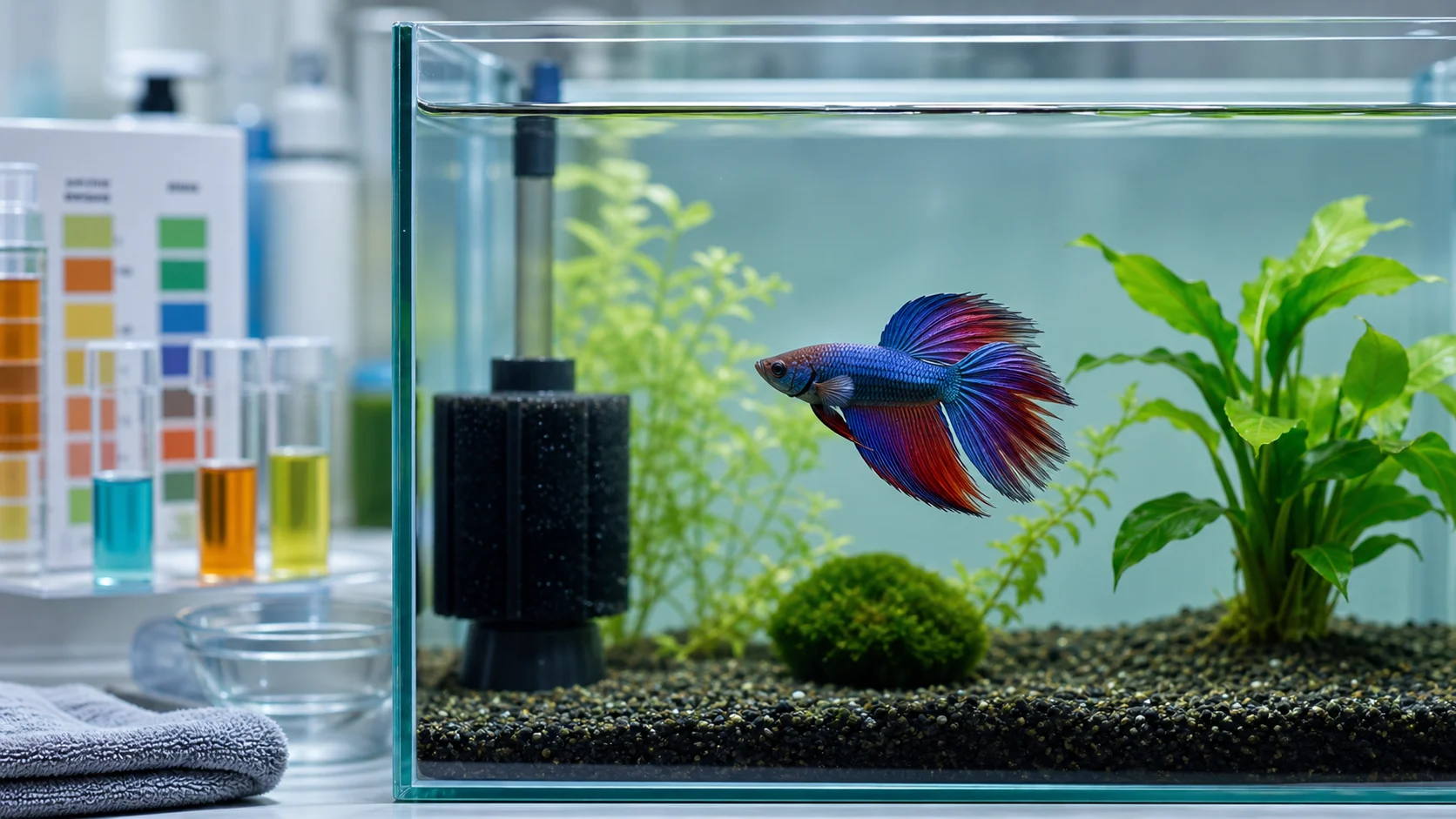
Start with water temperature, ammonia, nitrite, and nitrate. Cold water can make a betta sluggish, while ammonia or nitrite can irritate the gills and make the fish weak even when the water looks clear.
Use a thermometer instead of guessing from room temperature. Clear water does not prove safe water, so test results matter more than appearance.
If your betta is laying on the bottom and breathing heavy
Bottom-sitting with heavy breathing is more urgent than quiet rest. Test ammonia and nitrite immediately, confirm the temperature, and check whether the fish is gasping, clamped, pale, bloated, or struggling to reach the surface.
Also review oxygen and flow. A tall tank, strong current, dirty filter, or lack of resting spots near the surface can make a weak betta work harder.
If your betta is at the bottom and not eating
Bottom-sitting plus appetite loss is more concerning than either sign alone. Check water quality, temperature, belly shape, breathing rate, fin position, color, and recent changes in the tank.
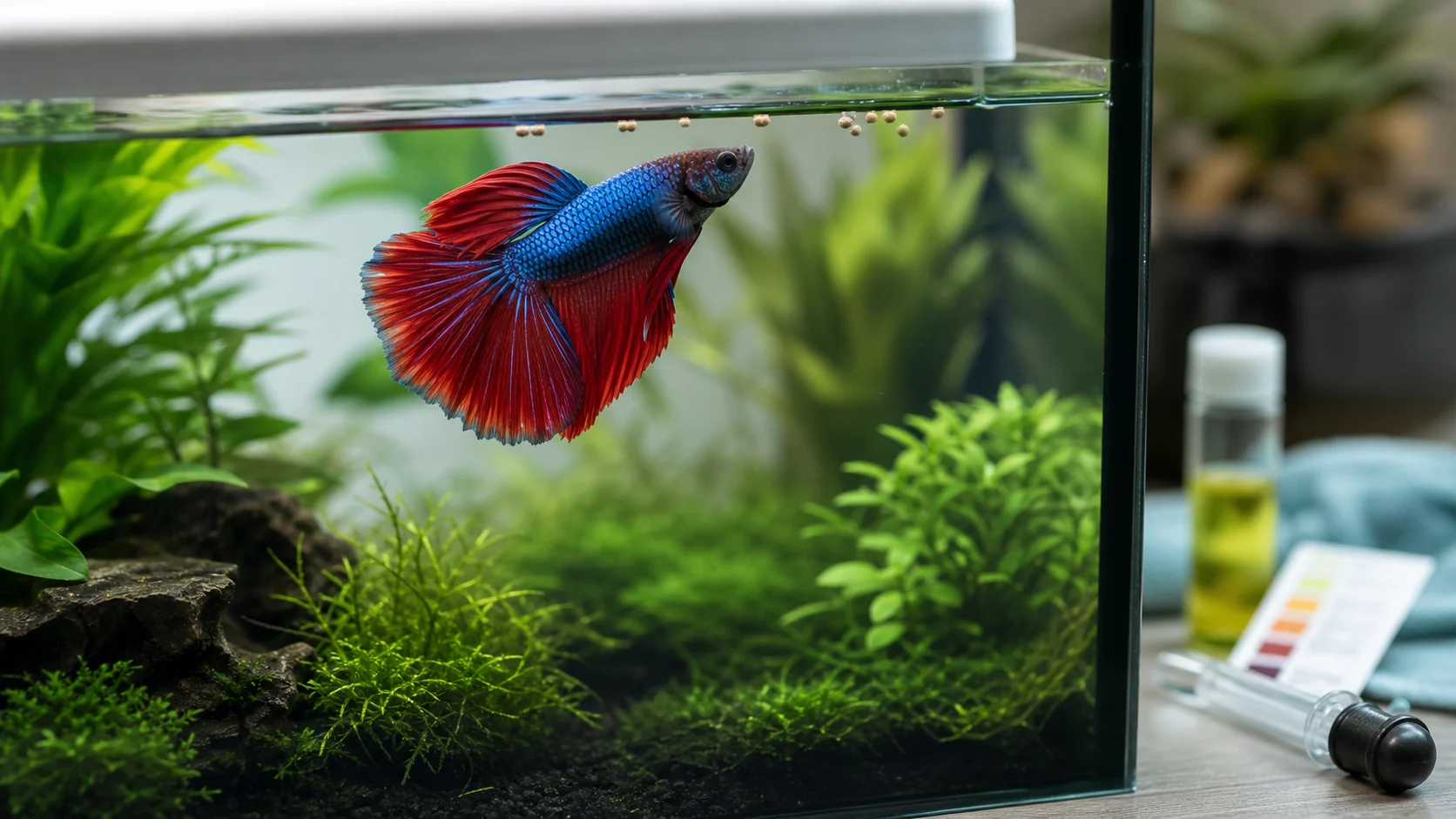
Do not keep trying many foods before checking the environment. Appetite loss often improves only after the actual stressor is found.
Common causes of bottom-sitting
Possible causes include normal sleep, cold water, poor water quality, ammonia, nitrite, stress after a move, strong filter flow, lack of resting places, constipation, bloating, swim bladder trouble, age, injury, or illness.
The exact cause depends on the full symptom picture. A calm betta resting after lights out is different from a weak fish breathing fast on the substrate all day.
Quick checklist
- Test ammonia and nitrite; both should read 0.
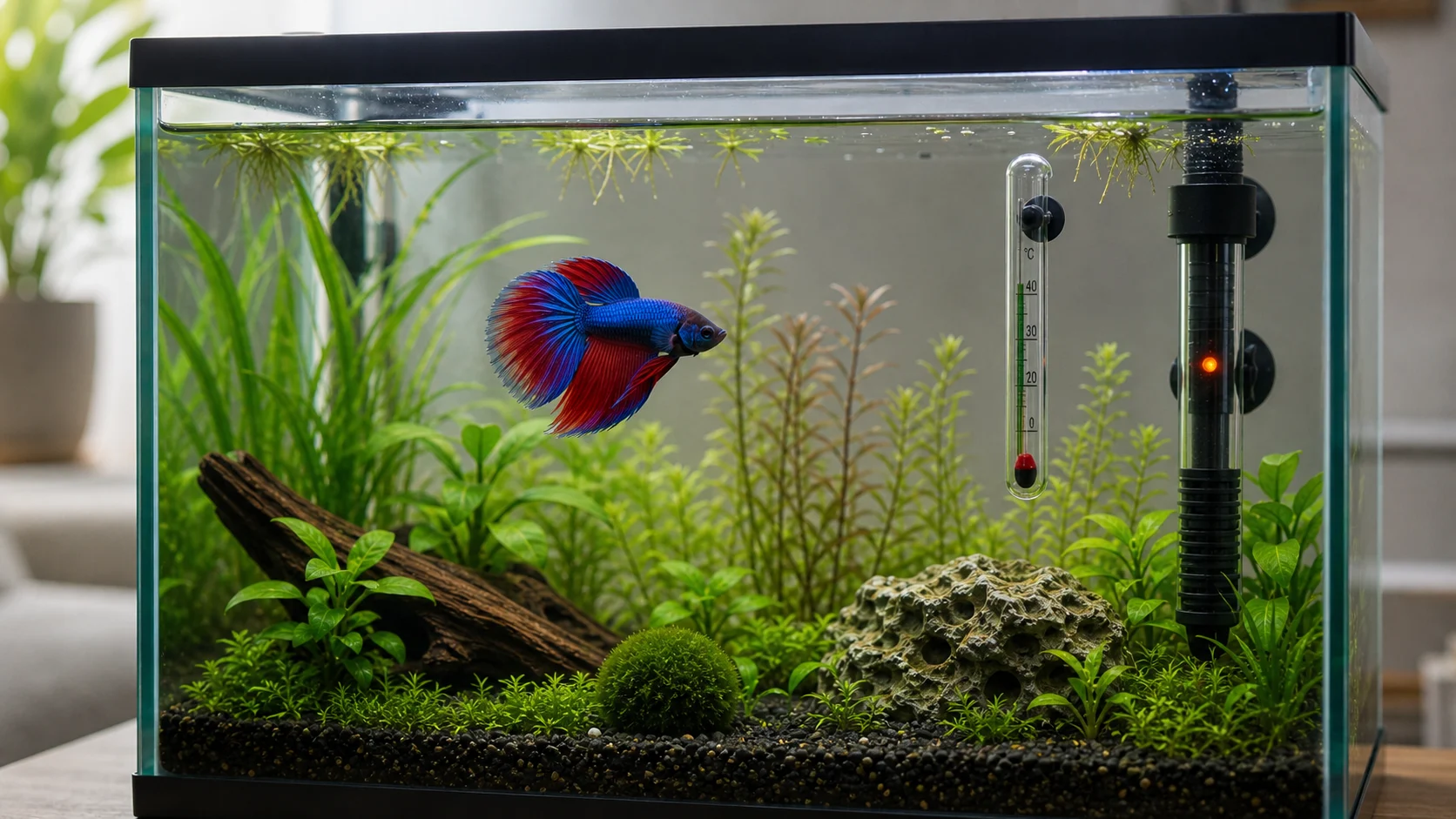
- Check water temperature with a thermometer.
- Watch breathing rate and whether the fish is gasping.
- Check appetite and whether the fish can swim up normally.
- Look for bloating, pineconing scales, white spots, clamped fins, torn fins, or red gills.
- Reduce strong filter current if the fish is being pushed around.
- Add easy resting spots near the surface if the tank is bare.
What to do next
Correct obvious husbandry issues first: unsafe ammonia or nitrite, cold water, strong current, leftover food, or sudden stress. Keep changes calm and avoid chasing or repeatedly moving the fish.
If the fish is breathing heavily, losing balance, bloated, pineconing, gasping, or rapidly declining, treat the situation as urgent and seek qualified fish health guidance.
Common mistakes
Common mistakes include assuming the fish is just lazy, medicating before testing water, changing everything in the tank at once, ignoring cold water, and waiting too long when bottom-sitting comes with breathing trouble or appetite loss.
Use the whole picture: breathing, appetite, posture, balance, water tests, temperature, and recent changes.