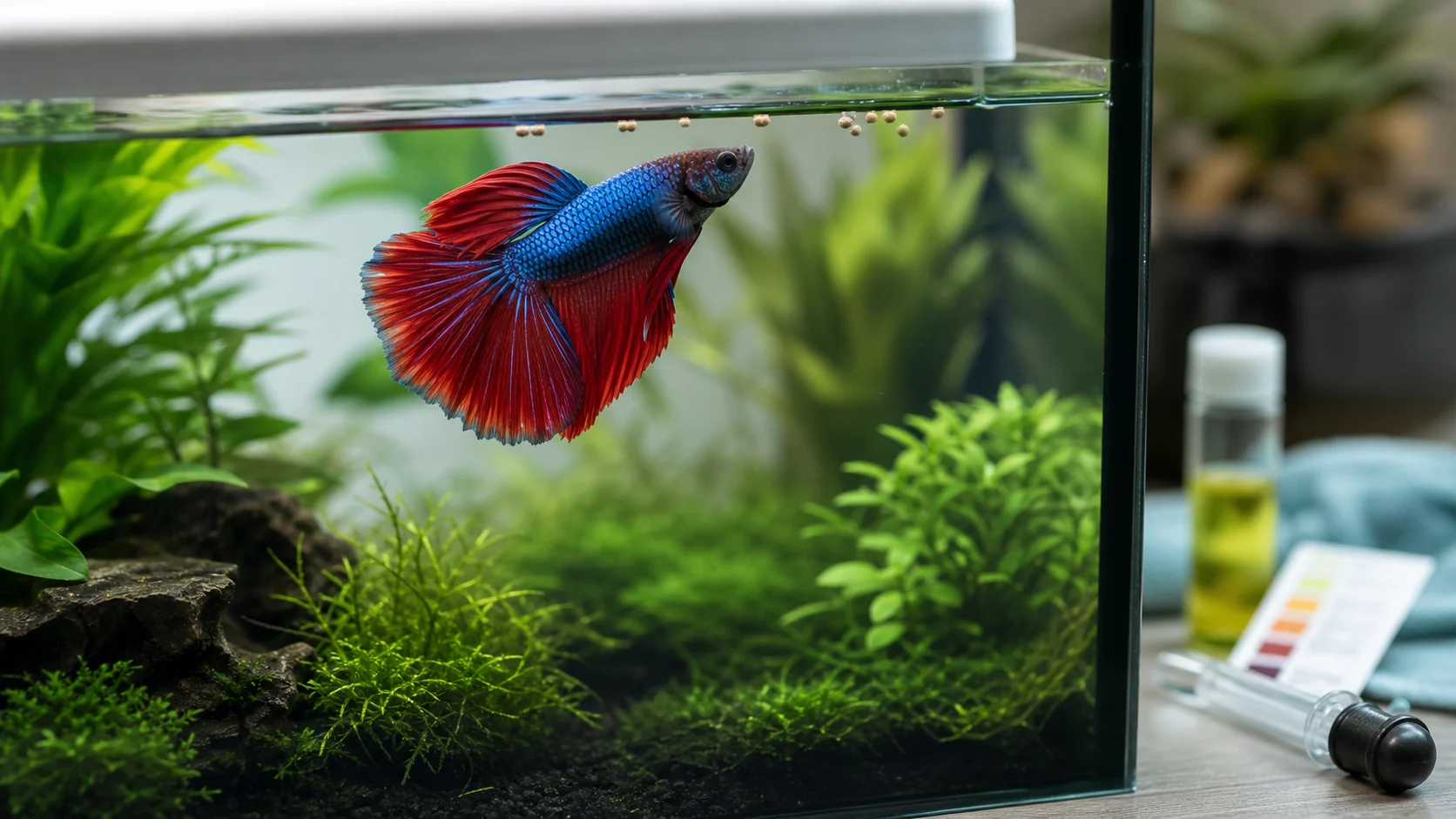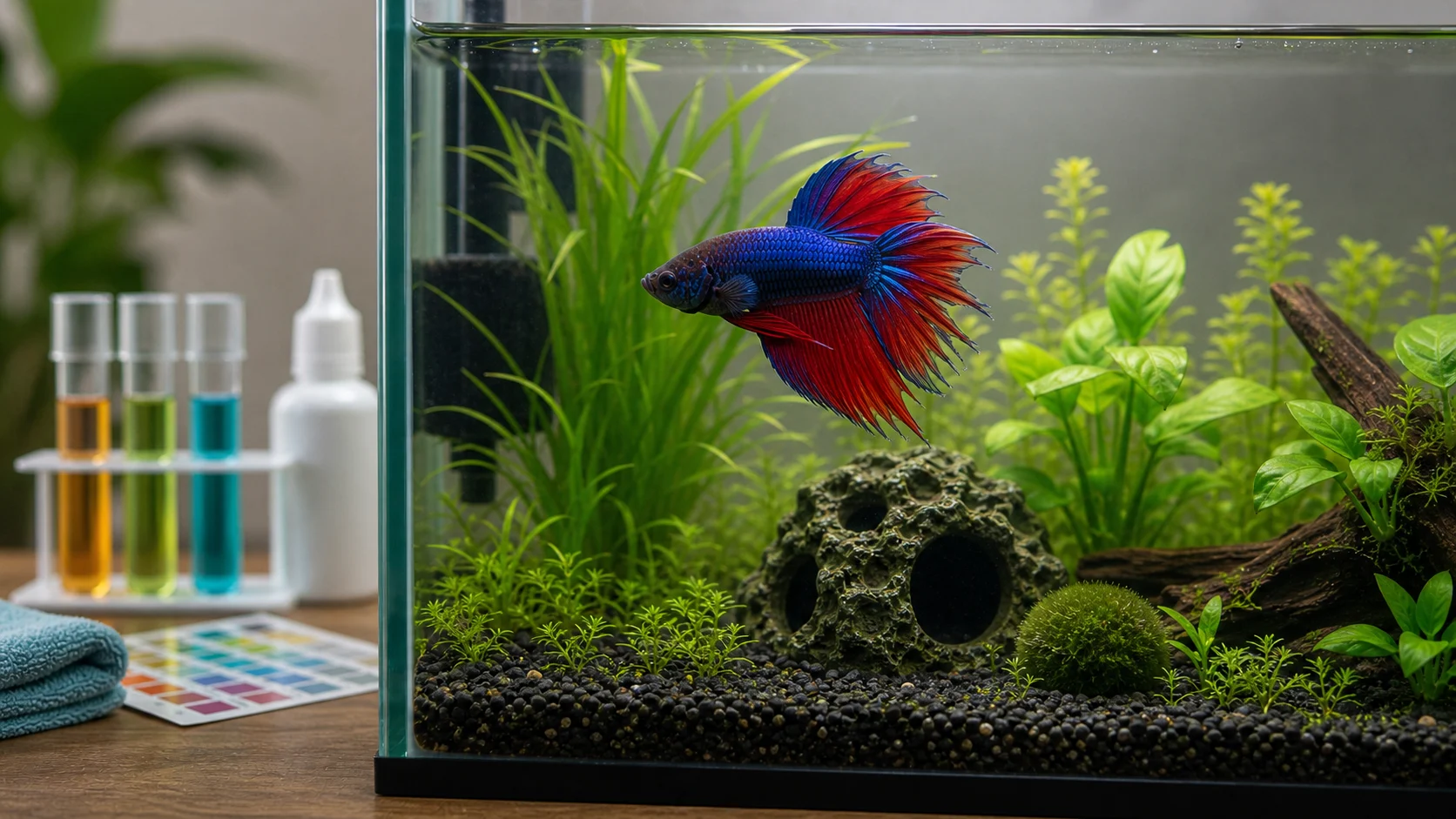
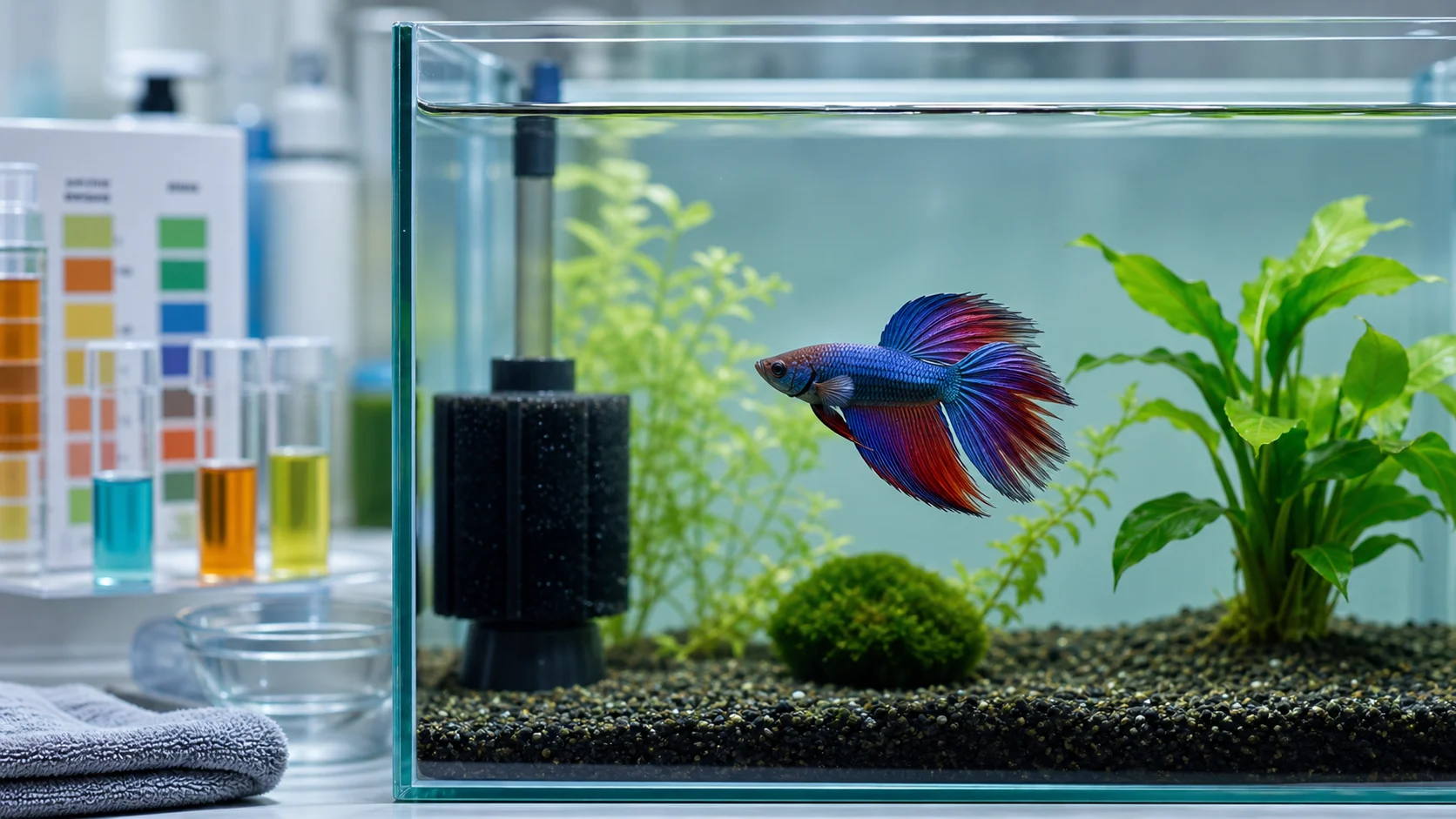
What betta fin rot can look like
Fin rot can show as ragged, shrinking, darkened, pale, fuzzy, or inflamed fin edges. The most important clue is progression: the fin edge keeps receding or looking worse instead of stabilizing.
Look at the whole fish, not only the fin edge. Lethargy, clamped fins, appetite loss, body sores, or rapid fin loss make the situation more concerning.
Fin rot vs torn fins
torn fins from sharp decorations, fin biting, rough handling, or tank mates can look similar at first. A torn fin often has a clear split and may stop worsening once the cause is removed.
Fin rot is more likely when the edge looks irritated, uneven, fuzzy, discolored, or continues to shrink over several days. Take photos under similar lighting so you can compare instead of relying on memory.
Check the tank before guessing
Test ammonia, nitrite, and nitrate. Review temperature, filter flow, sharp plastic plants, rough decorations, tank cleanliness, and whether any tank mate could be nipping fins.
Poor water quality and stress are common contributors to fin problems. Correcting the environment is part of the response even when more help is needed.
How to monitor progression
Take a clear photo every day or two. Compare the edge shape, color, and total fin length. Stable clear regrowth is different from continuing loss.
Do not keep moving the fish or changing treatments without a clear reason. Repeated stress can make recovery harder.
When fin damage is urgent
Fast fin loss, red or inflamed edges, fuzzy growth, body sores, severe lethargy, clamped fins, or refusal to eat should be evaluated carefully. This guide is educational and should not replace advice from an aquatic veterinarian or qualified fish health professional.
If your betta fins look ragged
Ragged fins can come from fin rot, torn fins, fin biting, sharp decorations, strong flow, or nipping tank mates. The most useful question is whether the damage is getting worse after the obvious cause is removed.
Check plastic plants, rough rocks, ornament holes, filter intake areas, and any tank mates. Then take a clear photo and compare the same fin edge after 24 to 48 hours.
Signs the ragged edge may be fin rot
Fin rot is more likely when the edge keeps receding, looks dark, pale, fuzzy, red, inflamed, or uneven in a way that spreads. A simple tear may look dramatic but should stabilize in clean water once the cause is fixed.
Water quality still matters in both cases. Even a physical tear can become harder to recover from if ammonia, nitrite, temperature stress, or dirty substrate are part of the picture.
Ragged fins without clear fin rot
If the fin edge looks ragged but does not keep receding, compare it with torn fins, fin biting, sharp decor, strong flow, or tank mate nipping. Fin rot is about progression and unhealthy edges, not just one uneven fin shape.
Use photos over several days. A stable tear with clear regrowth points in a different direction than a shrinking edge with redness, fuzziness, darkening, or spreading damage.