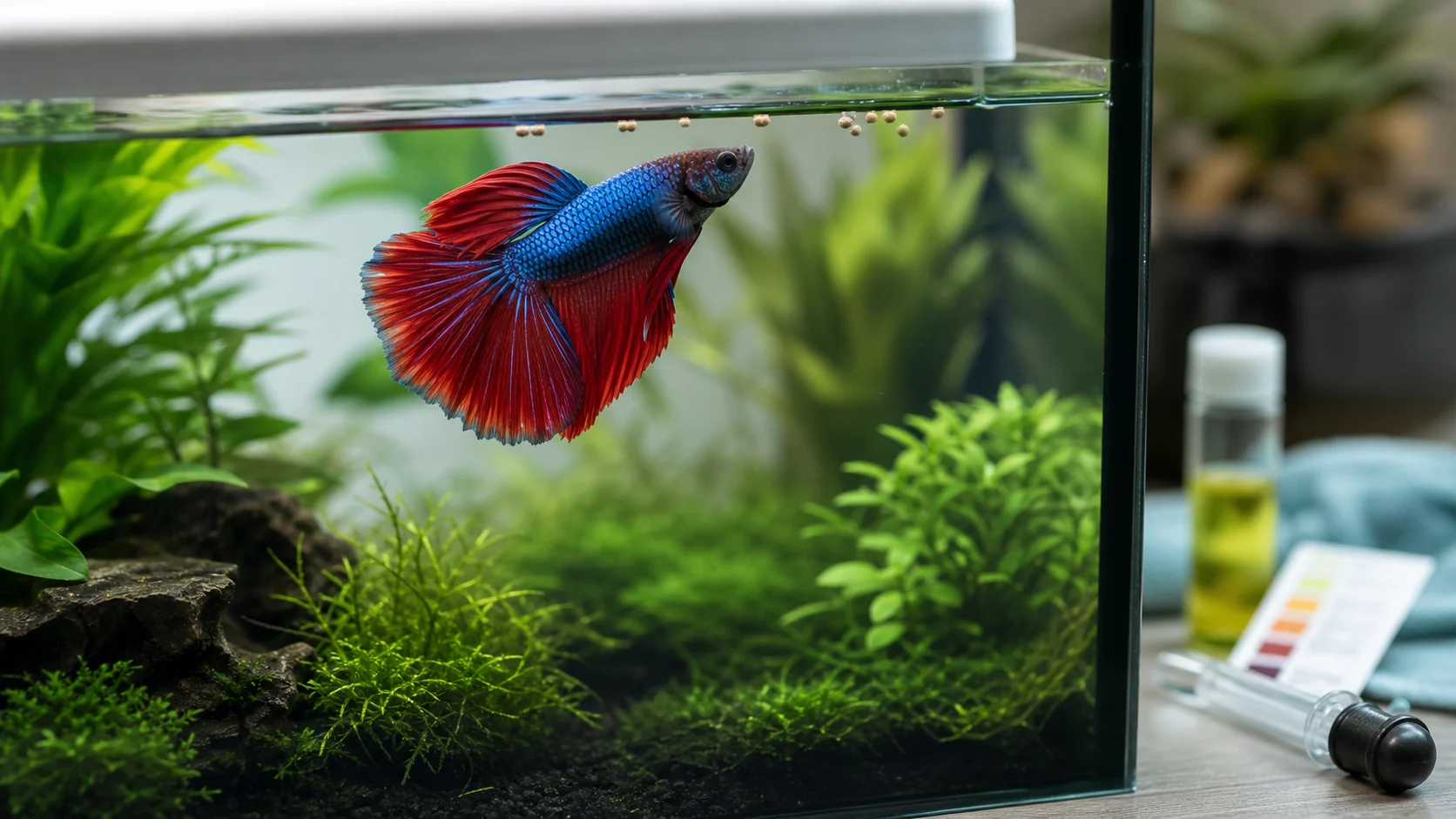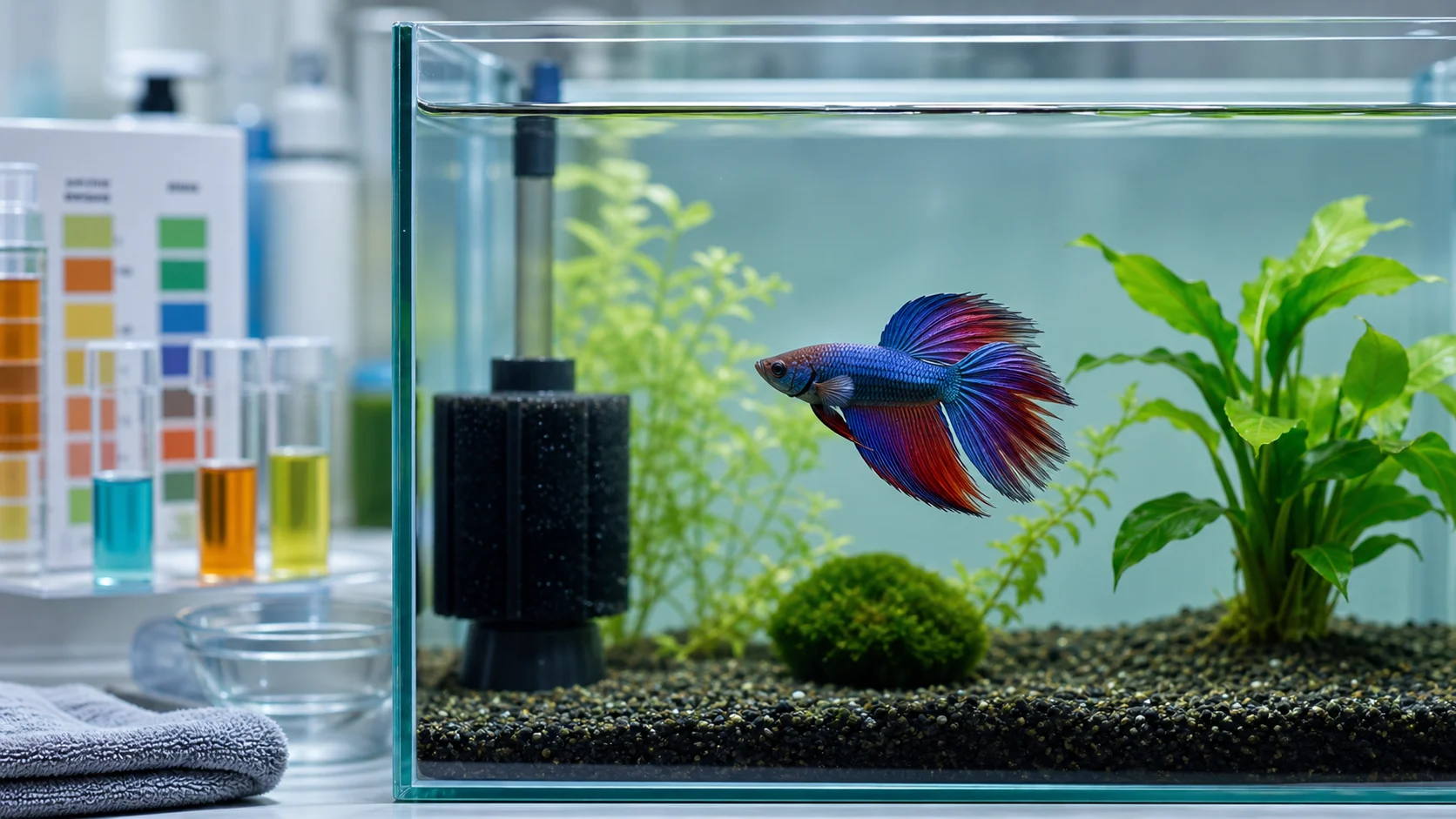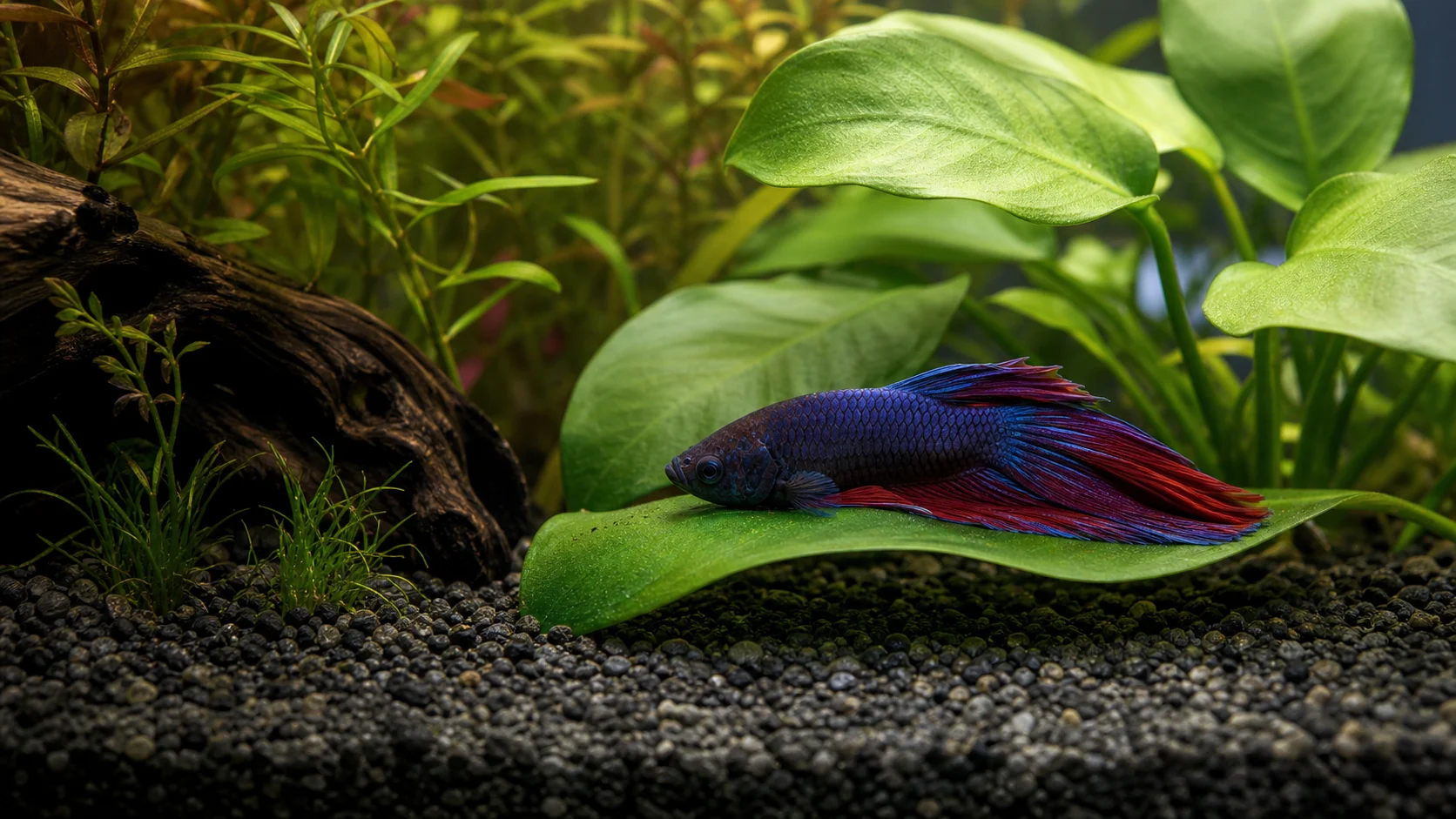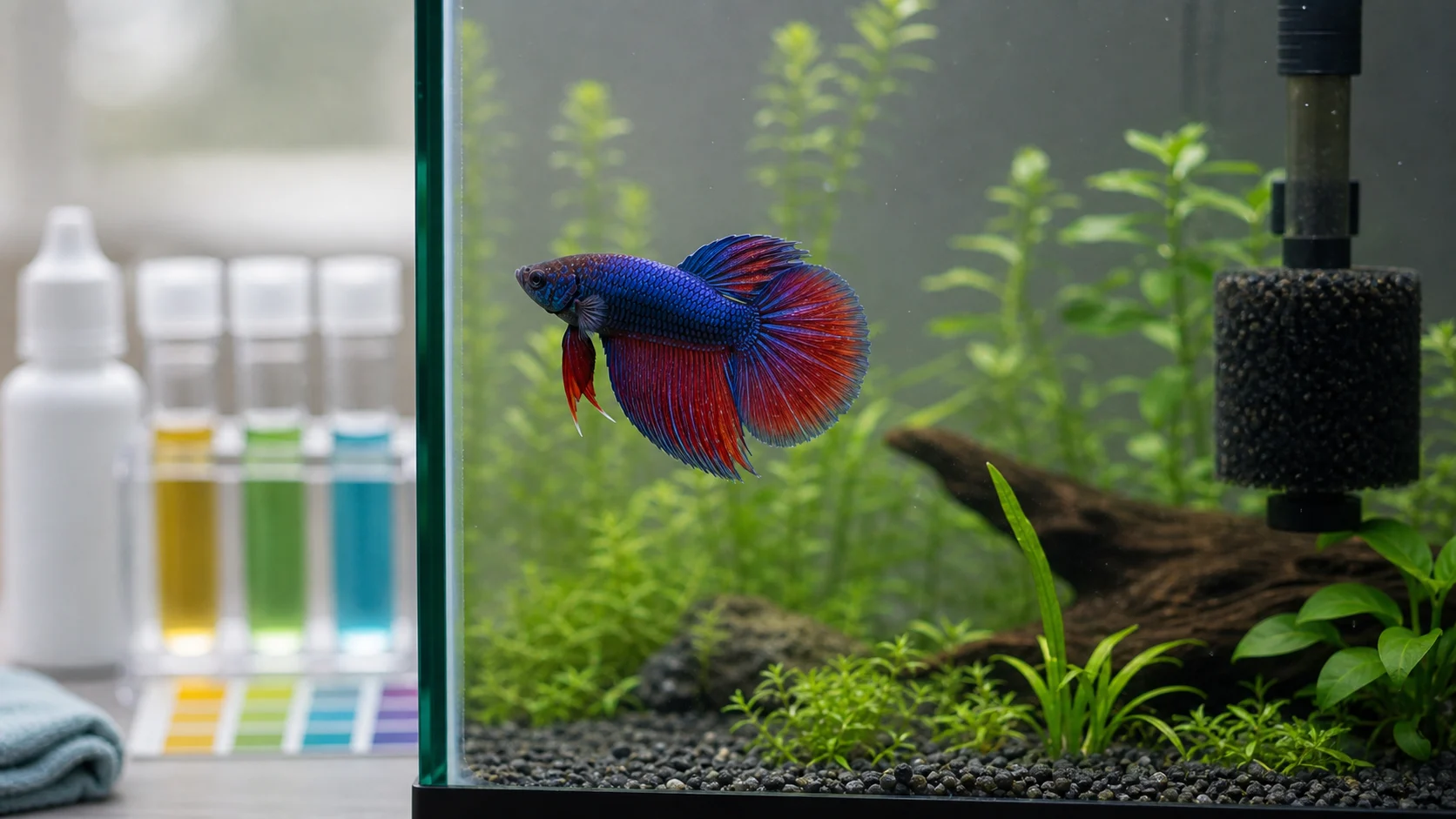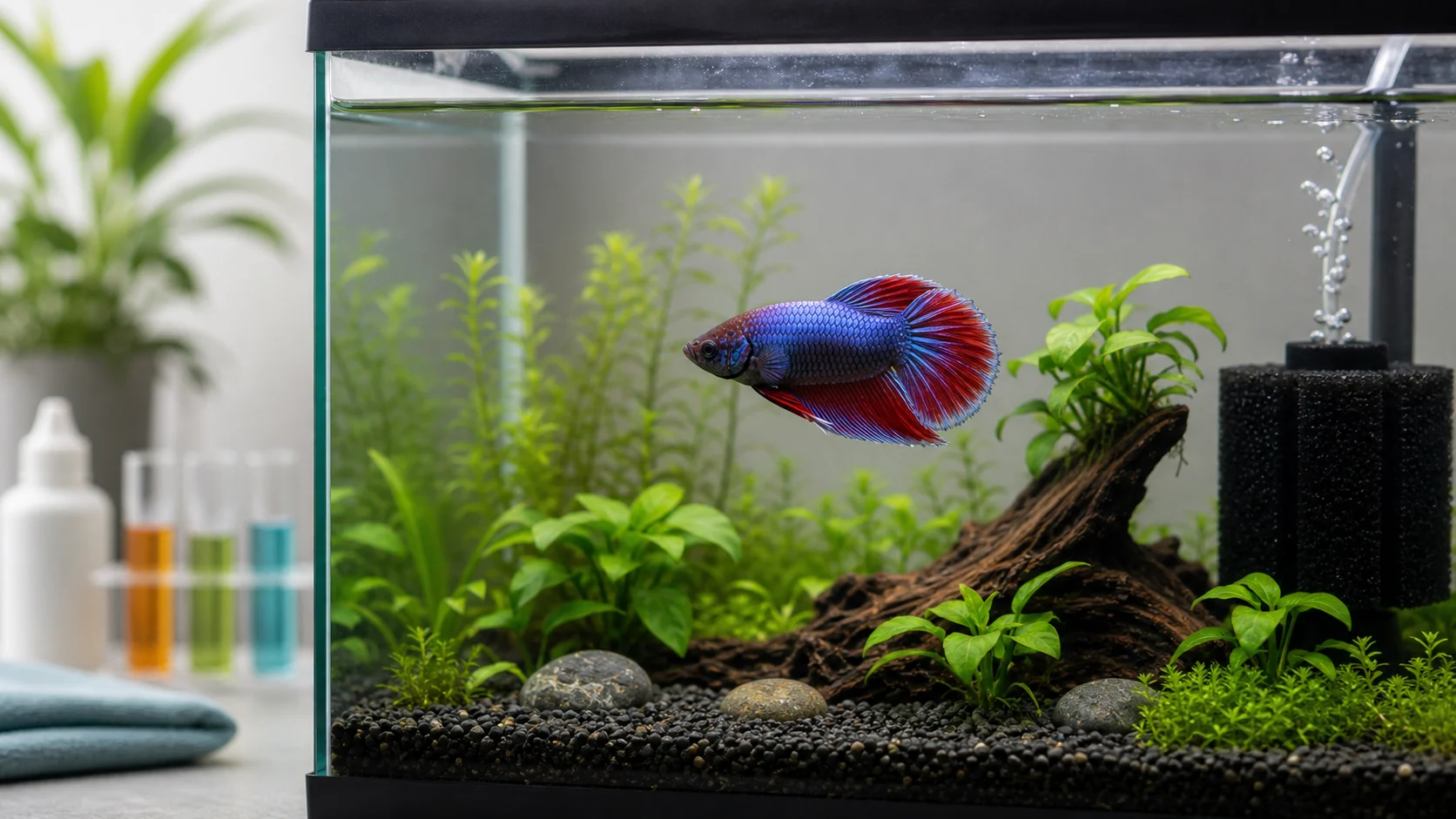
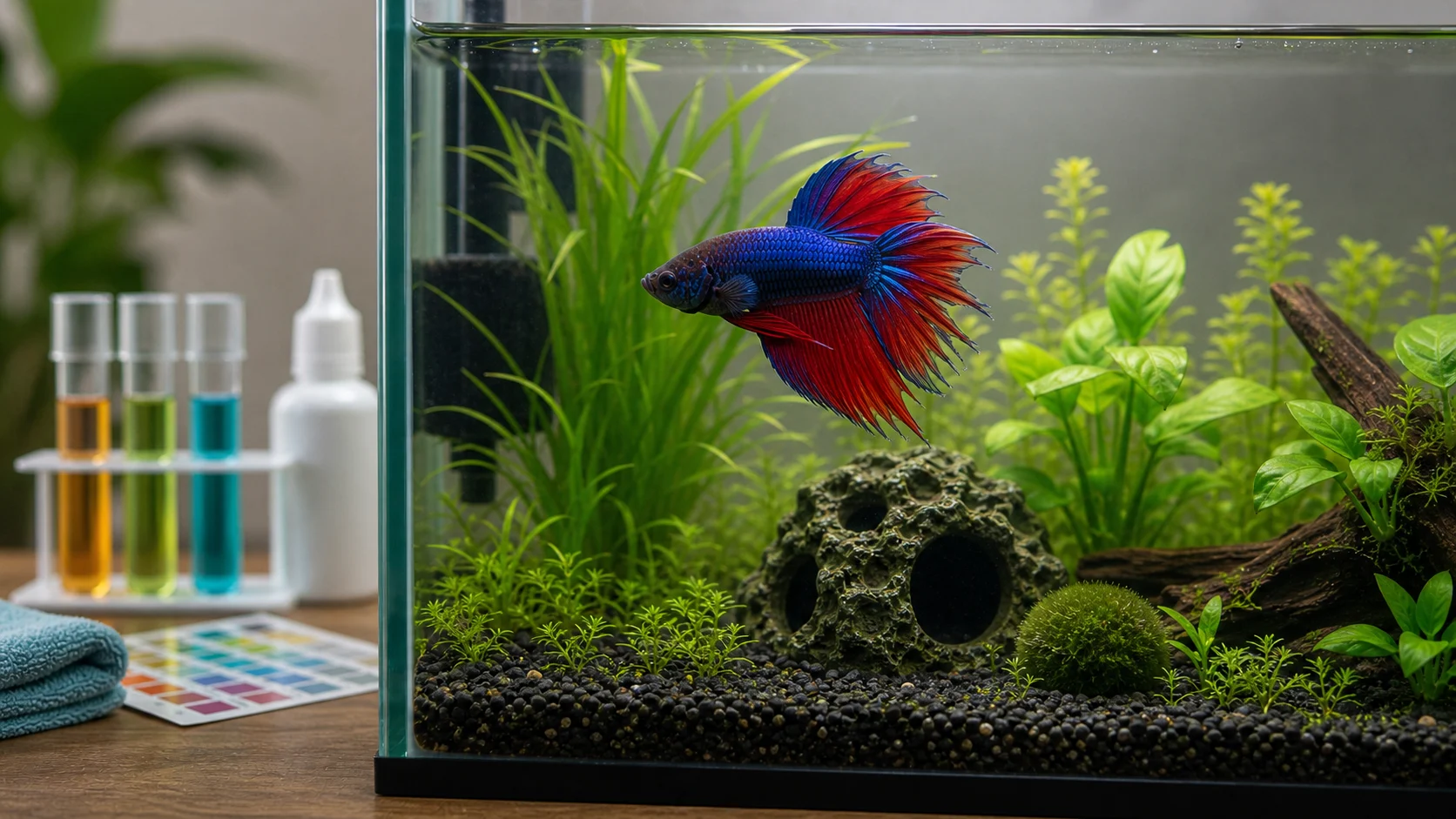
Quick answer: ragged fins are not always fin rot
Ragged fins can come from physical damage, fin biting, tank mate nipping, strong current, filter intake injury, or fin rot. The first question is whether the damage appeared suddenly or keeps getting worse over time.
Check the tank, water, and behavior before assuming a disease. A clean tear after a decoration scrape is different from fin edges that keep shrinking, darkening, reddening, turning pale, or looking fuzzy.
Torn fins vs ragged fins vs fin rot
Torn fins often look like splits, missing chunks, or uneven edges after a snag, bite, or scrape. Ragged fins is a broader description: it tells you what the fin looks like, not why it happened.
Fin rot is more likely when the edge keeps receding or looks inflamed, dark, pale, fuzzy, or unhealthy. Torn fins can become irritated in poor water, so both injury and water quality matter.
What to check first
Test ammonia and nitrite; both should read 0. Confirm stable warm water, then inspect plastic plants, caves, rocks, driftwood, filter intakes, and any tank mates.
Also watch for fin biting. Some bettas damage their own fins when stressed, bored, overstimulated, or struggling with strong current.
Common causes of ragged betta fins
Common causes include sharp decor, rough plastic plants, narrow holes, strong filter flow, fin biting, tank mate nipping, transport damage, handling stress, poor water quality, and progressive fin rot.
If the damage appears overnight in clean chunks, injury or biting may be more likely. If it slowly spreads over several days, fin rot or ongoing irritation deserves closer attention.
What to do safely
Remove or smooth sharp decor, reduce strong flow, protect filter intakes, separate aggressive tank mates, and keep water stable. Take clear photos so you can compare whether the fin edge is healing or shrinking.
Avoid aggressive treatment guesses. The safest first steps are removing the cause, testing water, and watching progression.
When ragged fins are urgent
Ragged fins are more concerning when they rapidly worsen or come with clamped fins, not eating, bottom-sitting, heavy breathing, red/inflamed edges, fuzzy patches, white spots, severe lethargy, or ammonia/nitrite above 0.
This guide is for general educational purposes and is not a substitute for advice from an aquatic veterinarian or qualified fish health professional.