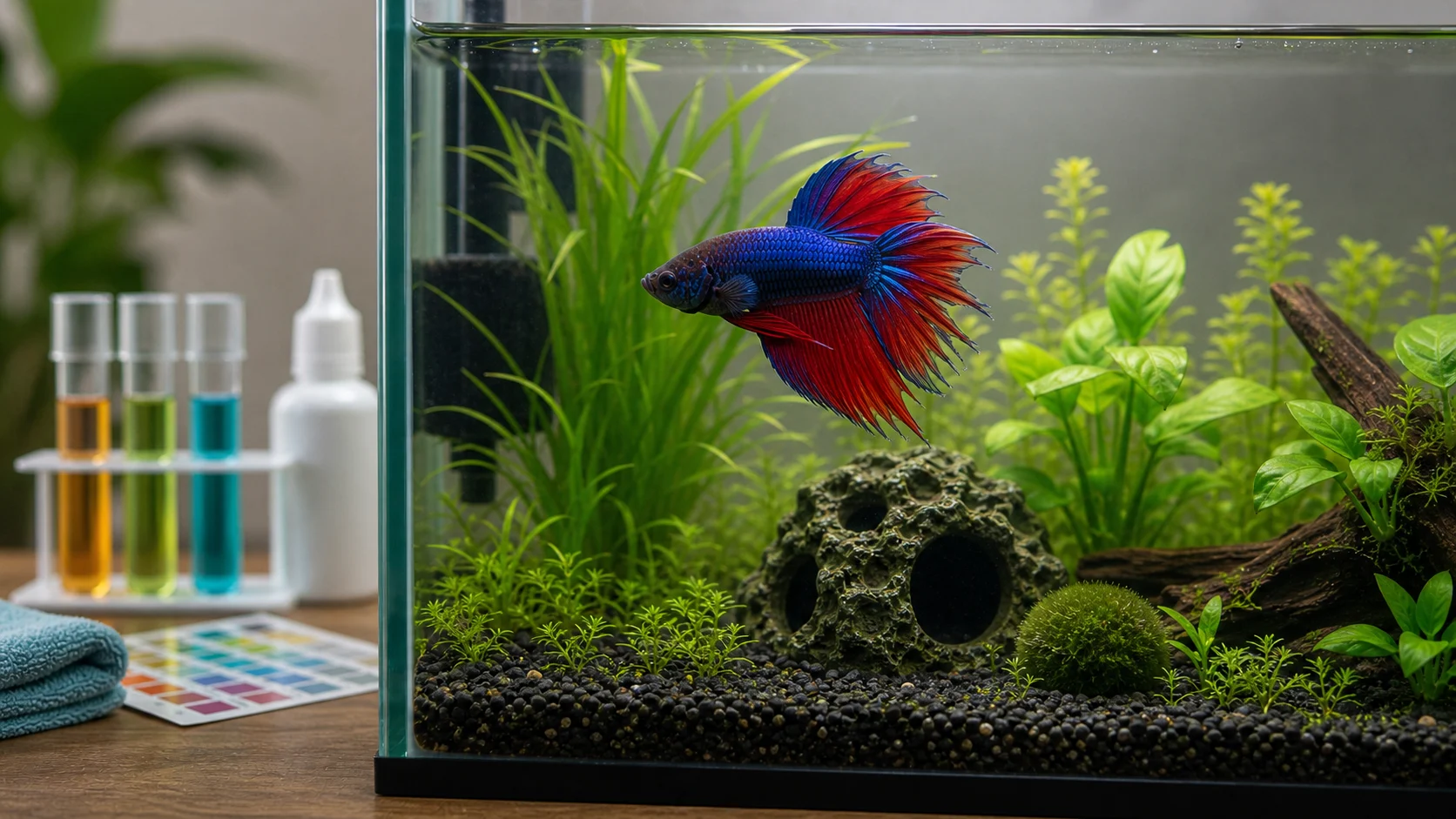
Can bettas bite their own tails?
Yes. Some bettas can bite or tear their own fins, especially long-finned bettas that can reach the tail. Owners often notice sudden chunks, uneven edges, or missing sections that appear quickly.
Tail biting is frustrating because it can look like fin rot, torn fins, or damage from tank mates. The first job is not to guess, but to rule out other causes.
Tail biting vs fin rot
Fin rot often looks like progressive fin loss, darkened or pale edges, inflammation, fuzzy growth, or damage that keeps creeping inward. Tail biting may look more like sudden clean chunks or C-shaped missing pieces.
The two can overlap. A bitten fin can become irritated in poor water, and fin rot can be mistaken for self-biting if the damage appears uneven.
Rule out physical damage first
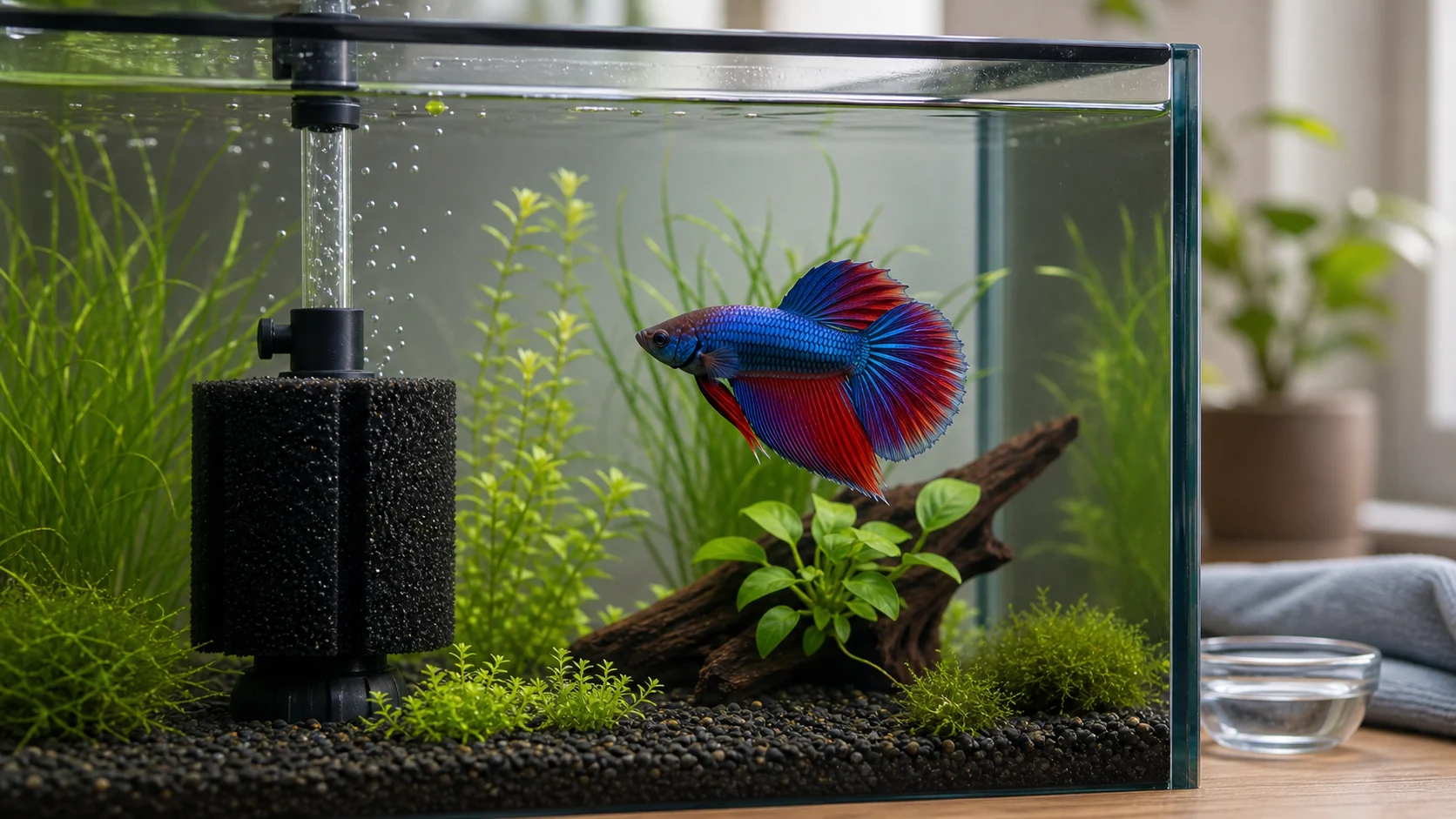
Check sharp plastic plants, rough rocks, narrow decoration holes, filter intake areas, strong current, and any tank mates. A betta may tear fins while squeezing through decor or fighting flow.
If the damage stops after removing a rough object or softening filter flow, the issue may have been environmental rather than self-biting.
Stress triggers to check
Possible triggers include strong current, bare tanks, boredom, reflection fighting, cramped space, poor water quality, sudden changes, or aggressive tank mates.
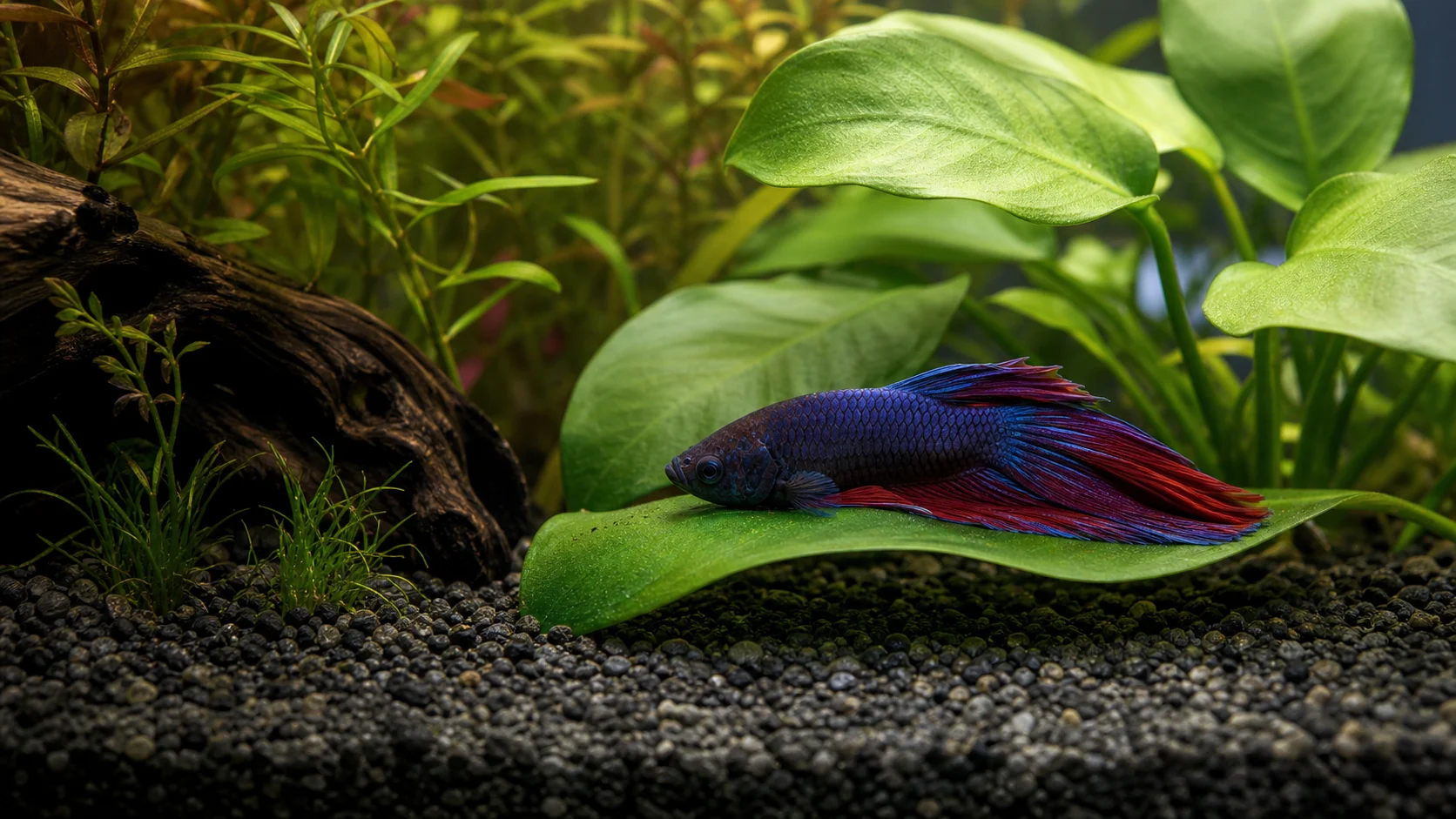
Look for glass surfing, hiding, clamped fins, stress stripes, not eating, or rubbing against objects. Those signs suggest the tank setup or water conditions need attention.
What to do first
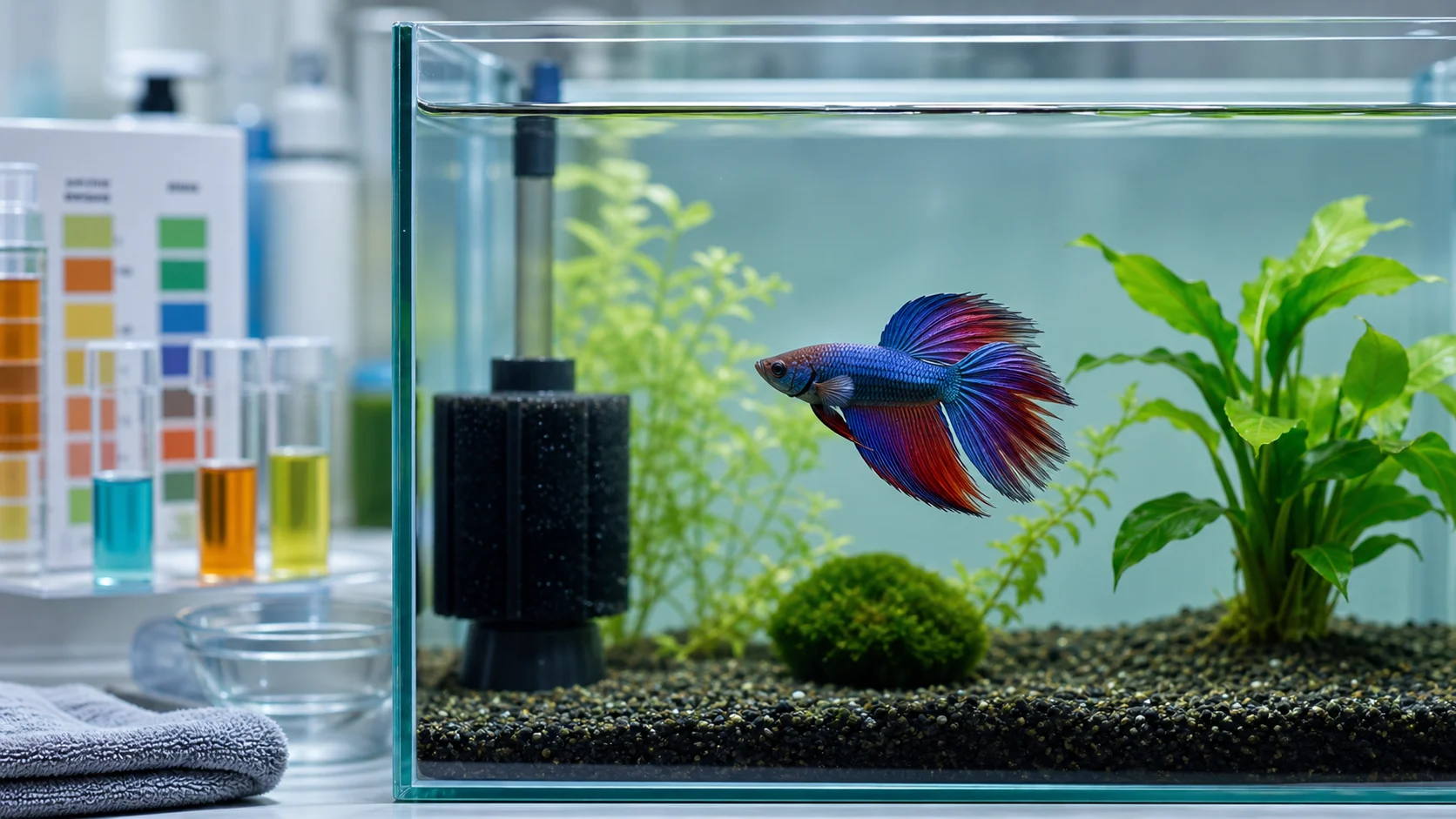
Test ammonia and nitrite, keep the water clean and stable, remove sharp decor, reduce strong flow, add safe cover, and take clear photos of the same fins every day or two.
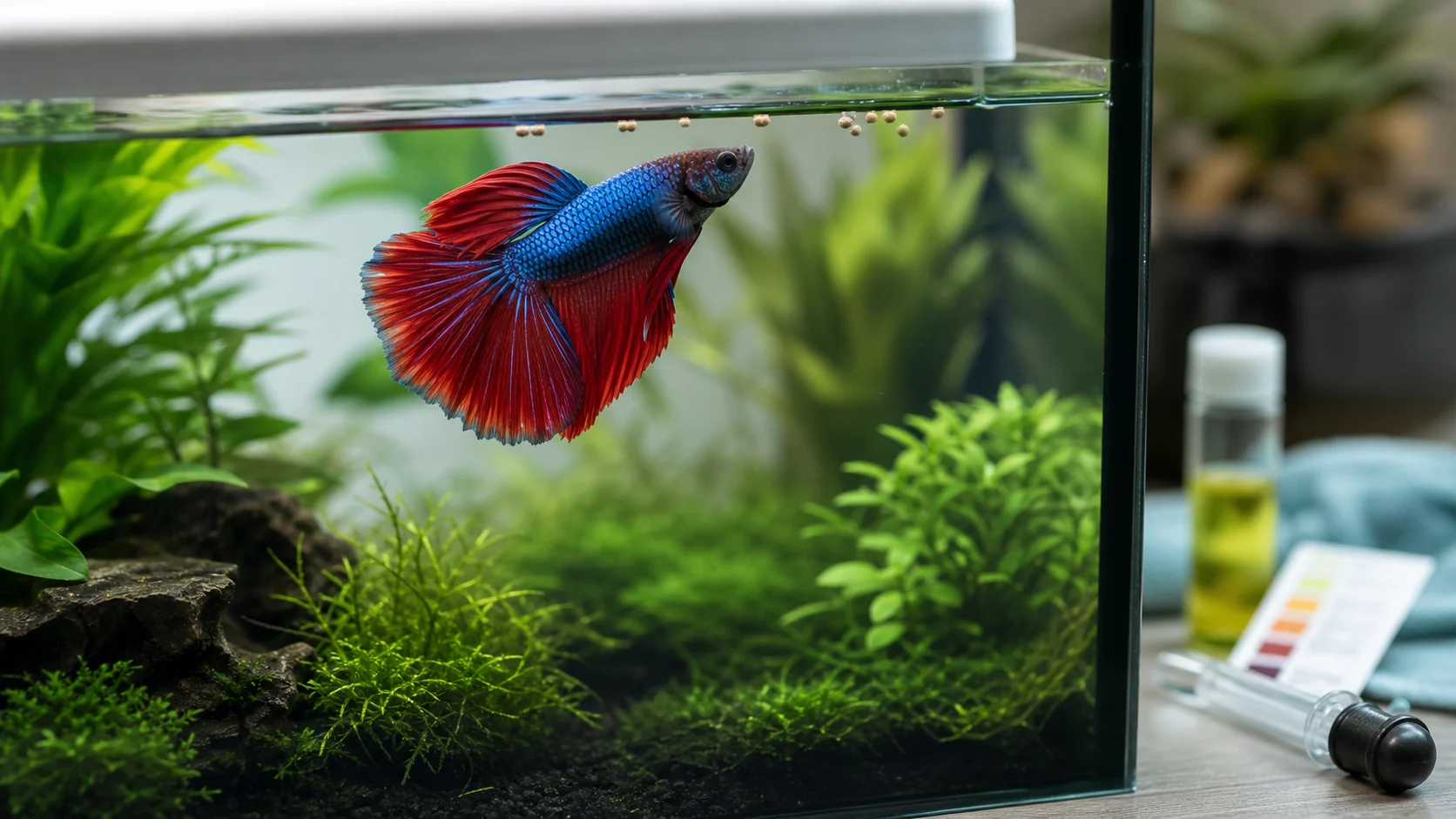
If you can, observe the betta quietly after lights change or feeding time. Catching the behavior directly is more useful than assuming every ragged fin is biting.
When fin damage is urgent
Treat fin damage as more urgent when the fins keep receding, edges look red or inflamed, fuzzy growth appears, the fish stops eating, becomes lethargic, clamps fins, or develops body sores.
This guide is educational and is not a substitute for advice from an aquatic veterinarian or qualified fish health professional.