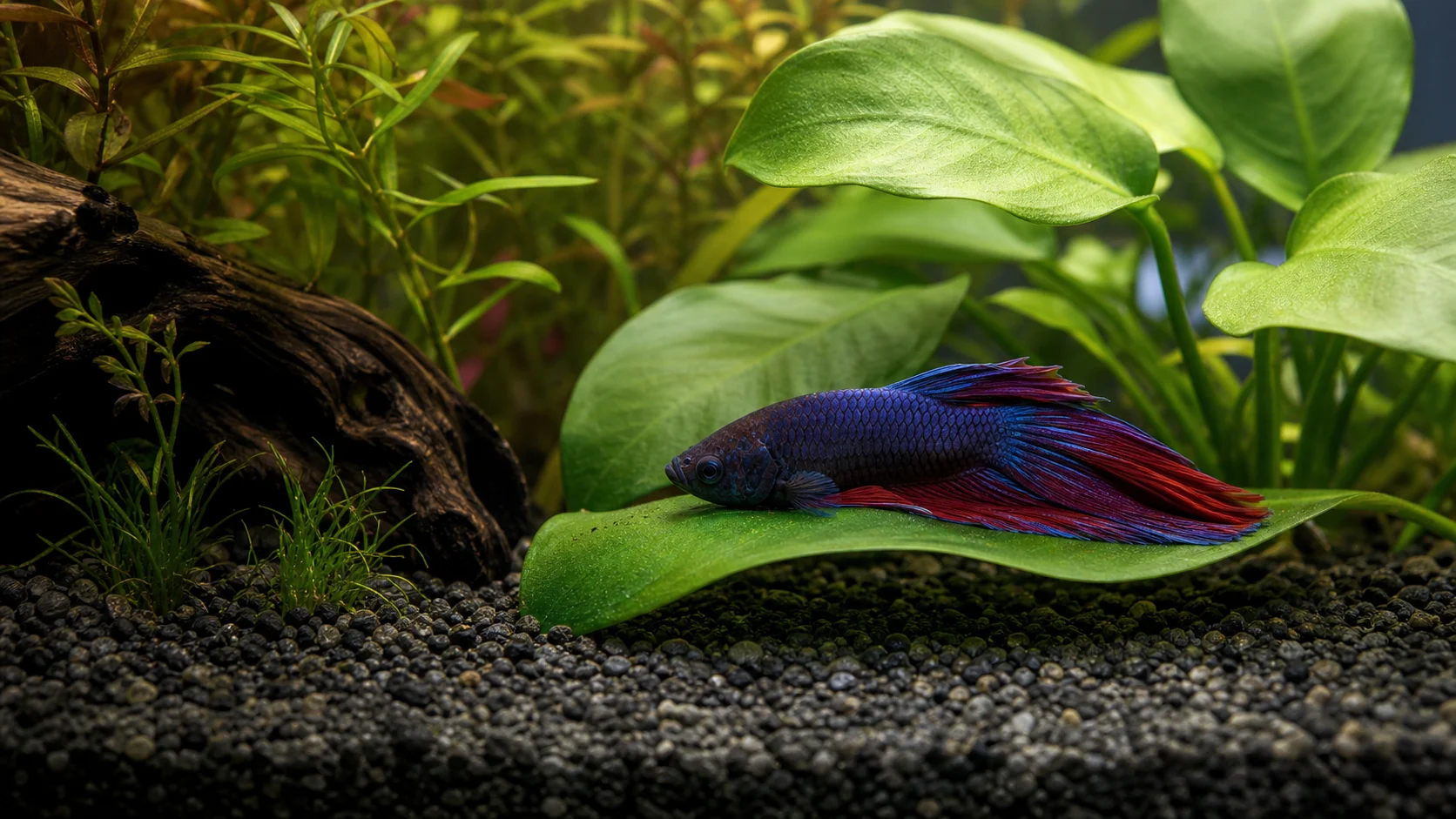

Quick answer: stress stripes mean check the tank
Stress stripes are usually horizontal pale or dark bands along a betta body. They are not a disease by themselves, but they can be a useful warning sign that the fish is stressed by something in the tank, routine, or recent change.
Start with the basics: ammonia, nitrite, water temperature, recent moves, water changes, bright light, strong filter flow, tank mates, and whether the betta has enough cover.
What stress stripes look like
Stress stripes are usually horizontal bands that run along the body. They may look lighter or darker depending on the betta color, and they can be easier to see on females, juveniles, and lighter-colored fish.
Because bettas can also marble, mature, heal, or fade for other reasons, do not judge by color alone. Look at the full pattern and the behavior that appeared with it.
Stress stripes vs normal color change
Normal color change is often gradual and may happen while the fish still eats, swims, explores, and breathes normally. Stress stripes are more suspicious when they appear suddenly after a move, tank change, water problem, lighting change, or new tank mate.
They are also more concerning when they appear with clamped fins, hiding, glass surfing, fast breathing, bottom sitting, gasping, or not eating.
What to check first
Test ammonia and nitrite first; both should be 0. Then confirm the actual water temperature with a thermometer rather than guessing from room temperature or heater settings.
Review what changed in the last few days: a new fish, snail, plant, decoration, filter cleaning, water change, different food, bright light schedule, loud activity near the tank, or transport from a store.
Common causes
Common causes include transport, a new aquarium, poor water quality, cold or unstable temperature, strong current, aggressive tank mates, bright light, lack of plants or hiding places, sudden noise, or repeated handling.
Stress can stack. A betta may tolerate one small change, but a new tank plus bright light plus unstable water can be enough to show stripes.
New betta stress stripes
A new betta may show stress stripes after shipping, bagging, store conditions, acclimation, or being placed in a new aquarium. Keep the tank calm, dim the lights, avoid tapping or chasing, and give the fish time to settle while you verify water conditions.
Do not keep rearranging the tank every few hours. Stability makes it easier to see whether the fish is improving.
How to reduce stress safely
Keep lights moderate, provide soft cover, reduce strong filter flow, remove uneaten food, and keep the water warm and stable. Add hiding places gradually if the tank is bare, but avoid a full redesign while the fish is already stressed.
Make one careful change at a time when possible. If everything changes at once, it is harder to know what helped or what made the stress worse.
When stress stripes are more urgent
Stress stripes deserve faster attention when they come with not eating, clamped fins, gasping at the surface, bottom-sitting, bloating, white spots, torn fins, red gills, severe lethargy, or ammonia/nitrite above 0.
Those signs do not prove one specific disease, but they do mean you should treat the situation as more than a cosmetic color change.
Common mistakes
Common mistakes include assuming stress stripes are always harmless, adding medication before testing water, changing too many things at once, leaving bright lights on all day, ignoring strong flow, or adding tank mates before the betta is settled.
Avoid aggressive treatment guesses. The safest first step is usually to confirm the environment, reduce obvious stressors, and observe whether appetite, breathing, fins, and activity improve.
When to ask for help
If stress stripes persist with worsening behavior, breathing trouble, severe lethargy, visible wounds, bloating, or repeated abnormal test results, seek advice from an aquatic veterinarian or qualified fish health professional.