
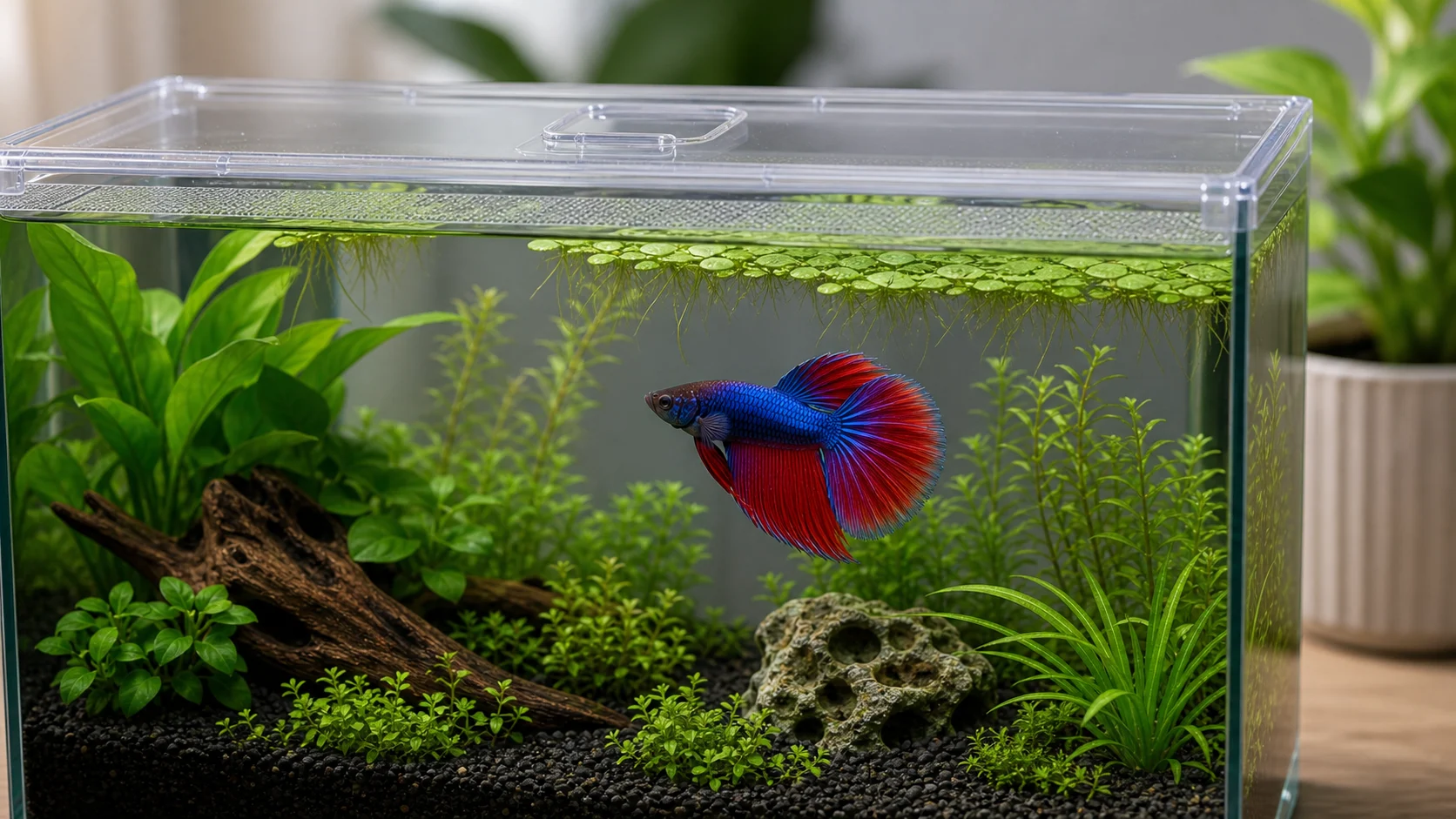
Quick answer: cover every gap
Betta fish can jump out of tanks, sometimes through openings that look too small to matter. Gaps around filters, cords, feeding doors, back corners, and loose lids are common escape routes.
Use a fitted lid, aquarium-safe mesh, or another safe cover that blocks escape routes while still allowing normal air exchange. Do not seal the tank airtight.
Why bettas jump
A betta may jump while feeding, chasing food, reacting to movement, exploring the surface, or being startled. Some bettas are simply more surface-oriented than others.
Repeated jumping or frantic surface behavior deserves a tank check. Possible triggers include ammonia, nitrite, unstable temperature, strong filter flow, reflections, aggressive tank mates, low cover, or a bare tank that feels exposed.
Check water and stress first
If jumping is new or repeated, test ammonia and nitrite, confirm temperature with a thermometer, and look for signs of stress such as glass surfing, clamped fins, hiding, gasping, rubbing, pale color, or not eating.
Clear water can still have unsafe chemistry. A jumping betta is not automatically sick, but water and stress checks are the safest first step.
Fix lid gaps safely
Inspect the tank from above. Cover filter cutouts, heater cord gaps, feeding slots, and back corners. Many escapes happen through small openings behind equipment.
Use aquarium-safe mesh, a fitted lid, or a rigid cover that cannot fall into the tank. Leave access to humid air above the water and keep surface exchange normal.
Feeding and jumping
Some bettas learn to jump for food. Keep the lid on during feeding when possible, lower food gently, and avoid making the fish leap toward fingers, tweezers, or food rings near open gaps.
If the fish jumps at feeding time, treat it as a safety issue first: cover the tank, then keep feeding calm and predictable.
After a betta jumps out
If the betta is out of the tank and still alive, move calmly. Return it gently to clean, temperature-matched tank water, dim the room if needed, and reduce disturbance.
Watch breathing, balance, skin, eyes, fins, and swimming afterward. The fish may be stressed or injured even if it initially revives.
Prevention checklist
- Use a fitted lid or safe mesh.
- Cover filter, cord, feeding, and back-corner gaps.
- Test ammonia and nitrite after sudden jumping.
- Keep temperature stable.
- Reduce strong flow and harsh reflections.
- Add plants or cover near the surface.
- Avoid encouraging jumps during feeding.
When it is urgent
Treat the situation as urgent if the fish jumped out and is injured, breathing poorly, unable to swim, clamped, pale, bleeding, covered in debris, or declining after being returned to the tank.
This guide is for general educational purposes and is not a substitute for advice from an aquatic veterinarian or qualified fish health professional.


