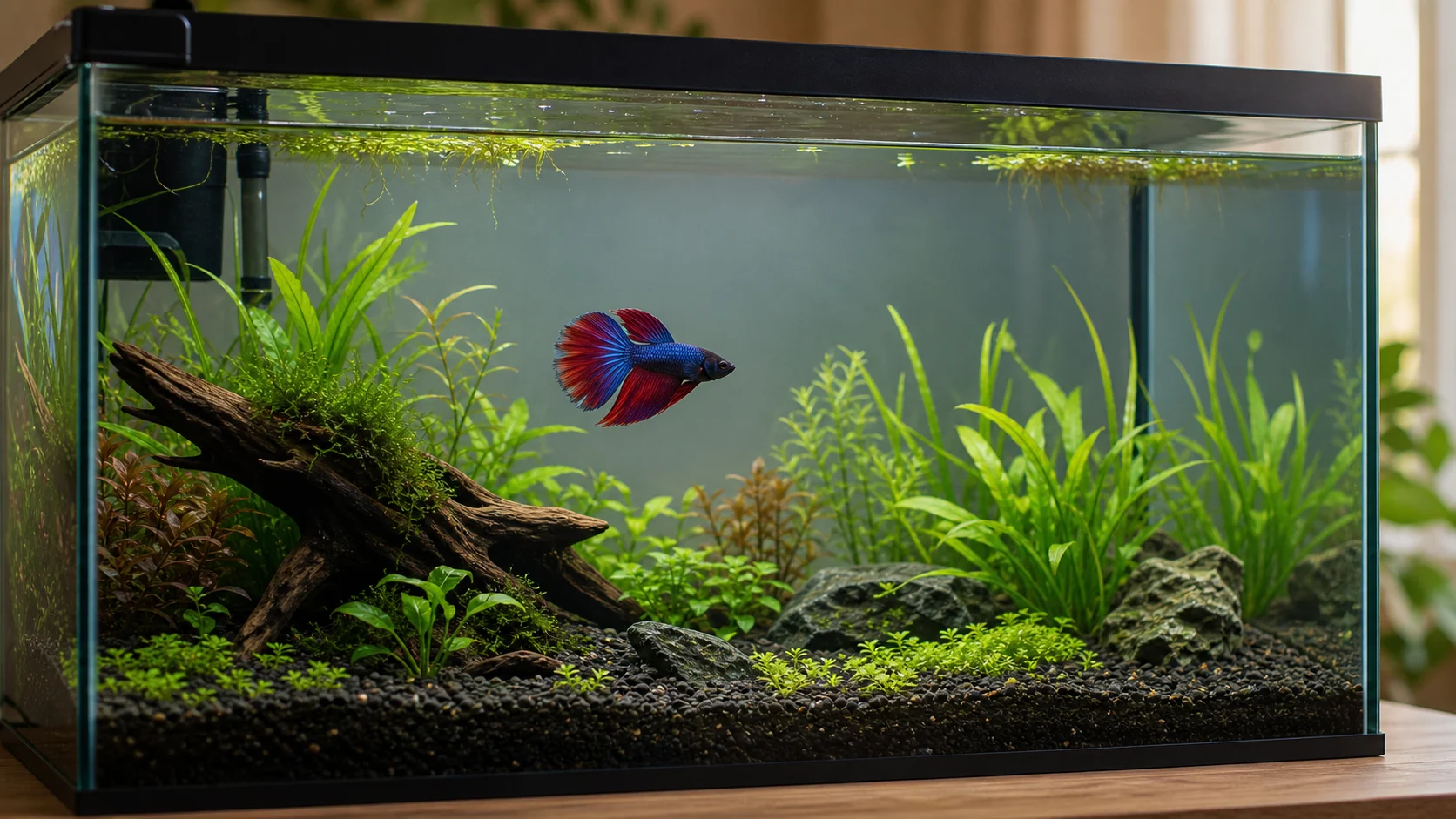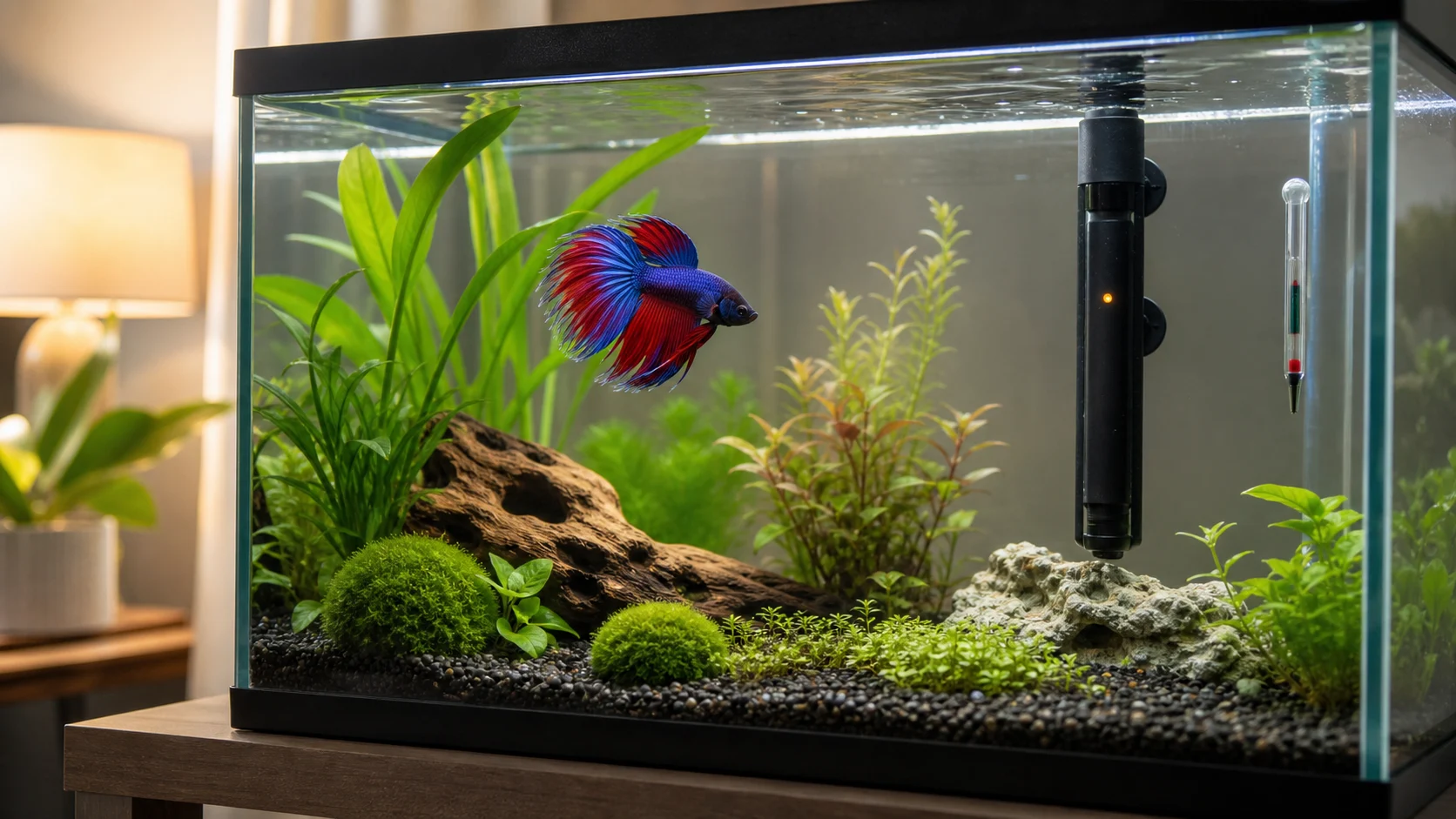
Quick answer: most betta tanks need a lid
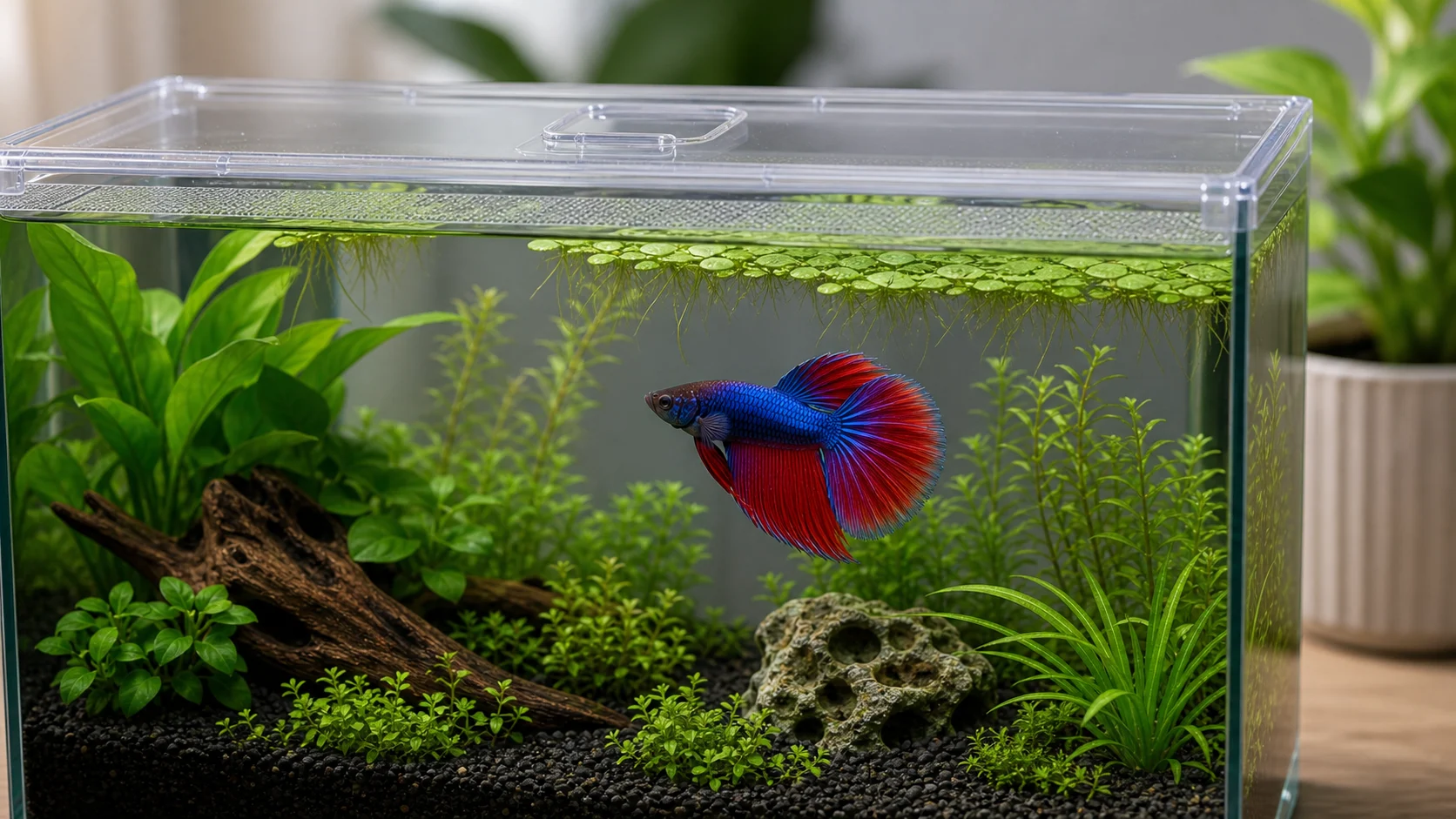
Most betta tanks should have a secure lid or aquarium-safe mesh cover. Bettas can jump, and even calm fish may escape through small gaps around filters, cords, feeding holes, and back corners.
The lid should block escape routes without sealing the tank airtight. Bettas still need access to warm, humid air above the water, and the aquarium needs normal gas exchange.
Why bettas jump
Bettas may jump during feeding, when startled, while exploring the surface, or when reacting to movement above the tank. Repeated jumping can also happen when the fish is stressed.
Possible stress triggers include poor water quality, strong current, harsh reflections, tank mates, an exposed layout, or unstable temperature.
Gaps that matter
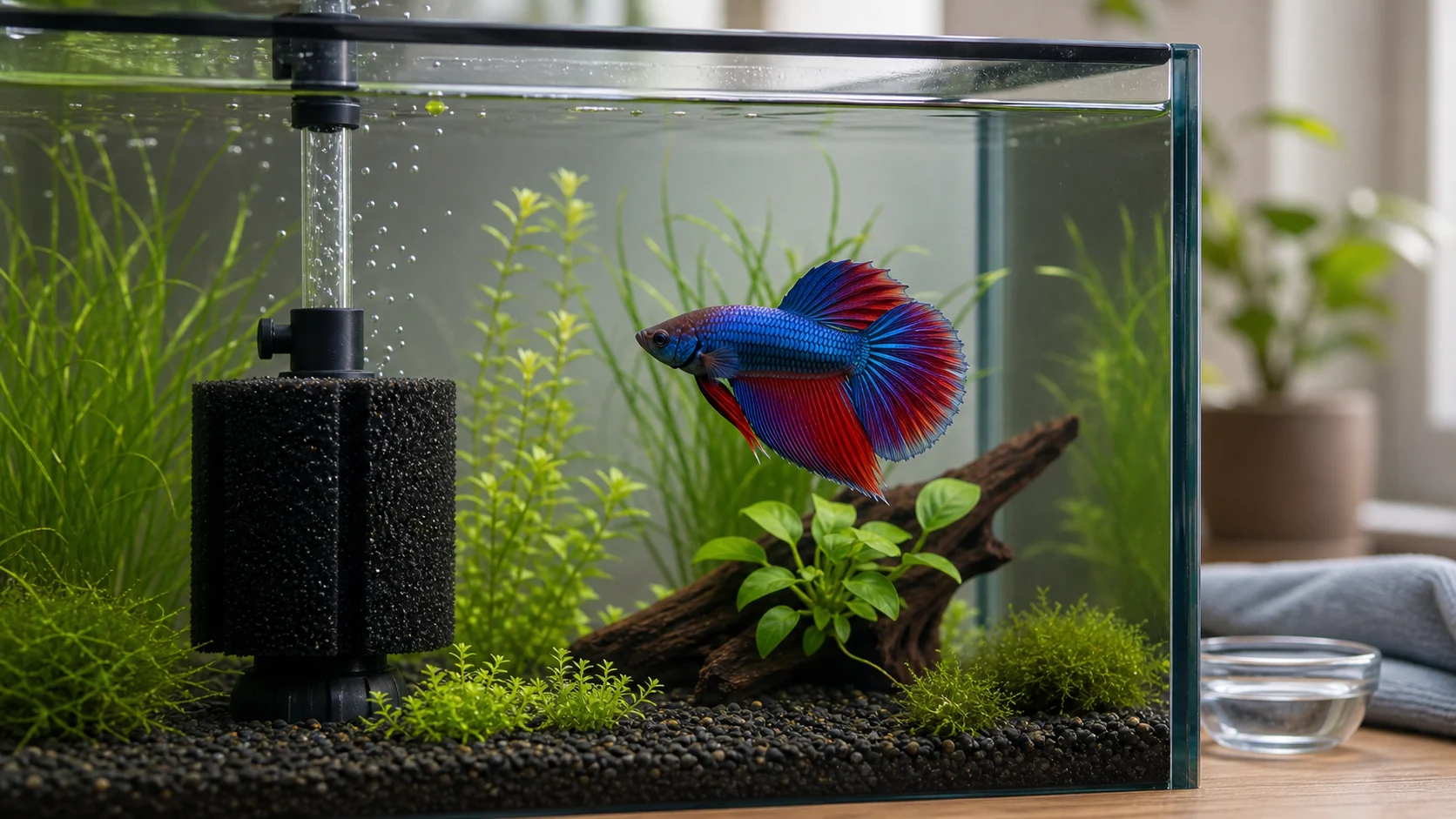
Check the tank from above, not only from the front. Common escape routes include filter cutouts, heater cord gaps, airline tubing openings, feeding doors, back corners, and spaces around clip-on lights.
A gap that looks small can still be risky. Bettas are surface-oriented fish and can launch upward faster than many beginners expect.
Safe lid and mesh options
A fitted glass, acrylic, or plastic aquarium lid can work well if it covers equipment gaps. Aquarium-safe mesh can also help cover awkward openings while allowing air exchange.
Avoid loose covers that can fall into the tank, sharp metal edges, mystery materials, or covers that block all airflow.
Surface access and airflow
Do not seal the tank airtight. Bettas breathe air at the surface with their labyrinth organ, and the air above the water should stay accessible.
Normal aquarium lids and mesh covers leave enough air exchange. The goal is escape prevention, not a sealed container.
Feeding with a lid
Keep the lid on during feeding when possible. Some bettas learn to jump toward fingers, tweezers, food rings, or pellets dropped from above.
Use a feeding opening carefully, close it afterward, and avoid encouraging high jumps near open gaps.
What to check if your betta tries to jump
If jumping is new or repeated, check ammonia, nitrite, temperature, filter flow, reflections, and tank mates. Also watch for glass surfing, gasping, clamped fins, hiding, or not eating.
Jumping is not always a disease sign, but it is a good reason to inspect both tank safety and tank conditions.
Common lid mistakes
Common mistakes include covering only the front of the tank, leaving filter gaps open, forgetting feeding doors, using unstable DIY covers, removing the lid during feeding, and assuming a calm betta will never jump.
A secure lid is simple prevention. It is much easier than trying to save a fish after an escape.