
Why bettas lose color
Betta fish can fade, turn pale, or develop white areas for several reasons. Some are harmless, like normal aging or marble genetics. Others are warning signs, especially when color loss appears suddenly with behavior changes.
Do not judge color alone. A betta that is active and eating normally is different from a betta that is pale, clamped, hiding, breathing heavily, or not eating.
Normal color change vs stress
Some bettas naturally change color over time. Marble bettas, in particular, can shift color dramatically without being sick.
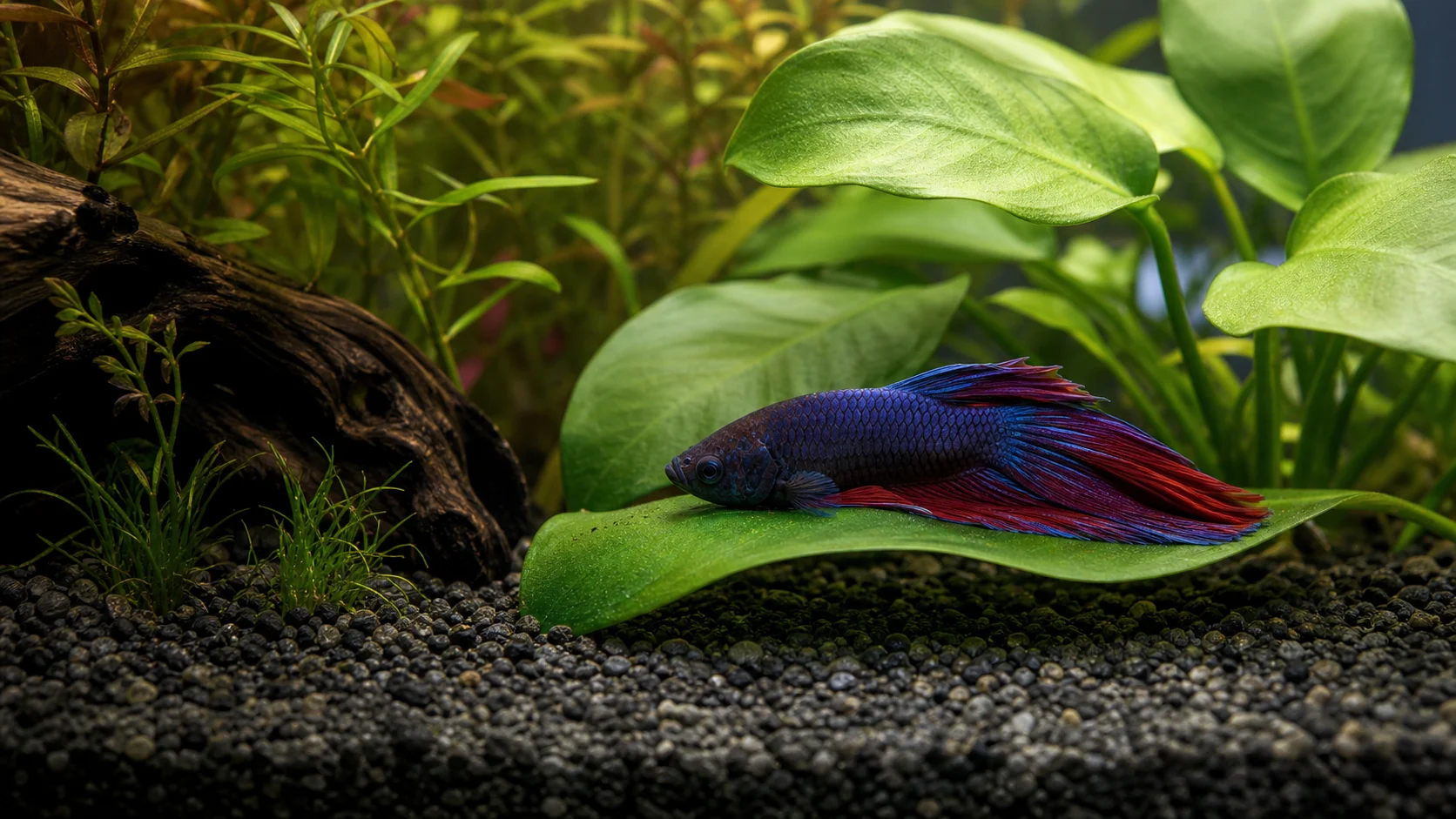
Stress-related fading often comes with other clues: clamped fins, hiding, glass surfing, poor appetite, bottom-sitting, or dull behavior. In that case, check the tank before assuming the fish is simply changing color.
Water quality and temperature
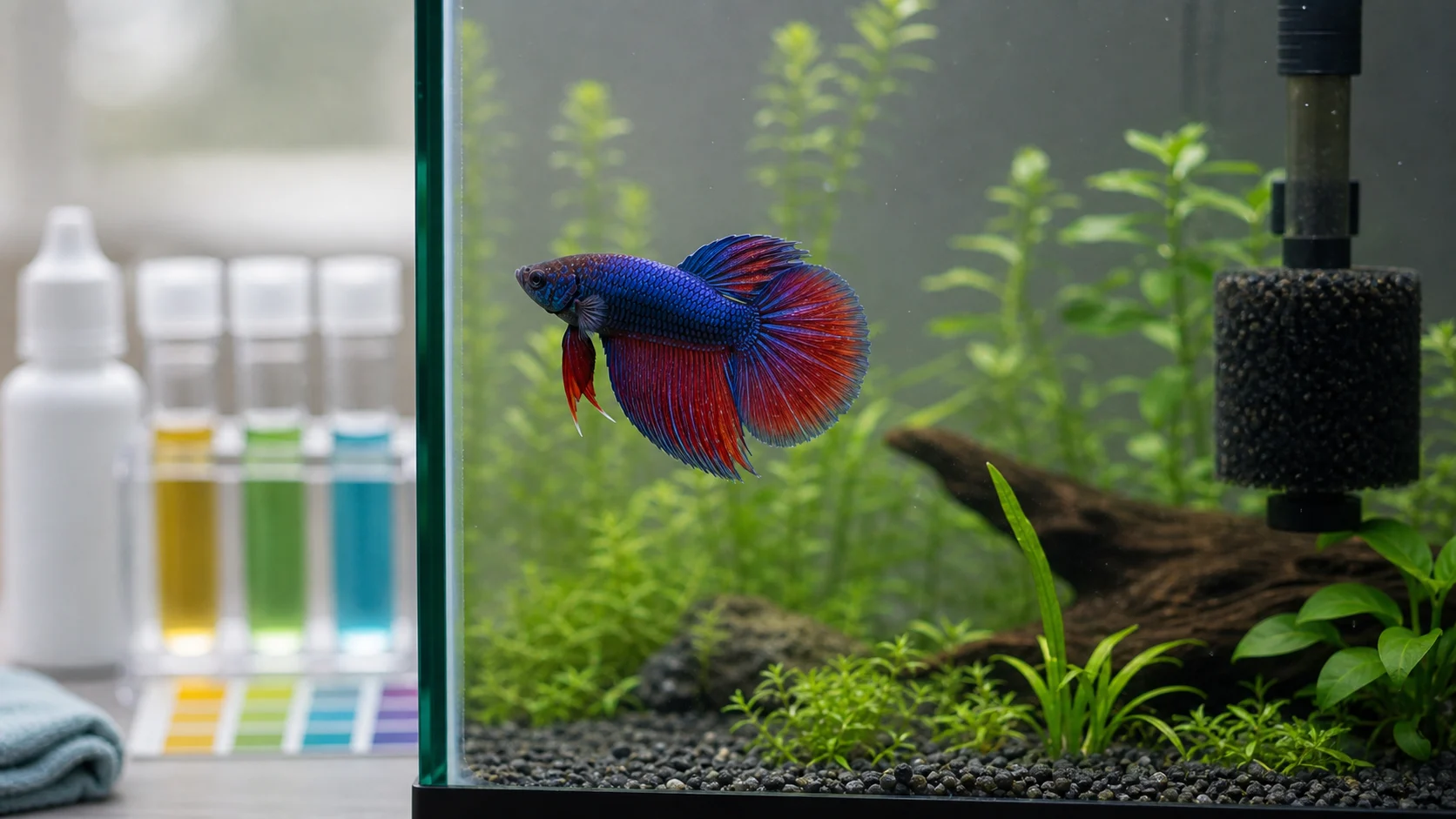
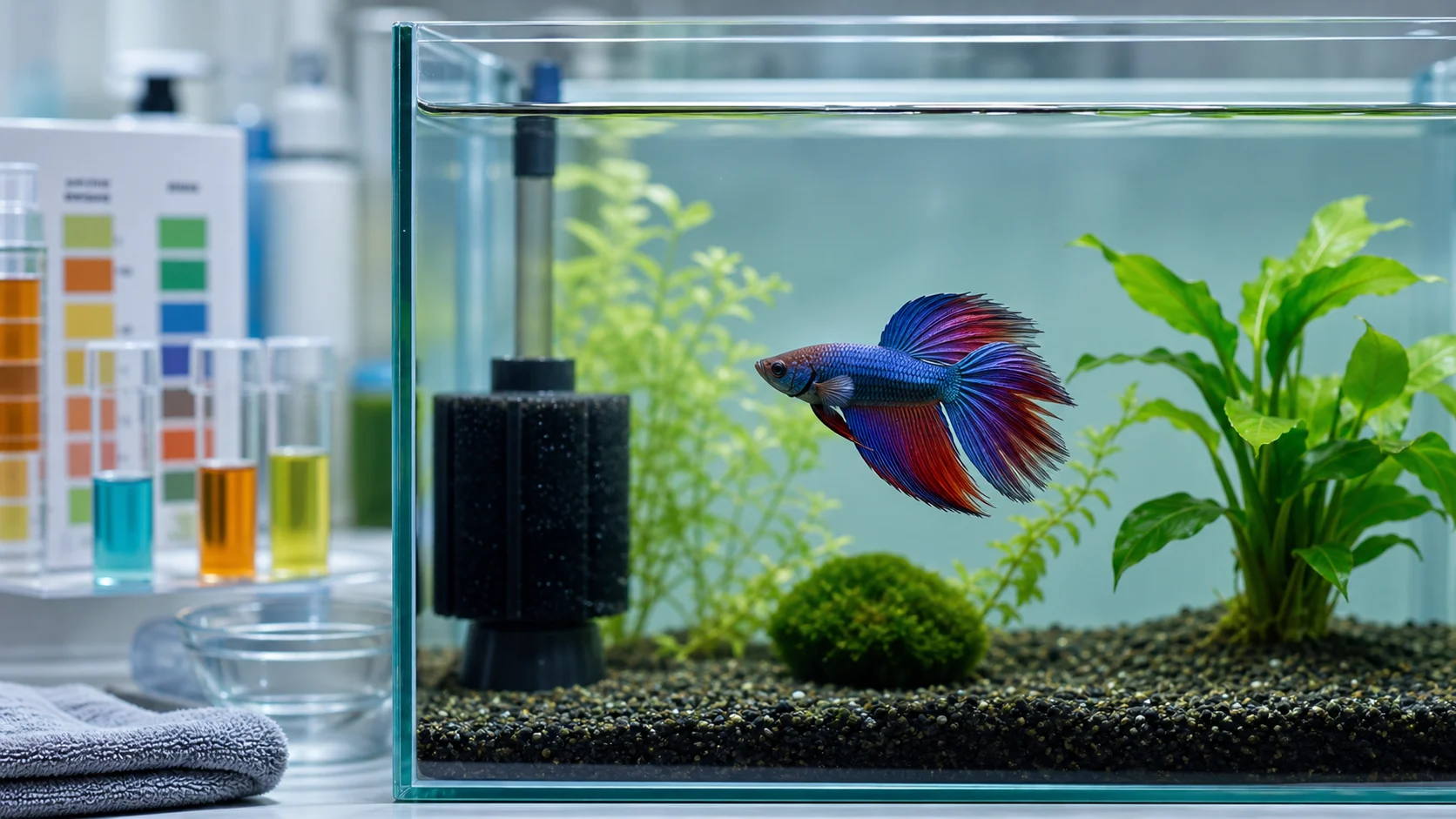
Poor water quality and cold water can make a betta look dull, pale, or washed out. Test ammonia and nitrite, confirm temperature with a thermometer, and review recent water changes, filter cleaning, or new tank additions.
Clear water does not prove safe water. A betta can lose color or act stressed while the tank still looks clean.
White patches, spots, or fuzzy areas
Patchy white areas may point to a different problem than general fading. white spots, fuzzy growth, pale damaged fins, or dust-like color changes should be compared with other symptoms.
Look for flashing, clamped fins, heavy breathing, appetite loss, ragged fins, or spreading spots. Those signs make the color change more urgent.
What to check first
Start with the basics: ammonia, nitrite, nitrate, temperature, appetite, breathing, fin condition, and whether the change happened suddenly.
Take photos under similar lighting every day or two. Photos make it easier to tell whether the color is stable, spreading, or linked to fin/body damage.
When color loss is urgent
Treat color loss as urgent when it comes with gasping, heavy breathing, not eating, bottom-sitting, clamped fins, white spots, fuzzy patches, pineconing scales, rapid fin loss, or sudden severe lethargy.
This guide is educational and is not a substitute for advice from an aquatic veterinarian or qualified fish health professional. Severe or fast-changing symptoms deserve qualified help.