
Quick answer: ammonia should be 0 ppm
In a betta tank, ammonia should test at 0 ppm. Any readable ammonia is a water-quality warning, even if the aquarium looks clear and the betta is still swimming.
Ammonia can irritate the gills and stress the fish. It is most common in new tanks, uncycled tanks, overfed tanks, very small tanks, tanks with decaying food or plants, and tanks where filter media was replaced or deep-cleaned.
Symptoms to watch for
Possible ammonia symptoms include gasping, red or irritated gills, clamped fins, lethargy, hiding, bottom-sitting, appetite loss, darting, rubbing, or sudden stress behavior.
These signs do not prove ammonia by themselves. They overlap with nitrite, cold water, disease, chlorine exposure, and general stress, so the first move is testing the water instead of guessing.
What to test first
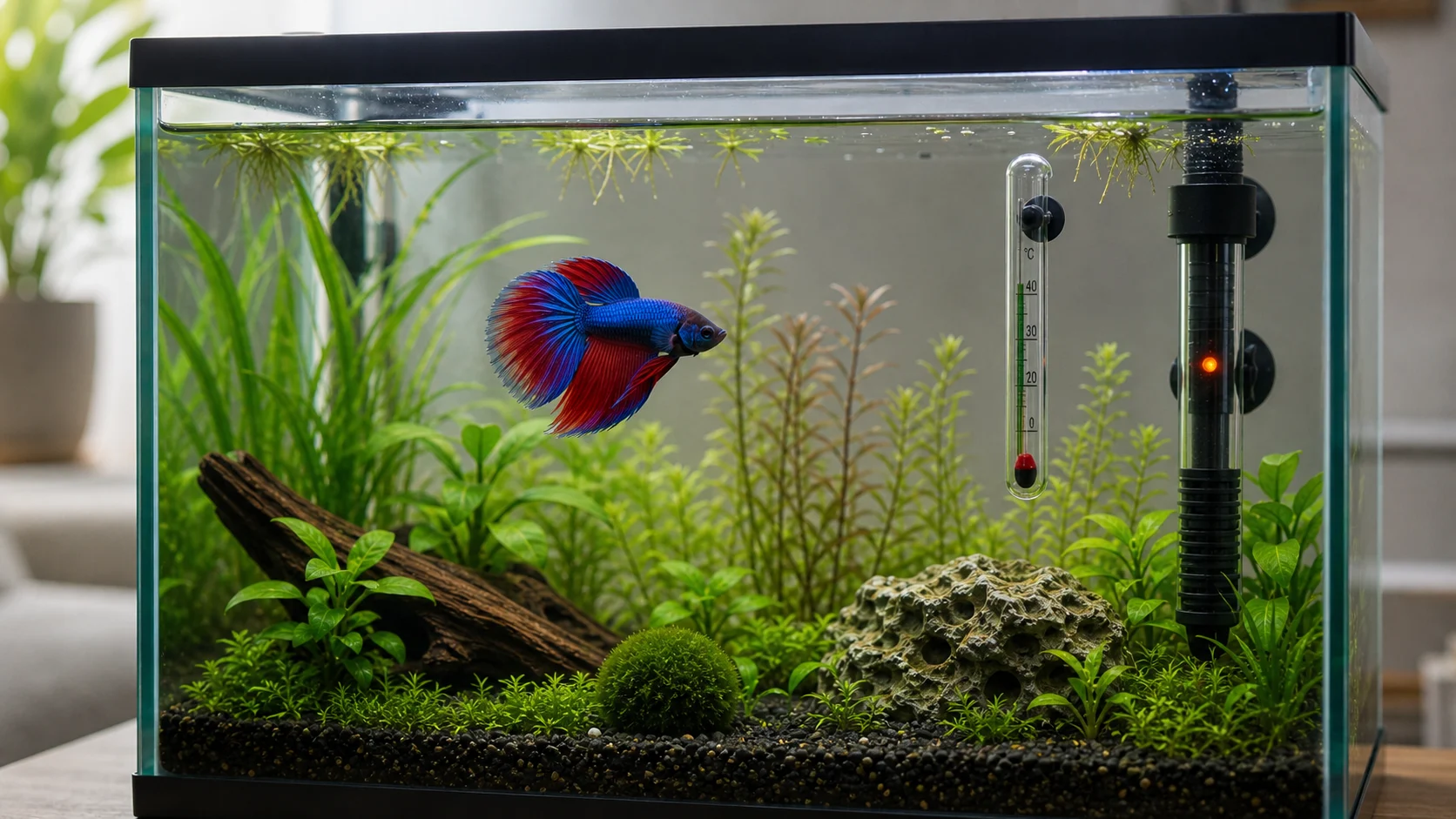
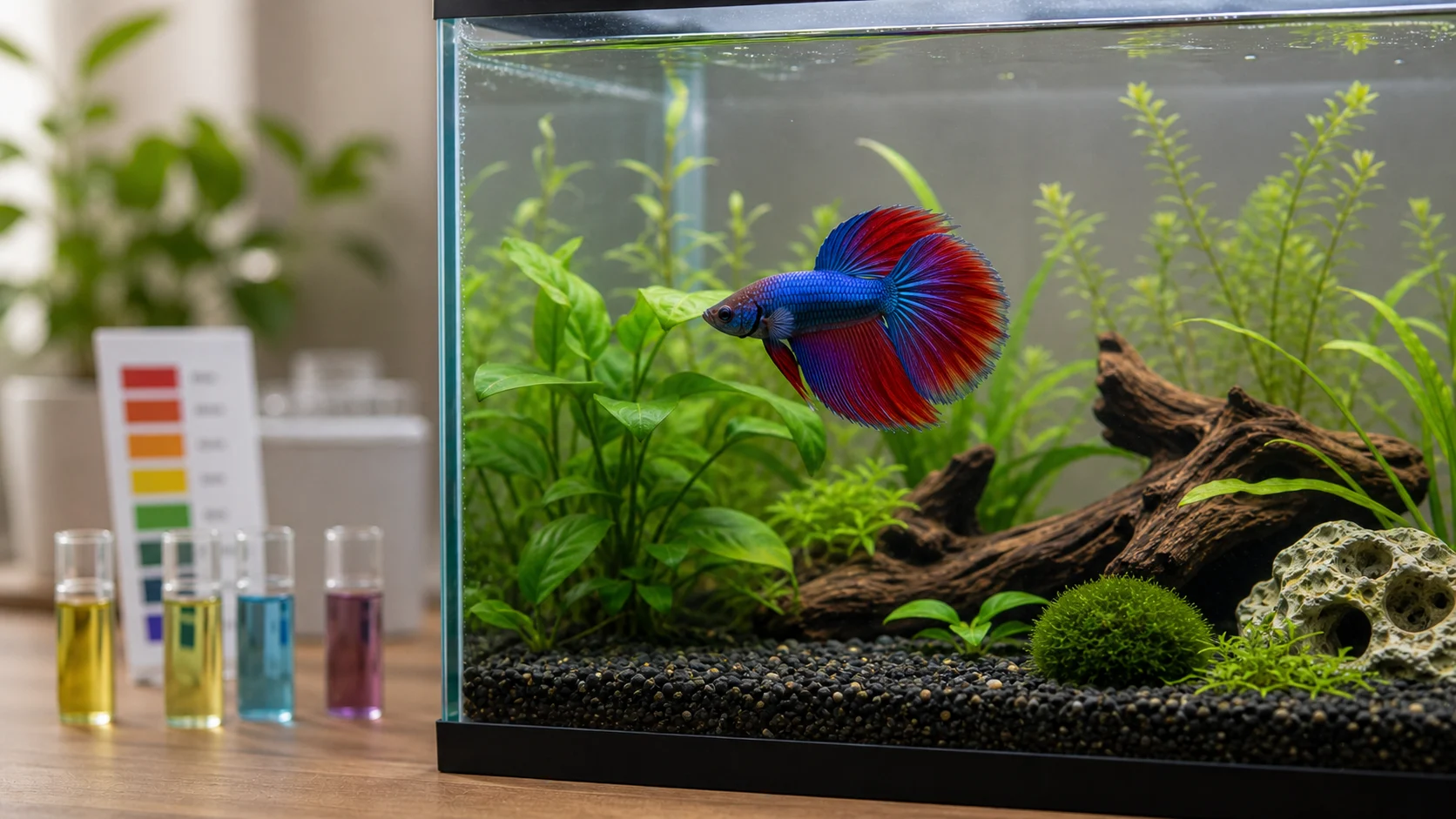
Test ammonia and nitrite first, then check nitrate and temperature. Ammonia and nitrite should both read 0 ppm in a safer betta aquarium.
Clear water is not proof that the tank is safe. Ammonia is invisible, and a tank can look clean while still having unsafe chemistry.
First steps if ammonia is present
Remove uneaten food, dead plant matter, and visible waste. Do a careful partial water change using conditioned water that is close to the tank temperature, then retest.
Keep the filter running. Do not replace all filter media, scrub every surface, or do a full tank reset unless there is a separate emergency reason. The long-term fix depends on preserving and growing the bacteria that process waste.
Why ammonia keeps coming back
Ammonia often returns when the tank is not fully cycled, the fish is overfed, the filter is too small or frequently replaced, the aquarium is too small, or maintenance removes too much beneficial bacteria at once.
It can also rise after a new fish is added, after a power or filter problem, after a medication or cleaning mistake, or when food is left to rot in the substrate.
Fish-in cycling caution
If a betta is already living in an uncycled tank, treat water testing as part of daily care for a while. Ammonia and nitrite can rise between water changes.
Use careful partial water changes to reduce risk while the biological filter develops. Avoid sudden temperature swings, untreated tap water, and repeated full cleanouts.
What not to do
Do not add extra food because the betta looks stressed. Do not rinse filter media under untreated tap water. Do not assume a bottle product means testing is no longer needed. Do not chase a perfect-looking tank by stripping it down every few days.
The goal is stable, conditioned, warm water with 0 ppm ammonia, 0 ppm nitrite, and a filter colony that is left intact enough to do its job.
When it is urgent
Treat the situation as more urgent if ammonia is readable and the betta is gasping, lying on the bottom, not eating, clamping fins, turning pale, showing red gills, or acting suddenly weak.
This does not mean guessing at aggressive treatments. It means testing, improving water quality carefully, checking temperature, and getting qualified fish-health help if the fish is declining or symptoms are severe.