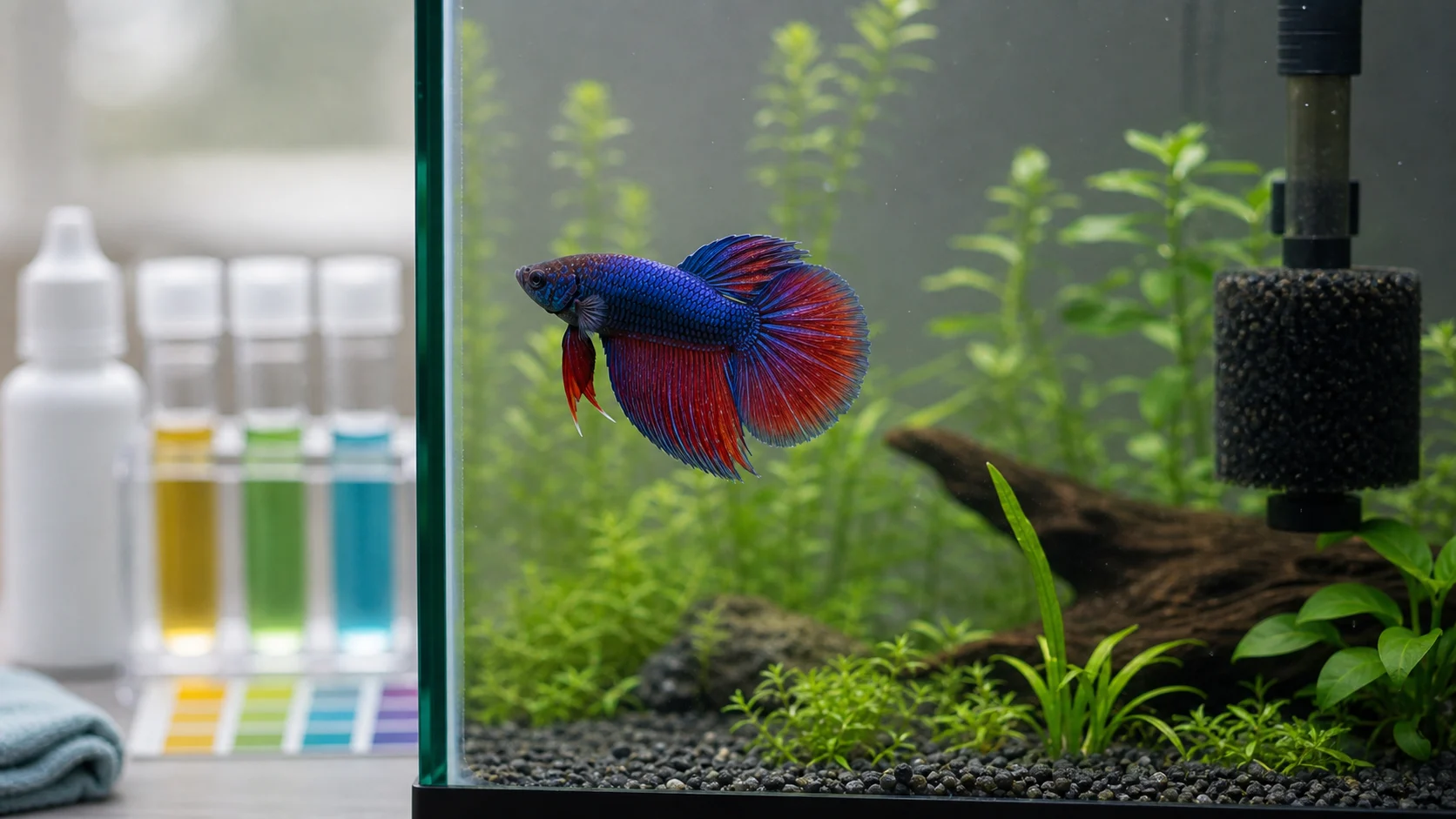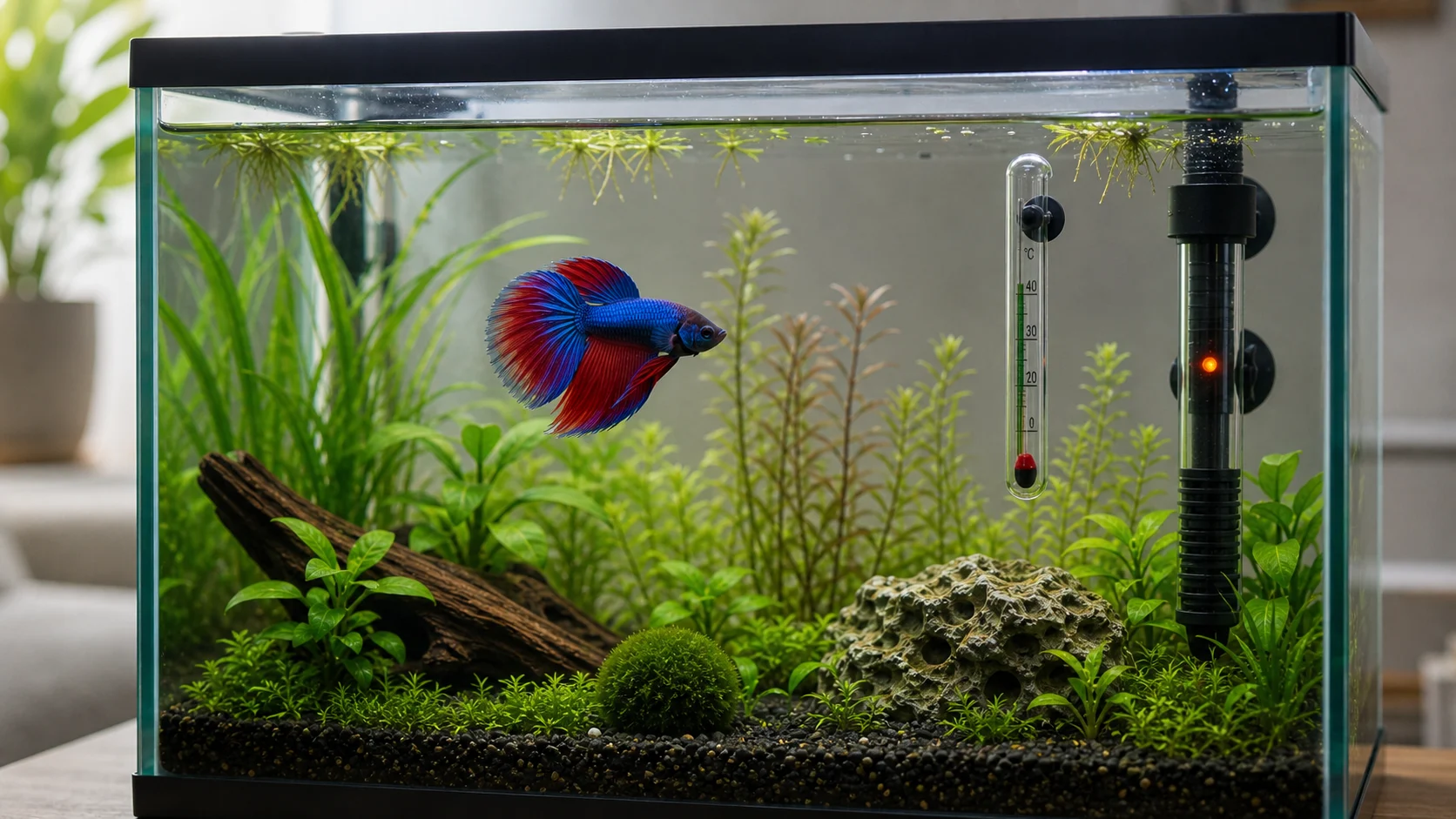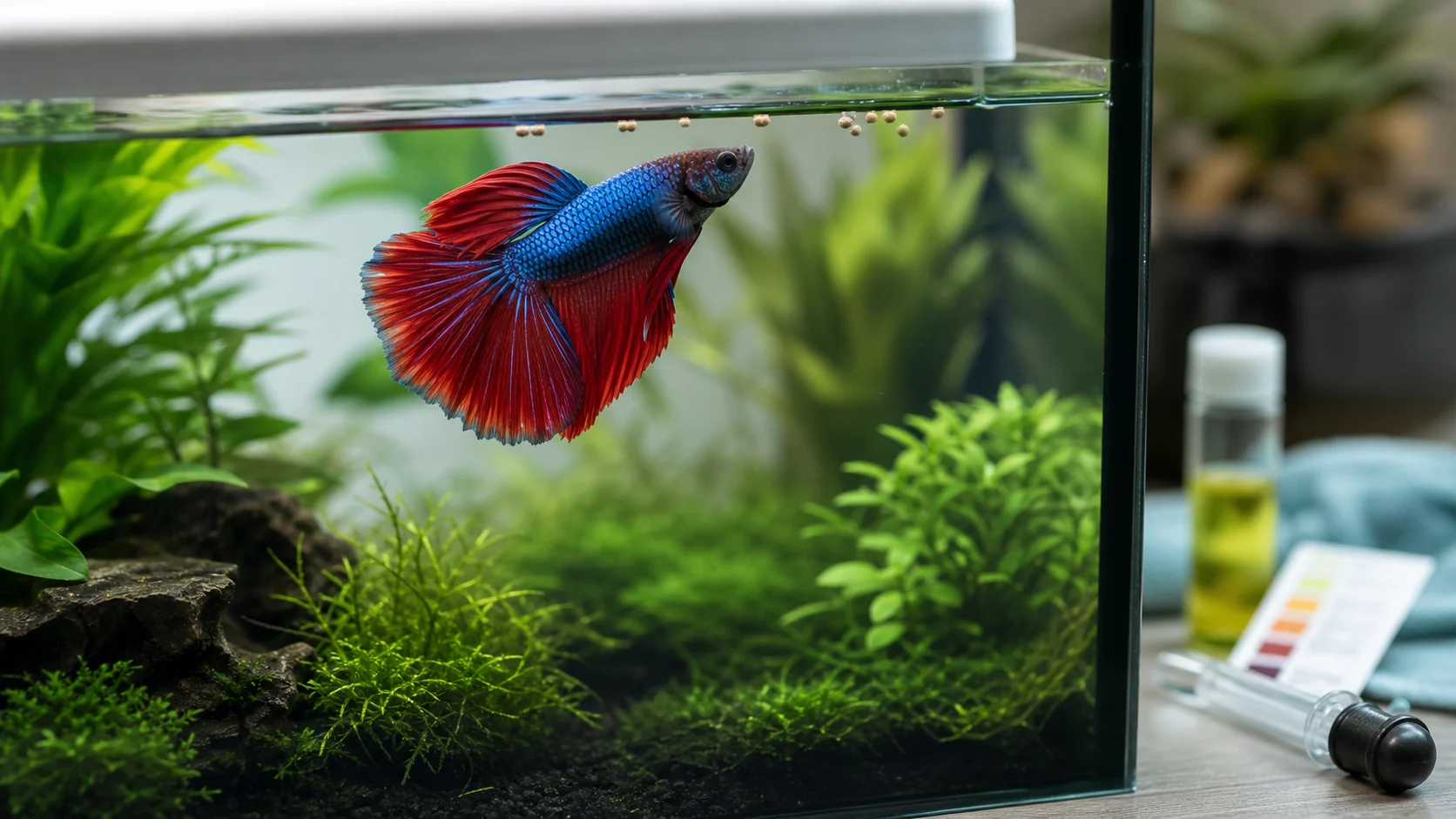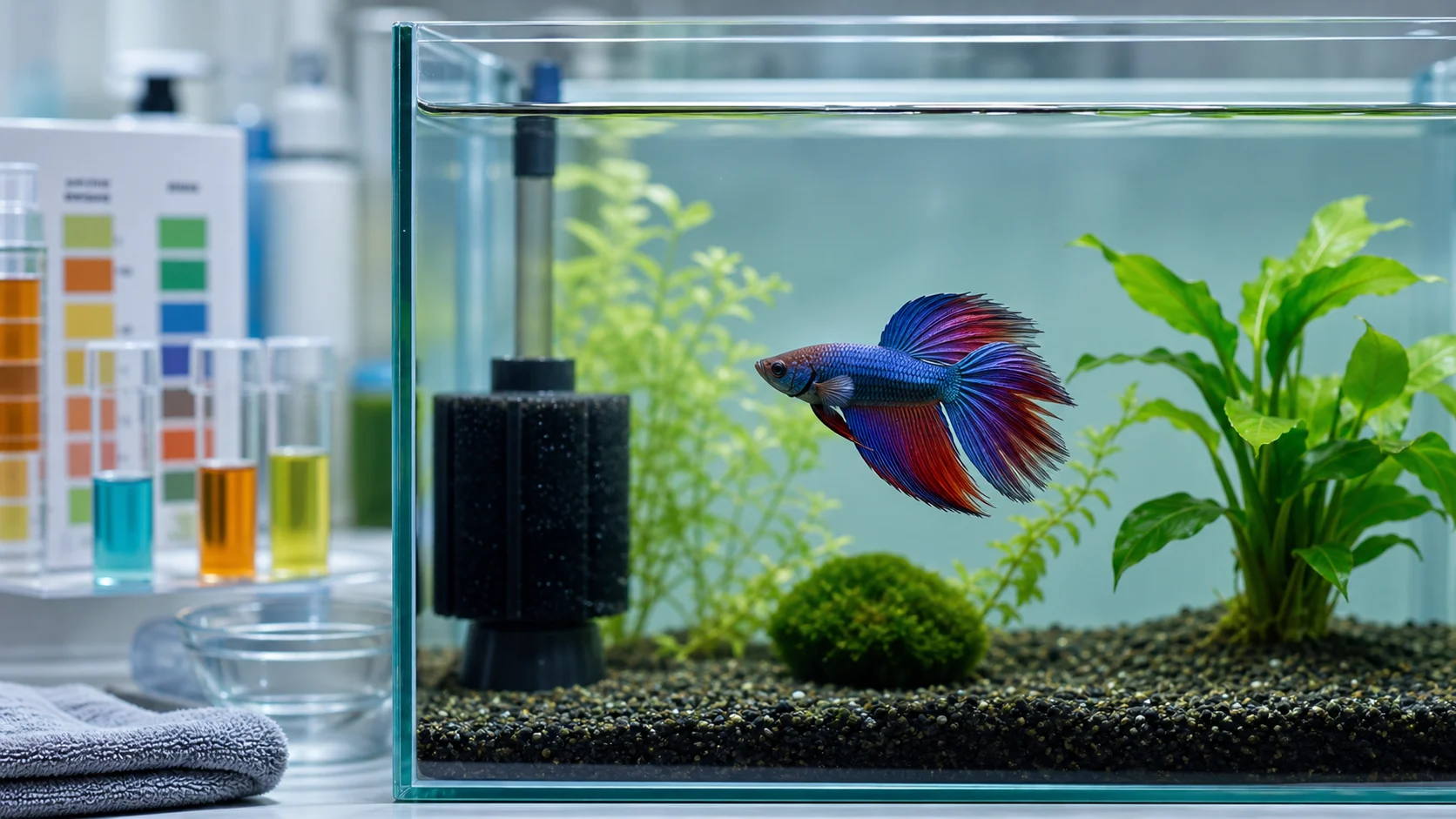

Some surface breathing is normal
Bettas have a labyrinth organ and regularly visit the surface. Occasional surface breaths are not automatically a problem.
Constant gasping is different
If the fish stays at the surface, breathes rapidly, or seems unable to swim normally, check the tank immediately.
What to check first
Test ammonia and nitrite, confirm temperature, make sure there is surface movement, and look for signs of stress or illness.
Gasping vs normal surface breathing
Bettas naturally take air from the surface, so one quick surface breath is normal. Constant gasping, hanging at the top, rapid gill movement, or weakness is different.
The key is pattern and intensity. A betta that cannot leave the surface comfortably needs immediate water checks.
First emergency checks
Test ammonia and nitrite, confirm temperature, and make sure there is gentle surface movement. High temperature can reduce dissolved oxygen, while ammonia and nitrite can irritate the gills.
If multiple fish or snails are affected, suspect a tank-wide water or oxygen issue.
What to avoid
Do not add random medication before checking water quality. Do not make a huge temperature swing. Correct obvious water problems calmly and use conditioned, temperature-matched water for partial changes.
Quick answer: gasping can be urgent
A betta taking quick breaths at the surface is normal. A betta that stays at the surface, breathes fast, flares the gills, looks weak, or cannot swim down normally needs immediate checks.
Start with ammonia, nitrite, temperature, and surface movement. These are common causes of gasping that can be missed when the water looks clear.
Normal surface breathing vs gasping
Bettas use their labyrinth organ to breathe air, so they naturally visit the surface. Normal surface breathing is brief and the fish can swim away normally.
Gasping looks more intense: rapid mouth or gill movement, hanging at the top, repeated trips to the surface, weakness, clamped fins, pale color, or trouble staying balanced.
First checks for gasping
Test ammonia and nitrite; both should read 0. Confirm the actual water temperature with a thermometer, then check whether the filter or air movement is creating gentle surface agitation.
Also review recent changes: water change, filter cleaning, medication, new decor, new tank mate, high room temperature, power outage, or overfeeding.
Oxygen and surface movement
Warm water holds less dissolved oxygen, and a still surface can make gas exchange worse. Bettas can breathe air, but they still benefit from stable, oxygenated water and a calm route to the surface.
Use gentle surface movement rather than blasting the fish with strong current. A betta that is already weak may struggle in heavy flow.
Water quality causes
Ammonia and nitrite can irritate the gills and make breathing harder. This can happen in new tanks, uncycled tanks, overfed tanks, or tanks where filter media was replaced or deep-cleaned.
Clear water does not prove the tank is safe. Use test results before deciding the fish is simply being dramatic.
What to do safely
Remove uneaten food, test water, and use careful partial water changes with conditioned, temperature-matched water if ammonia or nitrite is present. Keep the filter running and avoid replacing all media at once.
If the tank is hot, lower temperature gradually. Sudden temperature swings can add more stress.
When gasping is an emergency
Treat it as urgent if the betta is gasping constantly, cannot leave the surface, has red or inflamed gills, is very weak, has clamped fins, loses balance, or if ammonia/nitrite is above 0.
This guide is for general educational purposes and is not a substitute for advice from an aquatic veterinarian or qualified fish health professional.