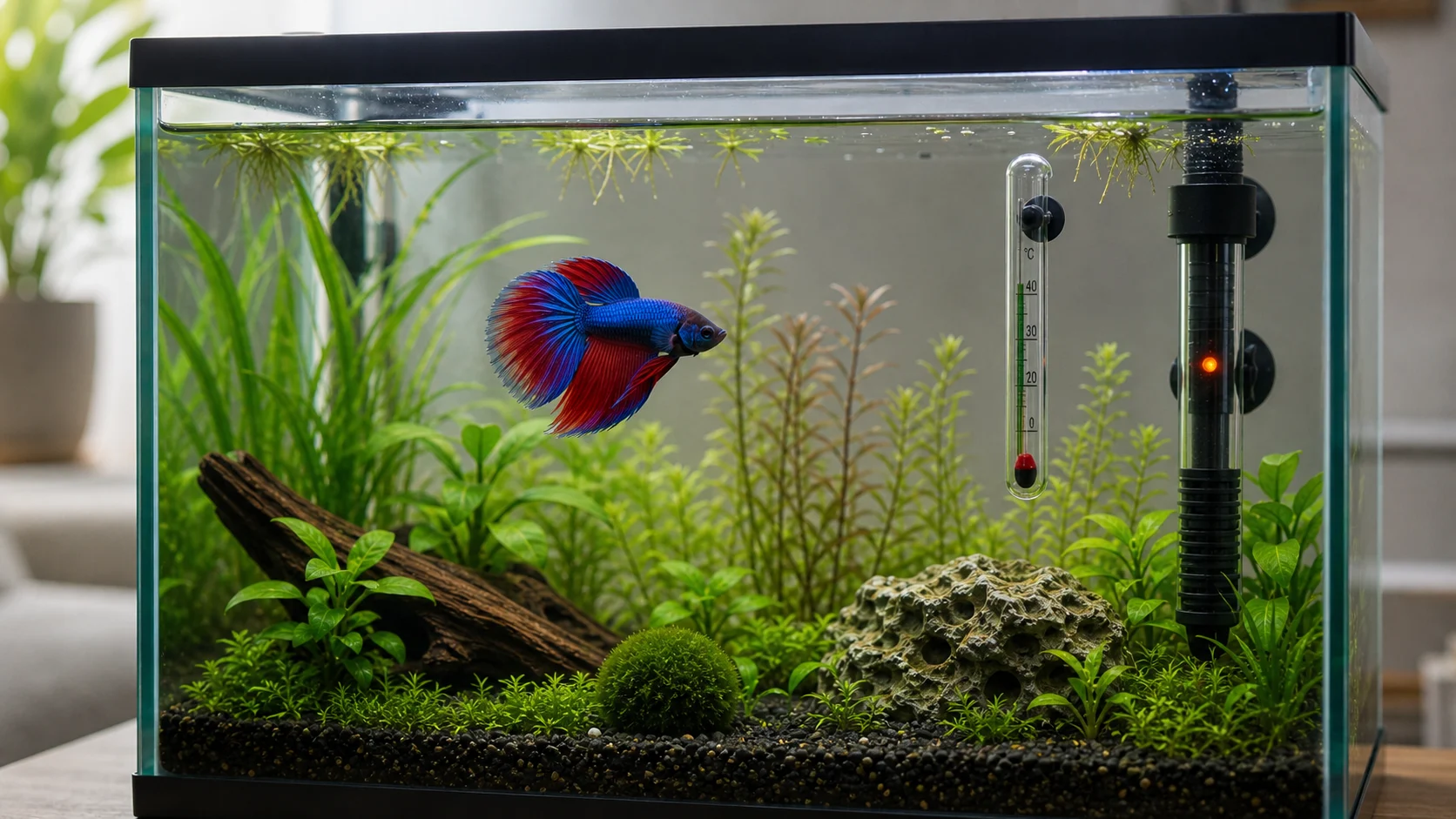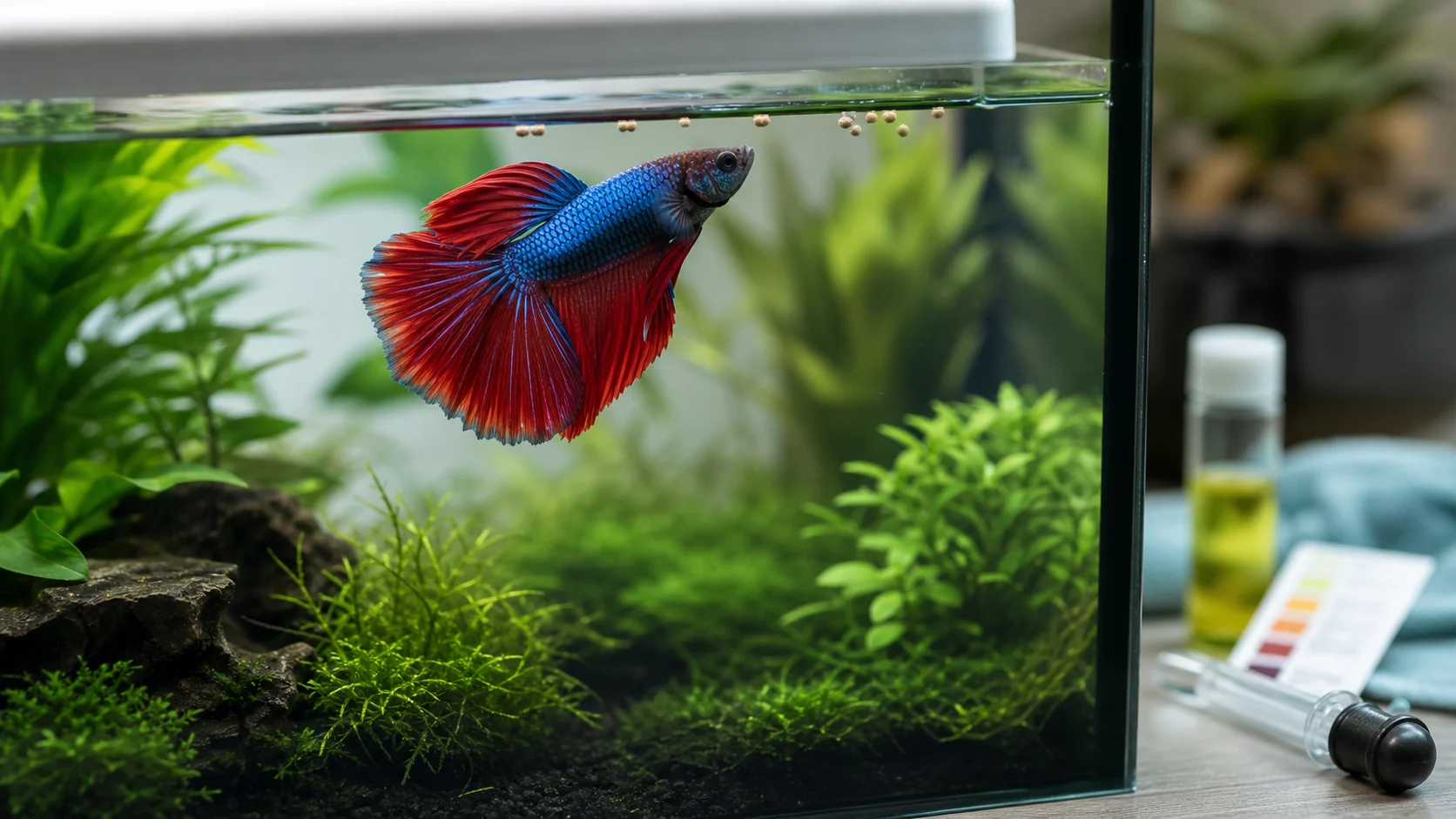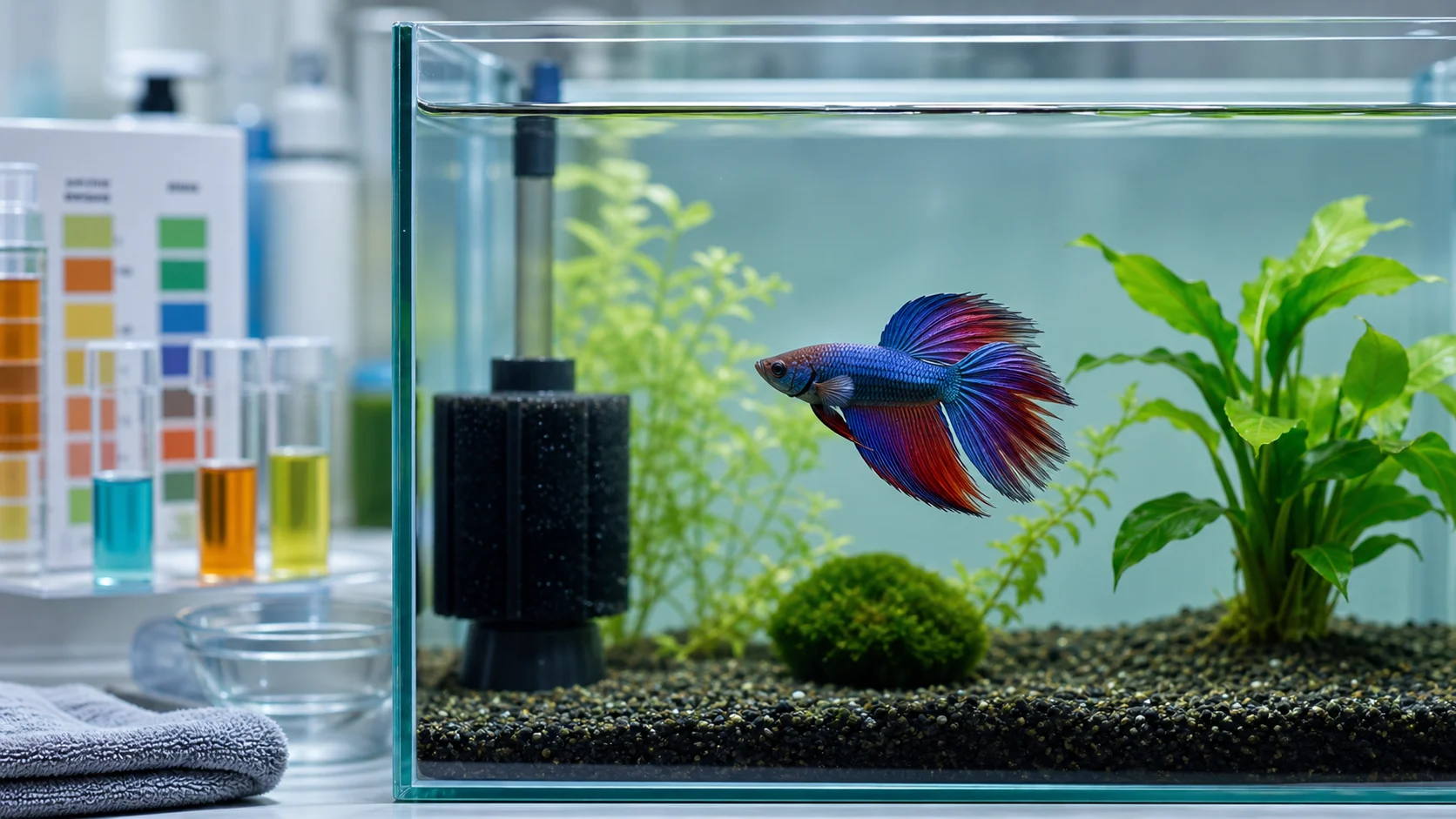

Quick answer: top-hanging can be normal or urgent
A betta fish staying at the top of the tank is not automatically sick. Bettas naturally visit the surface to breathe air, rest near floating plants, watch for food, and explore the upper part of the aquarium.
The concern rises when the betta stays there constantly, breathes fast, gasps, floats uncontrollably, clamps its fins, looks pale, refuses food, or cannot swim down normally.
Normal surface behavior
Normal surface behavior is usually calm and flexible. The betta may come up for air, rest on a leaf, greet you near feeding time, then swim around the rest of the tank.
If the fish has normal color, normal appetite, relaxed fins, steady swimming, and can leave the surface easily, the top of the tank may simply be part of its routine.
Warning signs near the surface
Top-hanging is more concerning with gasping, rapid gill movement, clamped fins, lethargy, hiding, red gills, pale color, bottom-sitting between surface visits, rubbing, floating sideways, bloating, or sudden weakness.
Those signs do not prove one specific diagnosis, but they should trigger water and temperature checks before assuming the fish is just resting.
Check ammonia and nitrite first
Test ammonia and nitrite first, even when the water looks clear. Poor water quality can irritate the gills and make a betta stay near the surface or breathe harder.
Also check nitrate, recent filter cleaning, uneaten food, dead plant matter, and whether the tank is new or uncycled. Clear water can still have unsafe chemistry.
Check oxygen, temperature, and flow
Low oxygen, very warm water, cold water, stagnant surface water, or strong filter flow can all affect where a betta spends time.
Confirm water temperature with a thermometer. Make sure there is gentle surface movement, but not a current that pushes the fish around or makes resting difficult.
Floating vs resting at the top
Resting near the surface is different from floating like a cork. If the betta tips sideways, struggles to stay level, floats back up after trying to swim down, or looks bloated, compare the pattern with swim bladder and bloating issues.
If the fish is simply using a leaf, floating plant, or calm corner and swims away normally, that is less alarming.
What to do first
Start with low-risk checks: test water, confirm temperature, watch breathing, reduce excessive current, remove uneaten food, and add calm resting cover near the surface if the tank is bare.
Make one careful change at a time. Repeated full cleanouts, untreated tap water, or big temperature swings can make a stressed fish worse.
When it is urgent
Treat it as urgent if the betta is gasping at the surface, unable to swim down, lying weakly, refusing food, clamping fins, turning pale, showing red gills, or declining quickly.
This guide is for troubleshooting and education. Severe or worsening symptoms need qualified fish-health help, especially when water tests do not explain the behavior.