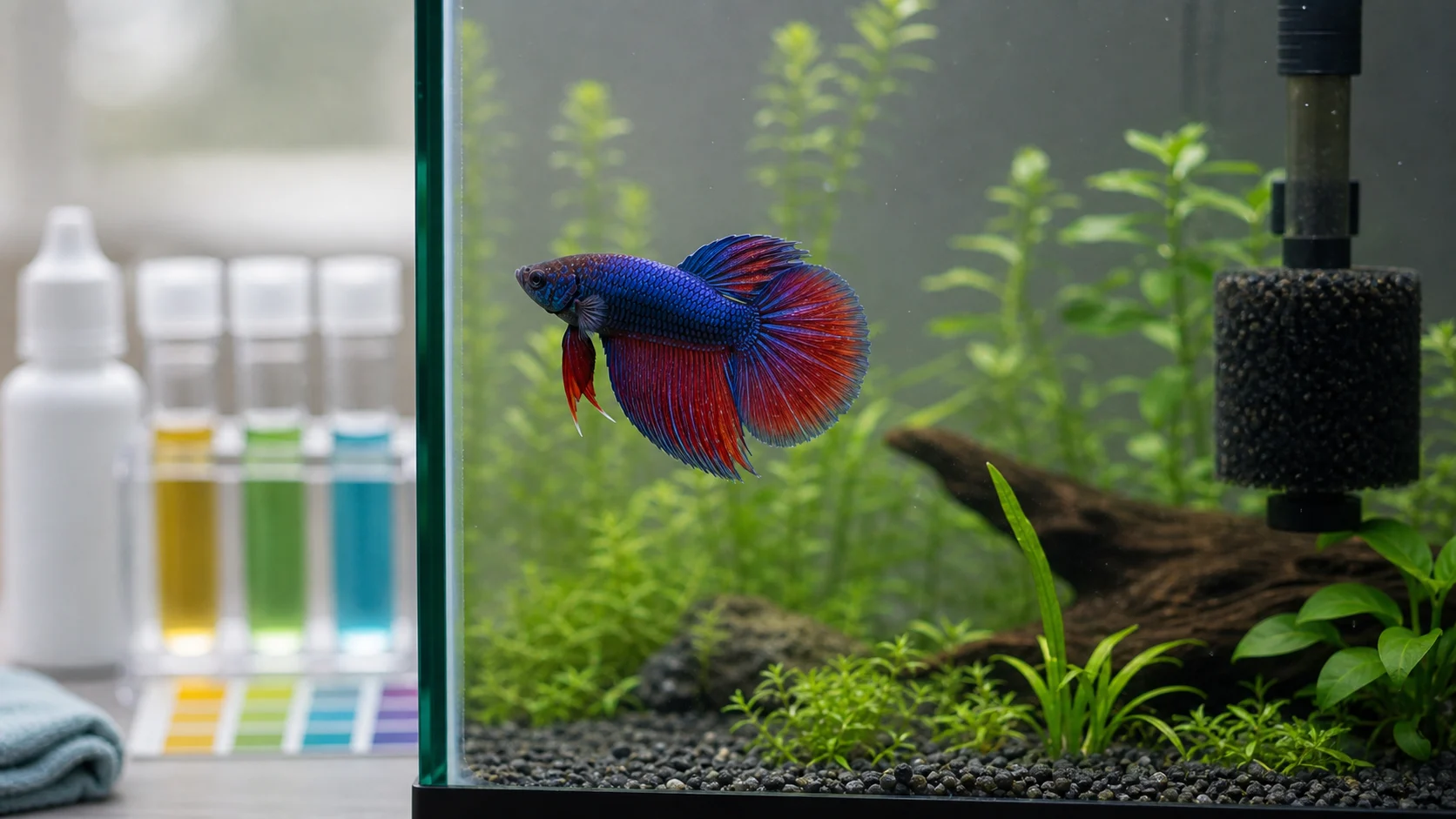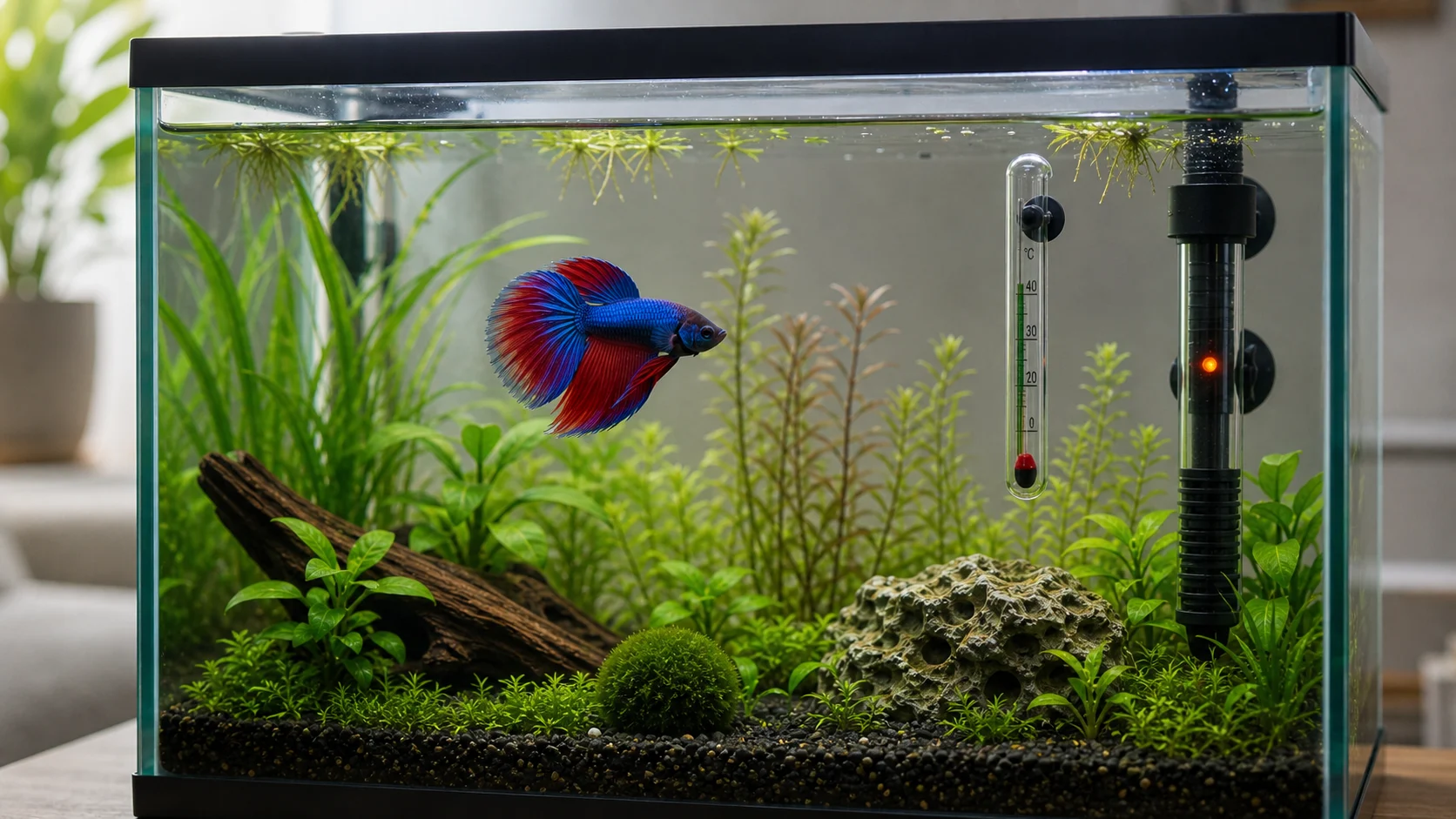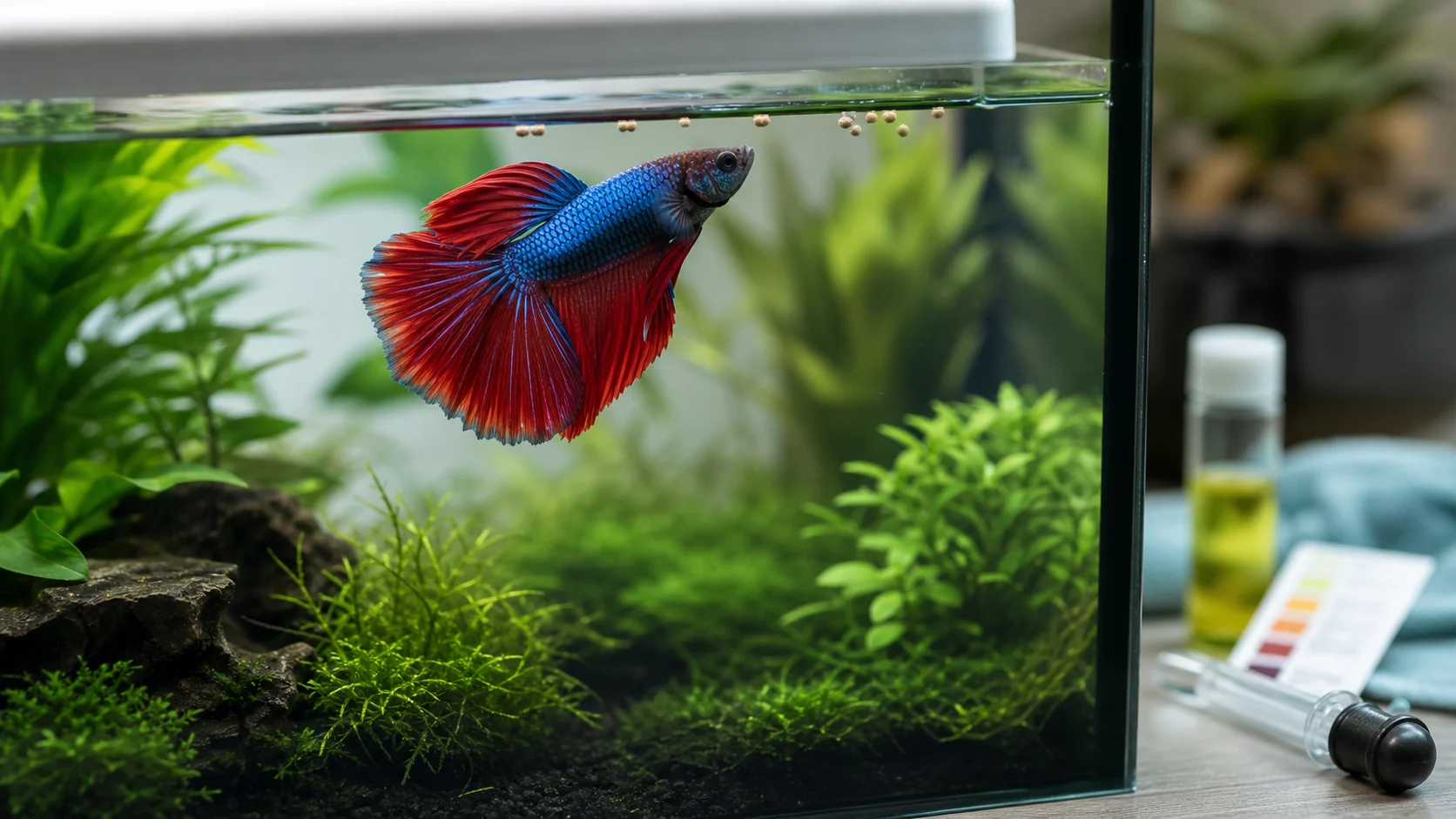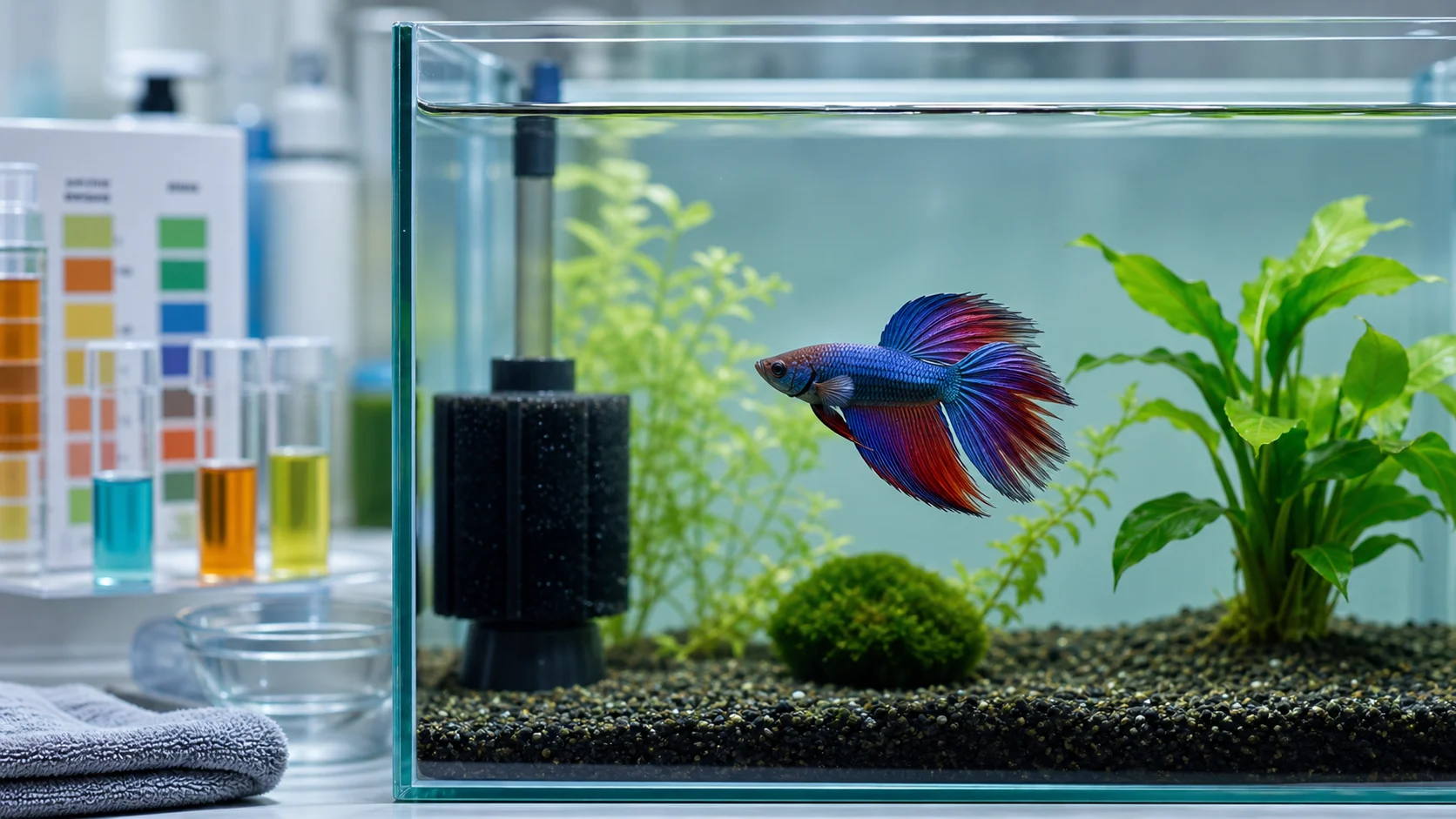

What clamped fins look like
Instead of holding fins open normally, the fish keeps them tight against the body or looks stiff and withdrawn.
Common triggers
Poor water quality, cold water, sudden changes, aggressive tank mates, strong current, and illness can all cause clamped fins.
What to check first
Test the water, verify temperature, review recent changes, and observe appetite and breathing.
Clamped fins plus other symptoms
Clamped fins are more concerning when they appear with not eating, bottom-sitting, white spots, bloating, gasping, rapid breathing, faded color, or torn fins.
One symptom alone can be vague. Several symptoms together give a stronger signal that water quality, temperature, stress, or illness needs attention.
Water and temperature checks
Test ammonia and nitrite first, then confirm the water temperature with a thermometer. Cold water and poor water quality are common reasons a betta looks tense or withdrawn.
Review anything that changed recently: water change, new decor, filter cleaning, new tank mate, new food, or a move.
Reducing stress
Keep lighting gentle, reduce strong current, provide cover, and avoid repeated handling or tank moves. Stable water and calm conditions make it easier to see whether symptoms improve.
Quick answer: clamped fins are a stress sign
Clamped fins usually mean something is bothering the betta. The cause may be water quality, cold water, sudden change, strong flow, tank mate stress, injury, or illness.
Do not treat clamped fins as a diagnosis by itself. Use it as a warning sign that the tank and the fish need a closer check.
First checks for clamped fins
Start with ammonia, nitrite, nitrate, and the actual water temperature. Then review the last 48 hours: water change, filter cleaning, new decor, new tank mate, food change, move, or temperature swing.
Also watch appetite, breathing, swimming balance, color, body shape, and whether the fish is hiding or staying near the bottom.
Common causes of clamped fins
Poor water quality and cold water are common beginner causes. Ammonia or nitrite can irritate the fish even when the tank looks clear, and cooler water can make a betta withdrawn or less active.
Stress can also come from strong filter current, bright light, lack of cover, aggressive tank mates, rough decorations, transport, or sudden changes in water conditions.
Clamped fins with not eating or bottom-sitting
Clamped fins become more concerning when the betta is also not eating, laying on the bottom, breathing heavily, gasping, bloated, pale, or losing balance. Multiple symptoms should move the situation from simple observation to active troubleshooting.
Check water and temperature before changing foods or adding treatments. Extra food left in the tank can make water quality worse.
Safe next steps
Keep the water stable, remove uneaten food, reduce stress, and test before making major changes. If ammonia or nitrite is readable, use careful partial water changes with conditioned, temperature-matched water.
Avoid deep-cleaning the whole tank or replacing all filter media at once. That can remove beneficial bacteria and make water problems worse.
When clamped fins are urgent
Act quickly if clamped fins come with gasping, heavy breathing, severe lethargy, pineconing scales, rapid swelling, white spots, red irritated gills, loss of balance, or ammonia/nitrite above 0.
This guide is for general educational purposes and is not a substitute for advice from an aquatic veterinarian or qualified fish health professional.