Safety first
Run a finger over decorations before using them. If an edge feels sharp, it may damage fins.
Give cover
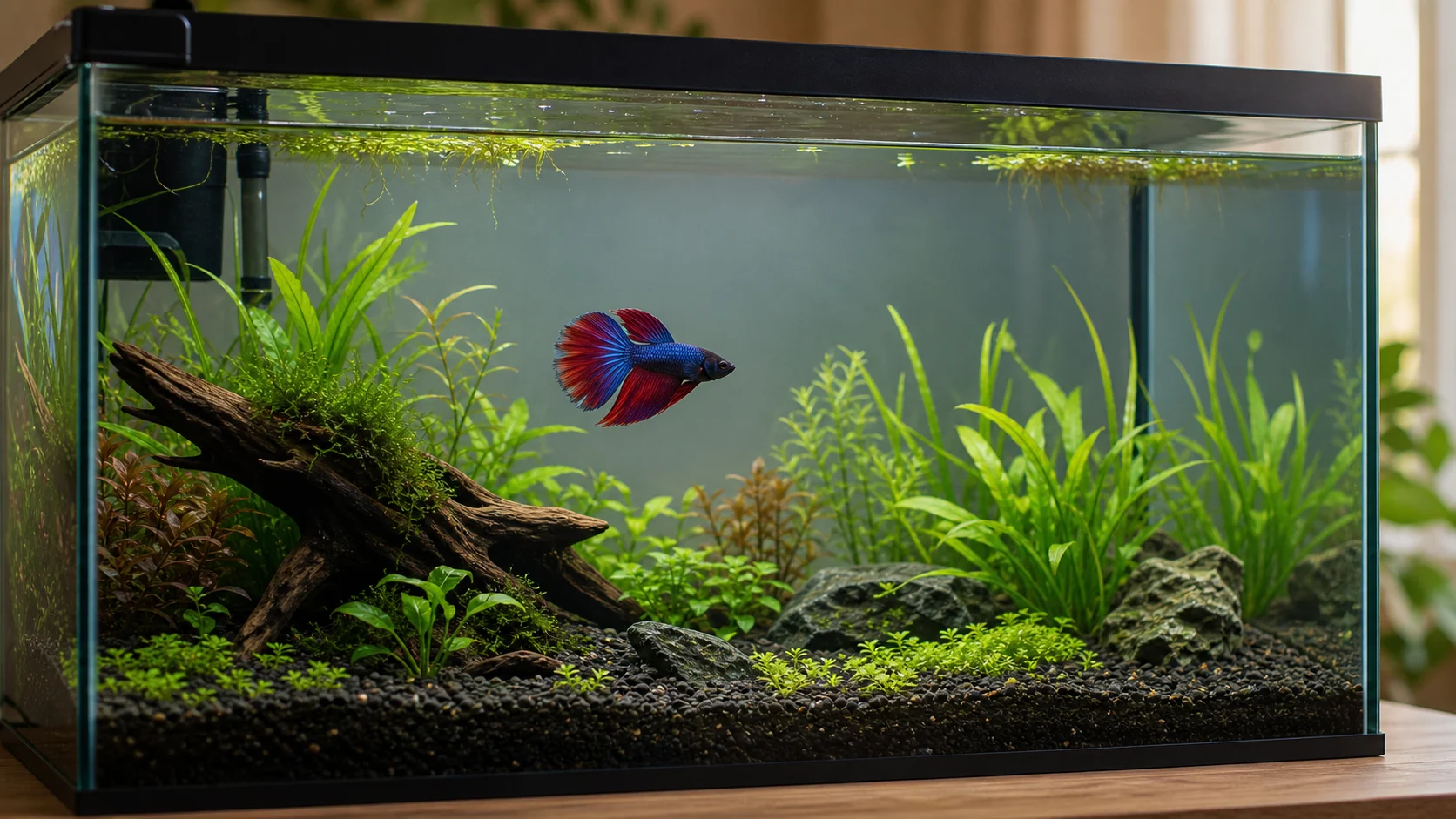
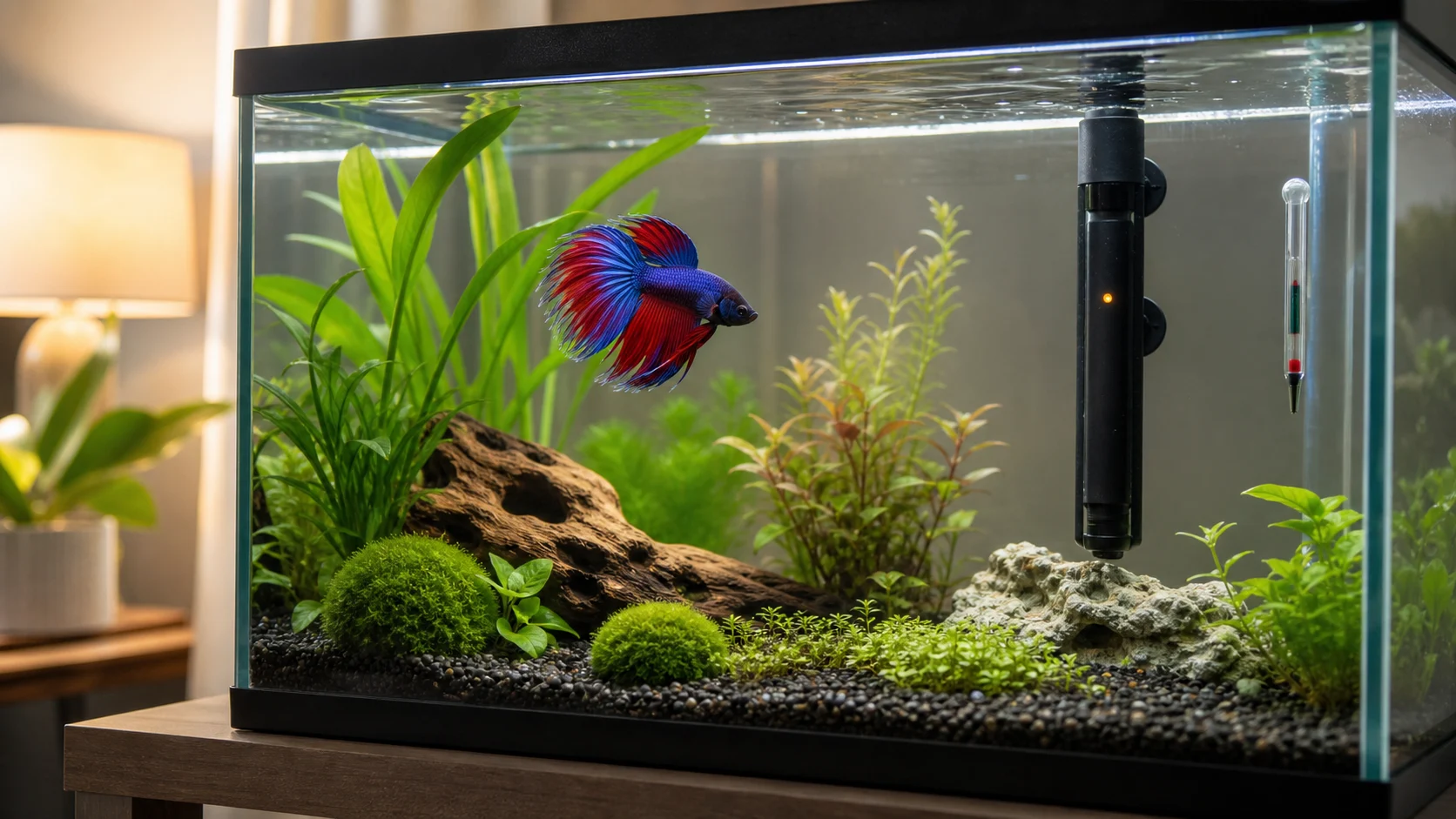
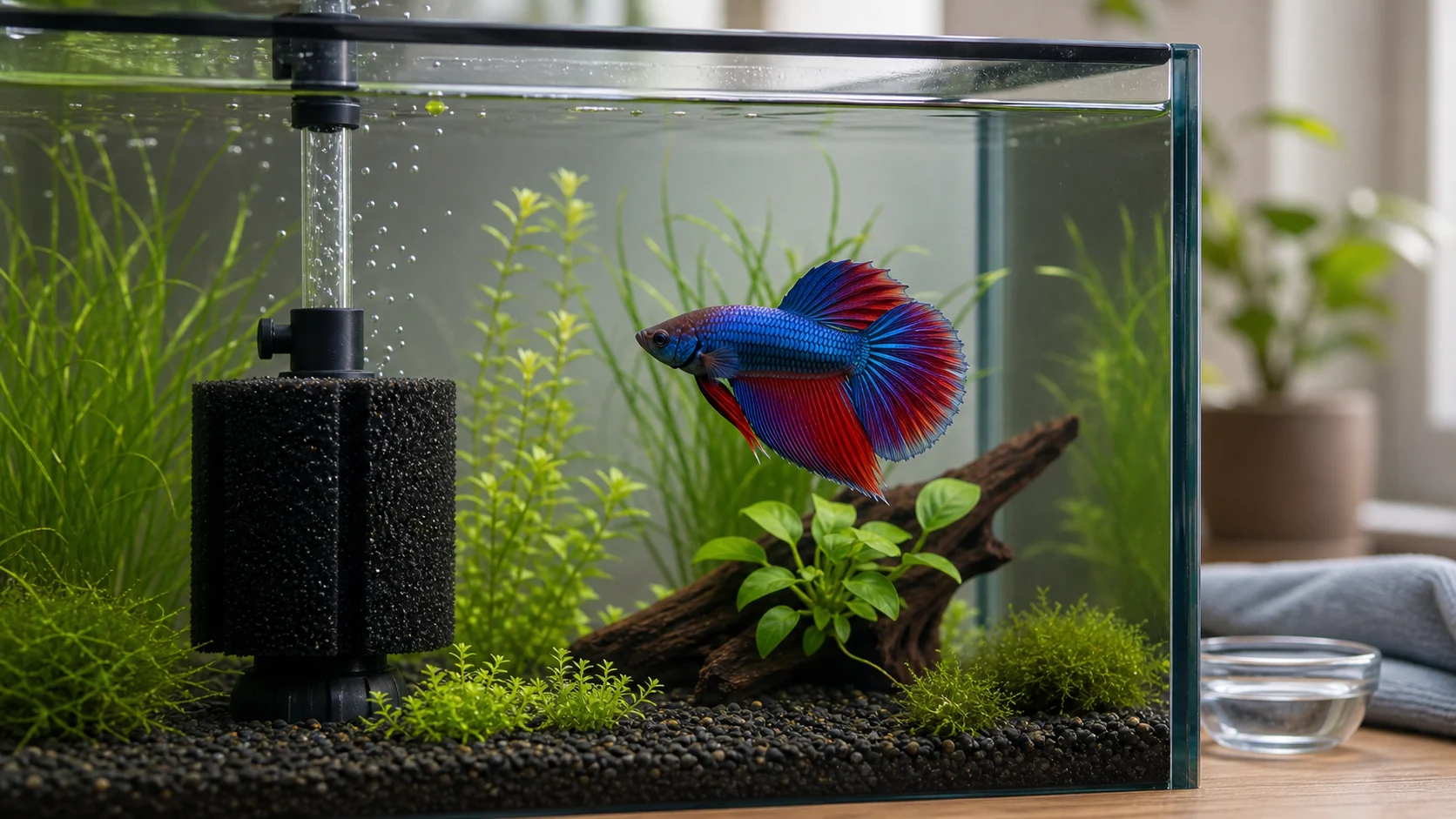
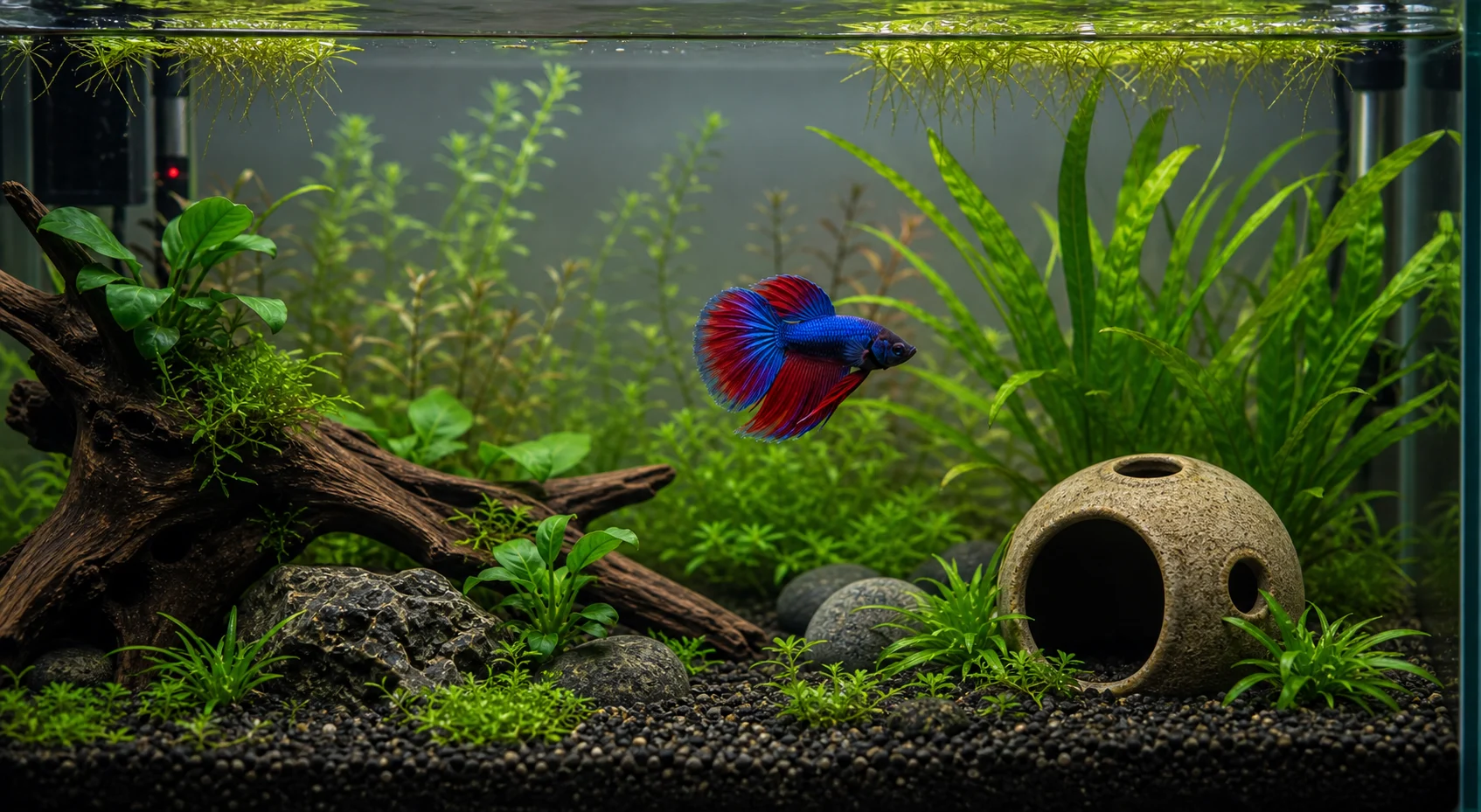
Decor should create hiding places and visual breaks. Bettas often feel safer when the tank is not completely open.
Avoid traps
Small openings can trap fish. Choose caves and ornaments with wide, smooth entrances.
Quick answer: safe betta decorations
Safe betta decorations are smooth, stable, and roomy enough that the fish cannot get stuck. They should create cover without crowding the entire aquarium or making cleaning impossible.
Long-finned bettas are especially vulnerable to sharp plastic plants, rough caves, and small openings.
Safe decoration checklist
- Smooth edges you can run a finger over comfortably.
- Wide openings on caves and hides.
- Stable pieces that will not tip over.
- Soft live or silk plants instead of sharp plastic.
- Enough open swimming room.
- No flaking paint, strong chemical smell, or mystery materials.
If a decoration fails the finger test, do not use it.
Hides and resting spots
Bettas benefit from hiding places and resting spots near the surface. Broad leaves, gentle plant clusters, smooth caves, and open-ended hides can make the tank feel safer.
Use decor to break up sight lines, not to fill every inch. A betta still needs open space to swim and reach the surface.
Decorations to avoid
Avoid sharp plastic plants, rough fake coral, tiny holes, narrow tunnels, unstable rock piles, decorations with peeling coating, and anything that can trap fins or the whole fish.
If you are unsure about a hole or tunnel, choose a larger, simpler hide instead.
Common decoration mistakes
The most common mistakes are choosing decor for appearance only, overcrowding a small tank, forgetting to rinse new items, using sharp plastic plants, and ignoring fin tears after adding a new ornament.
If torn fins appear soon after adding decor, inspect every plant, cave, rock, and filter intake in the tank.