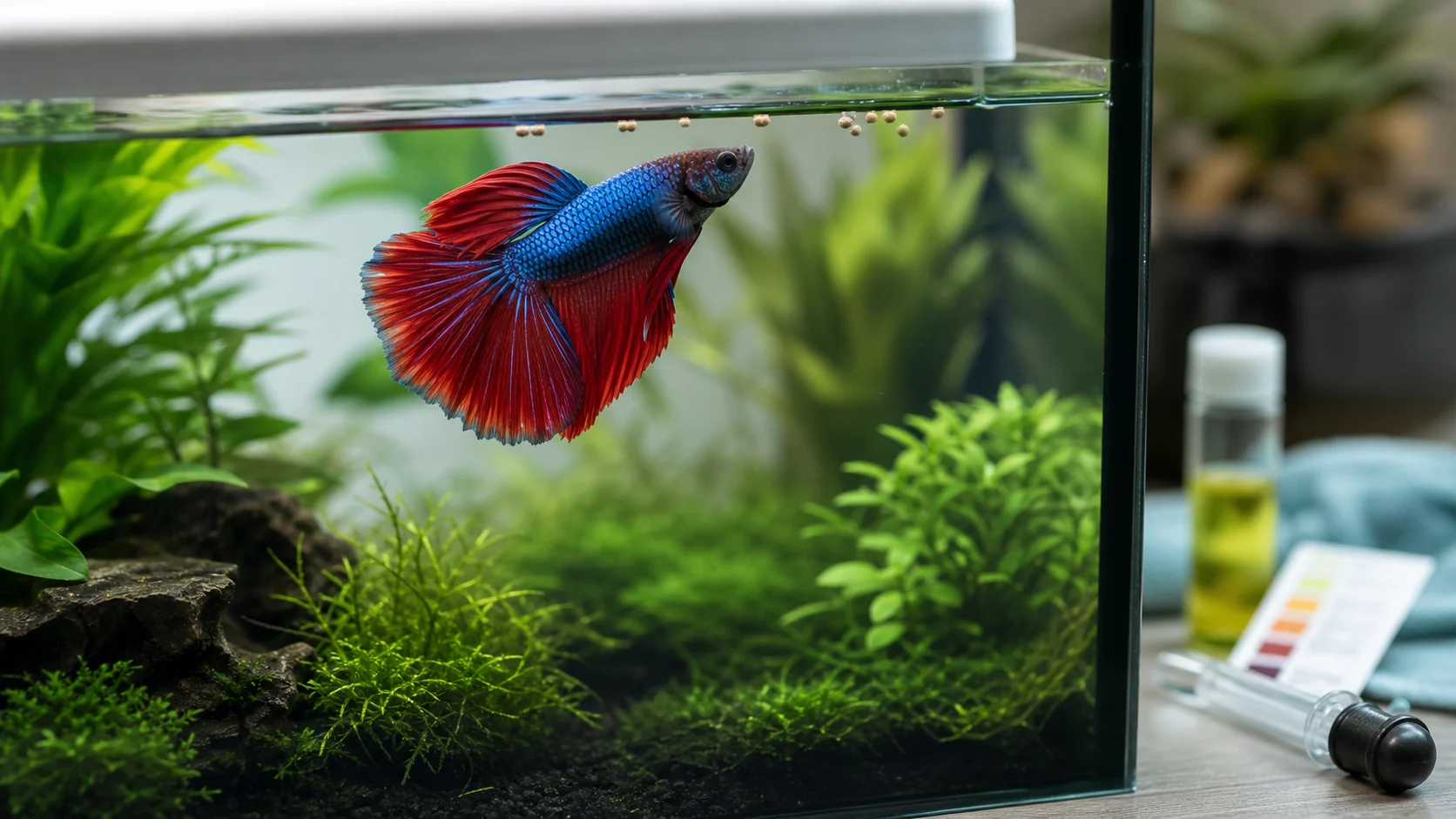
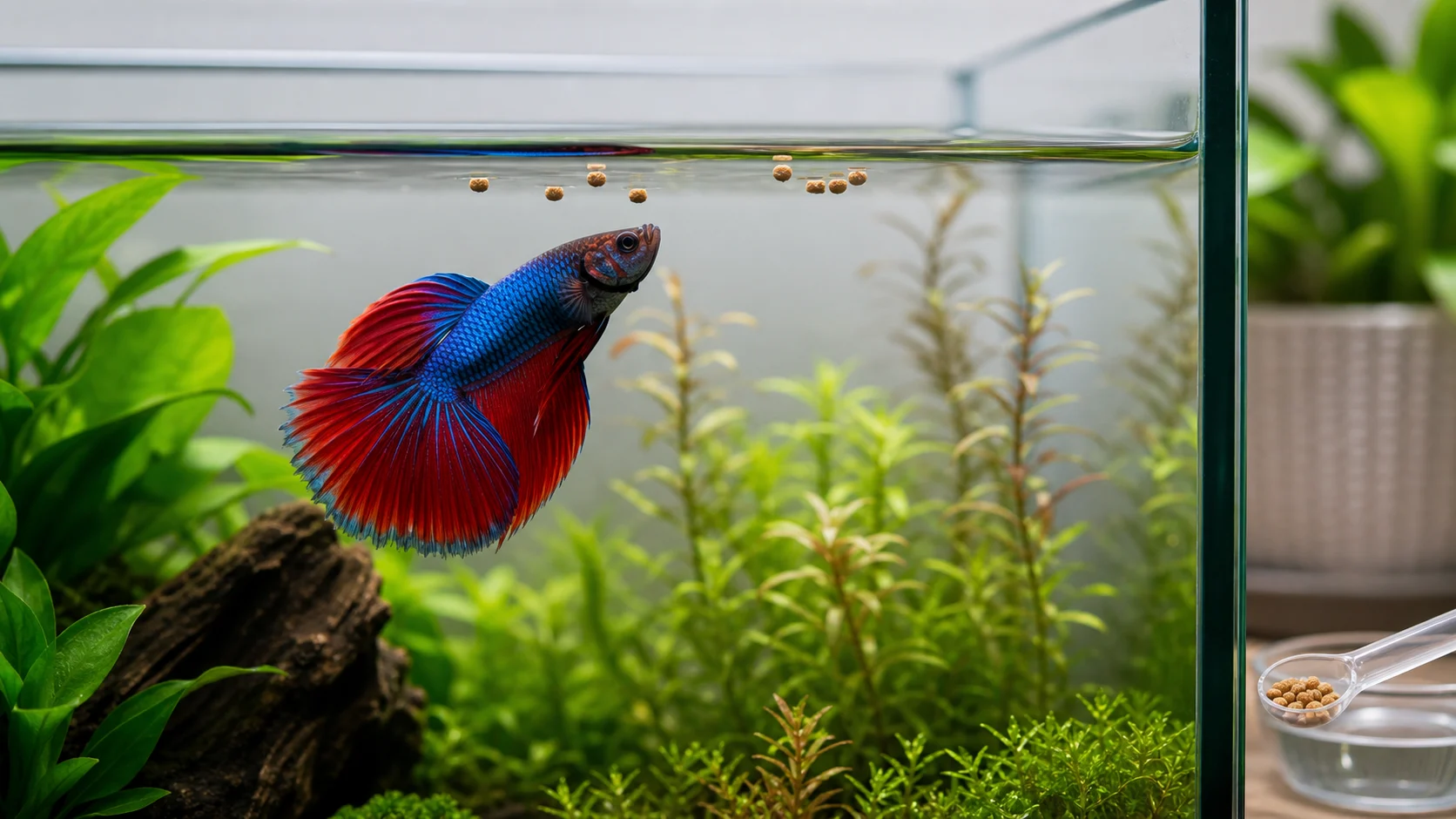
Quick answer: once or twice daily
Most adult bettas do well with small portions once or twice a day. The total amount matters more than the number of meals.
If you feed twice daily, make both meals tiny. Twice daily does not mean twice as much food.
A simple beginner feeding schedule
A practical beginner schedule is one small meal in the morning, or two very small meals split between morning and evening.
Keep the routine consistent for a week or two before changing it. Adjust only if you see leftovers, bloating, cloudy water, or a betta that starts ignoring food.
How much food should a betta eat?
pellet size varies, so there is no perfect pellet count for every brand. Feed a small amount that your betta can eat quickly without food falling to the bottom.
The belly should not look swollen after every meal. If the fish looks bloated, spits food out, or leaves pieces behind, reduce the portion and review food size.
Once a day vs twice a day
Once daily can work well when the portion is modest. Twice daily can also work if each meal is very small and the water stays clean.
Two tiny meals are often easier on digestion than one large meal, but either schedule can cause problems if the total amount is too high.
Pellets, flakes, and treats
A quality betta pellet is usually the easiest staple food. Flakes can work, but they break apart faster and can pollute the water if overfed.
Treat foods such as bloodworms or brine shrimp should add variety, not replace the staple diet. Use treats sparingly and watch digestion.
Signs you may be overfeeding
Common overfeeding signs include leftover food, cloudy water, rising nitrate, bloating, stringy waste, a betta that ignores food, or a tank that needs cleaning sooner than expected.
Overfeeding is not just a food problem. Extra food becomes waste, and waste can contribute to ammonia, poor water quality, and appetite changes.
Should bettas have a fasting day?
Some keepers use an occasional fasting day, especially after overfeeding. A fasting day is not a substitute for correct daily portions, clean water, and food the fish can swallow easily.
Do not use fasting to ignore bloating, weakness, pineconing, or ongoing appetite loss. Those signs need broader troubleshooting.
How long can a betta go without food?
A healthy adult betta can usually handle a short missed meal better than chronic overfeeding. Still, fasting should not become normal care.
If you will be away, do not dump extra food into the tank before leaving. Extra food can decay, raise waste, and create water-quality problems.
What to check if appetite changes
If a betta suddenly will not eat, check temperature, ammonia, nitrite, stress, food size, and whether uneaten food is building up.
Appetite problems are often connected to tank conditions, not only the food brand. If the fish is bloated, weak, gasping, clamped, or sitting at the bottom, treat feeding as only one part of the troubleshooting process.
Common feeding mistakes
Common mistakes include feeding every time the betta begs, using pellet counts from a different food brand, leaving flakes to decay, feeding too many treats, and adding extra food before a trip.
Keep meals small, remove leftovers, and let water quality guide adjustments.