Quick answer: leaf resting is often normal
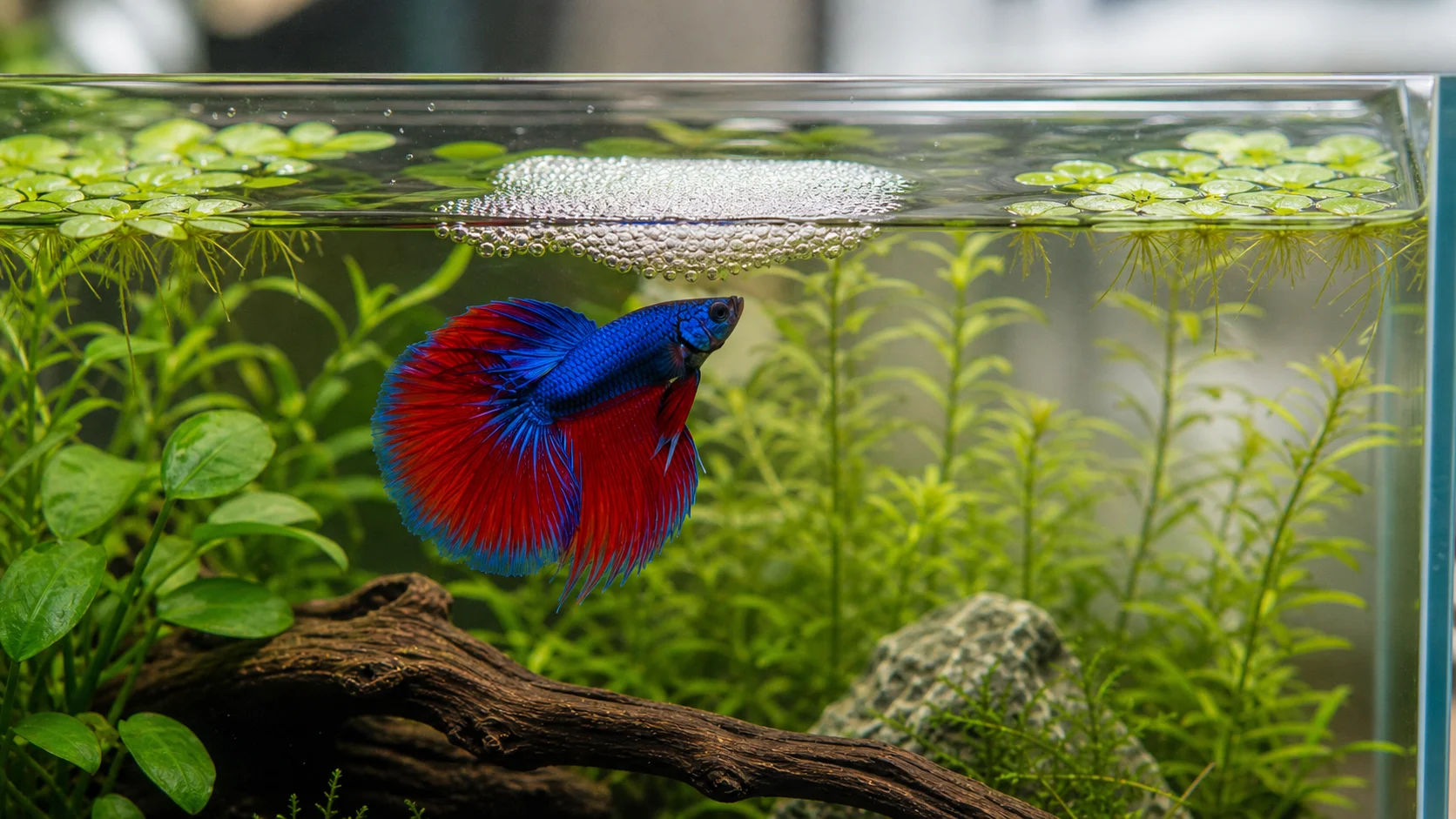
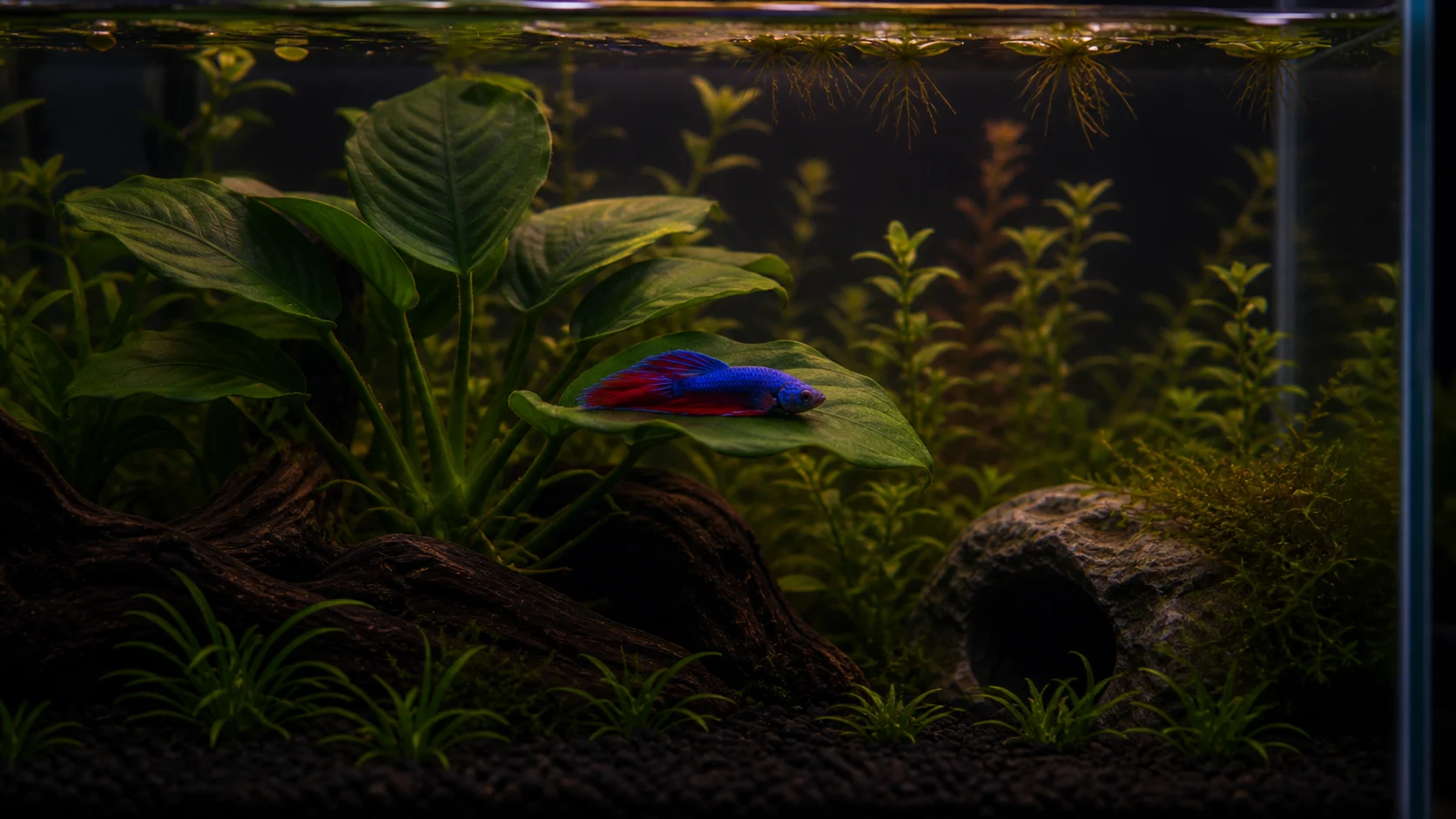
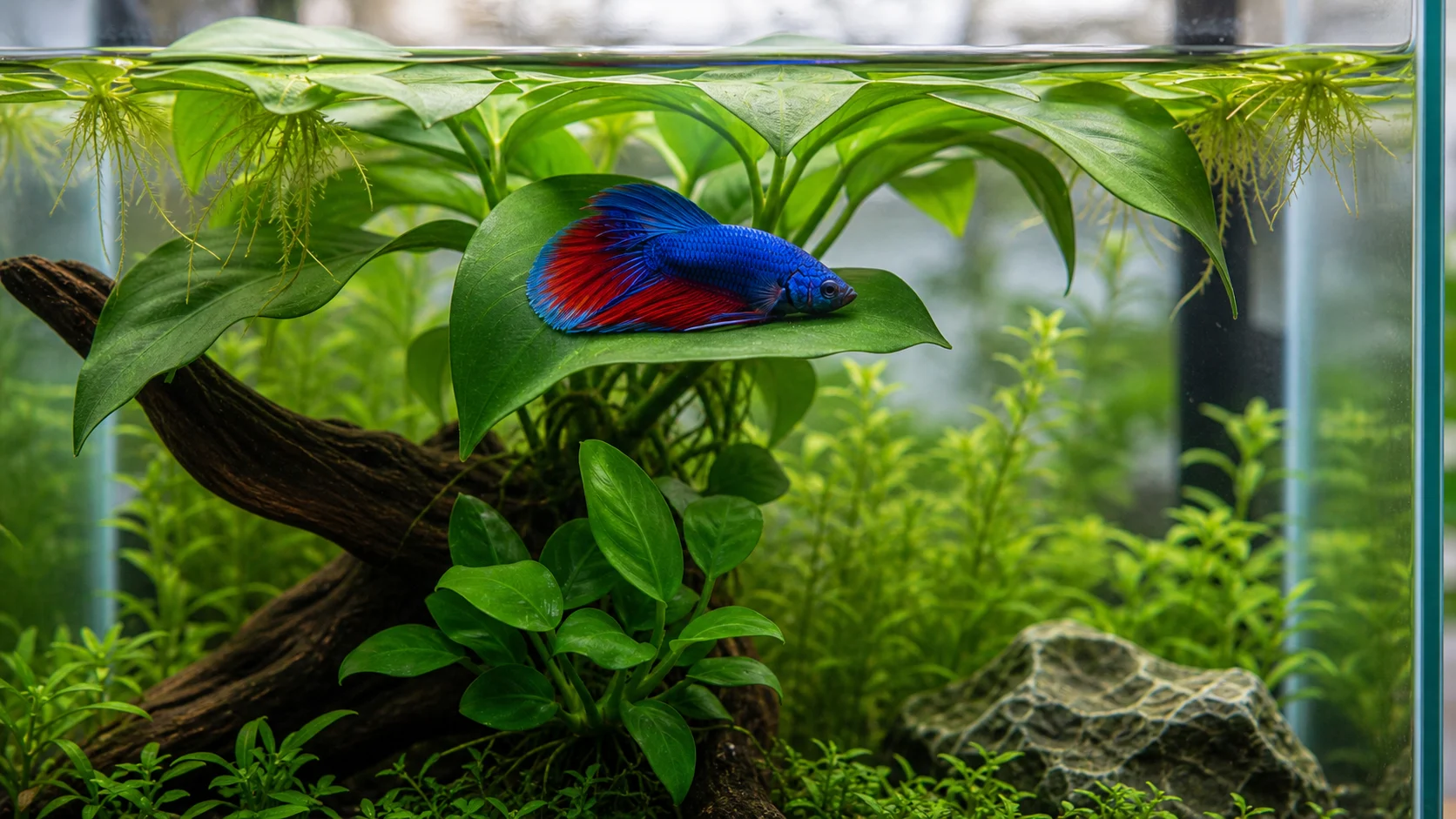
A betta fish resting on leaves is often normal. Bettas pause during the day, and many choose broad leaves, floating plant roots, or plant hammocks near the surface.
The key question is whether the fish looks relaxed or weak. Resting is usually less concerning when the betta still eats, explores, breathes calmly, responds to you, and swims away without struggling.
Normal resting signs
Normal leaf resting usually happens in short sessions. The betta may perch on an Anubias leaf, tuck into floating plant roots, rest near the surface, then return to swimming or watching the room.
Long-finned bettas may rest more than short-finned bettas because their fins take more effort to move. Older bettas may also rest more often.
Warning signs to watch for
Leaf resting is more concerning when it looks like weakness instead of choice. Watch for clamped fins, heavy breathing, gasping, not eating, bottom-sitting, pale color, bloating, torn fins, or a fish that barely reacts.
Those signs do not prove one specific disease, but they mean the tank and fish need a closer check.
Check water and temperature first
If resting suddenly increases, test ammonia and nitrite and confirm the temperature with a thermometer. Clear water can still have unsafe chemistry.
Cold water, unstable temperature, ammonia, nitrite, strong flow, and recent tank changes can all make a betta rest more than usual.
Check flow and surface access
Bettas often rest near the surface because they breathe air from the surface. Strong filter flow can make them seek leaves or corners where they do not have to fight current.
The fish should be able to hover, eat, and rest without being pushed around. If the current is strong, create calmer zones with plants, a baffle, or layout changes.
Safe resting spots
Good resting spots are smooth, stable, and easy to leave. Broad live plants such as Anubias and Java fern can work well. Silk plants and smooth hammocks can also help when they are placed safely.
Avoid sharp plastic plants, rough decorations, tiny holes, narrow tunnels, and anything that can tear fins or trap the fish.
What to check first
- Is ammonia or nitrite above 0 ppm?
- Is the water warm and stable?
- Is the filter flow too strong?
- Is the fish eating normally?
- Are fins relaxed or clamped?
- Is breathing calm or heavy?
- Can the fish swim away easily?
Common mistakes
Common mistakes include removing every resting spot, assuming all resting means illness, using sharp fake plants, ignoring water tests, and missing signs like not eating or gasping.
The goal is not to stop a betta from resting. The goal is to make sure resting is a normal choice in a stable, safe tank.