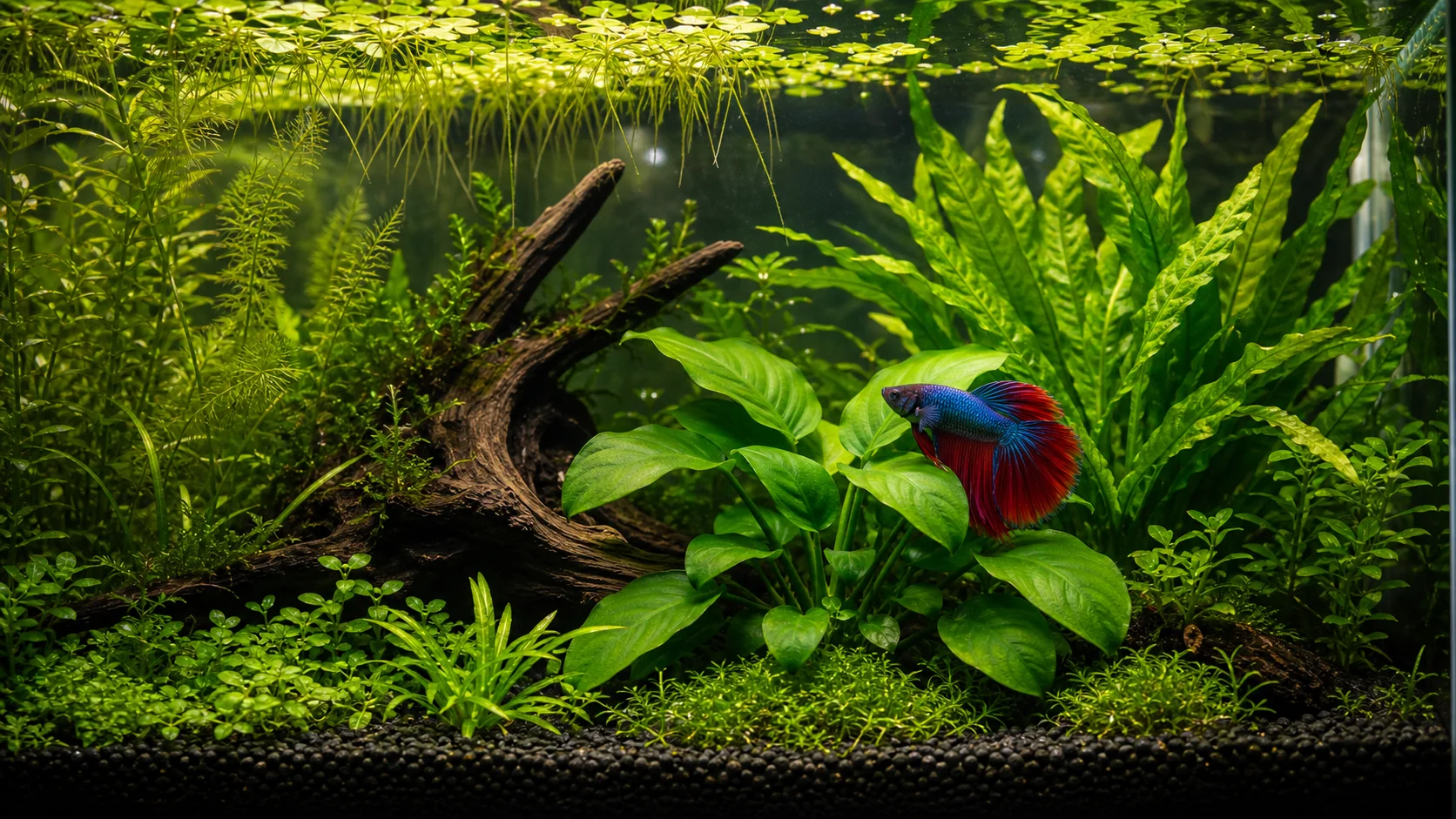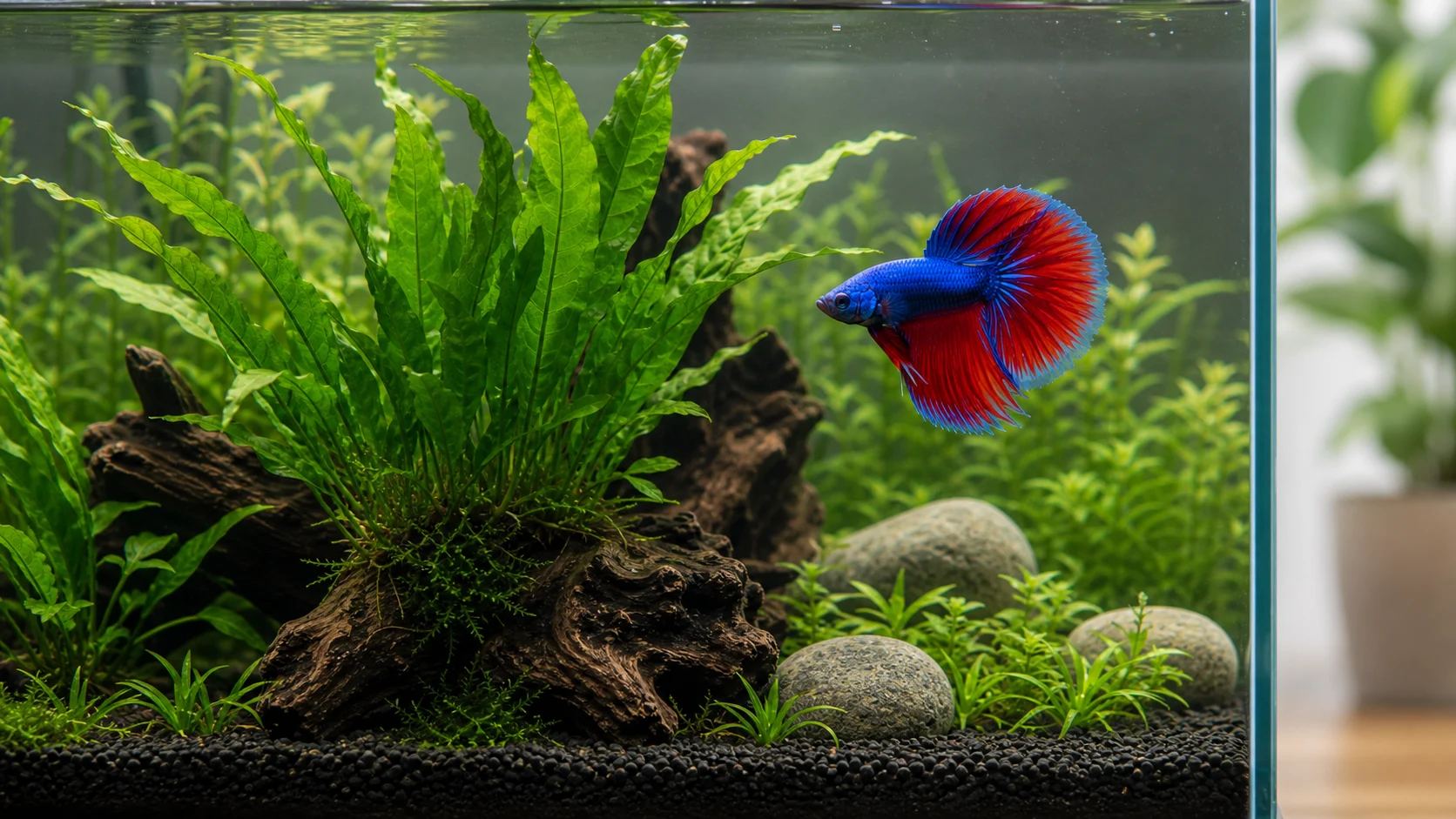

Quick answer: Anubias is excellent for betta tanks
Anubias is one of the best beginner live plants for betta fish. It has firm, broad leaves that can create cover and resting spots, and it does not need intense light, injected CO2, or nutrient-rich substrate to survive.
The main rule is simple: do not bury the rhizome. The thick horizontal stem should stay above the substrate so the plant does not rot.
Why bettas like Anubias
Bettas often appreciate plants that break up open space and give them places to pause. Anubias leaves can act like natural resting platforms, especially when the plant is placed on wood, rock, or decor near the middle or upper part of the tank.
It also helps a tank feel less exposed. A bare tank can make some bettas hide, flare, glass surf, or rest in awkward places because there is not enough cover.
Do not bury the rhizome
Anubias grows from a thick rhizome. The roots can touch substrate, wood, or rock, but the rhizome itself should stay uncovered. If the rhizome is buried, it may soften, rot, and cause the leaves to decline.
Beginner-friendly placement is to tie or glue the rhizome to driftwood, smooth rock, or safe aquarium decor. Use aquarium-safe gel super glue or cotton thread, and avoid crushing the rhizome.
Best placement in a betta tank
Place Anubias where it gives cover without blocking the entire swimming area. A front corner, side area, or piece of hardscape near the middle height often works well.
If your betta likes resting near the surface, position some leaves within an easy swim of the top. Leave open water at the front or center so the tank still feels roomy.
Light and algae control
Anubias is a slow-growing low-light plant. That is useful for beginner tanks, but slow growth also means algae can collect on the leaves if the light is too bright or left on too long.
Keep lighting moderate, avoid long photo periods, and wipe algae gently from older leaves when needed. floating plants can help shade Anubias if the tank light is intense.
Anubias varieties for bettas
Common beginner choices include Anubias nana, Anubias nana petite, and other compact varieties. Smaller varieties are easier to fit in 5 gallon tanks, while larger plants can look better in 10 gallon tanks or bigger aquascapes.
Choose plant size based on tank space. A huge plant in a small tank can crowd the betta, while a small rhizome can give cover without taking over the layout.
Common mistakes
The biggest mistakes are burying the rhizome, using too much light, placing the plant where it blocks all swimming space, letting algae coat the leaves, or buying a plant with damaged mushy rhizomes.
Do not treat Anubias as a replacement for water changes. Live plants can help the tank feel more stable, but they do not remove the need for testing, maintenance, and careful feeding.
What to check first
Before adding Anubias, check that the tank has safe decor, stable temperature, gentle flow, and enough room for the betta to swim. Rinse the plant, remove rock wool or gel from the roots, and inspect for damaged leaves.
After adding it, watch whether the betta rests on the leaves, hides more comfortably, or shows stress around the new object. Most bettas ignore the plant or use it as cover, but every layout change should be observed.
When Anubias is not enough
Anubias can improve cover, but it will not solve every problem. If a betta is clamped, breathing fast, laying on the bottom, or not eating, check temperature, ammonia, nitrite, nitrate, and recent tank changes instead of assuming the tank only needs more plants.
Use Anubias as part of a safe layout: soft cover, open swimming room, stable water, and no sharp decorations.