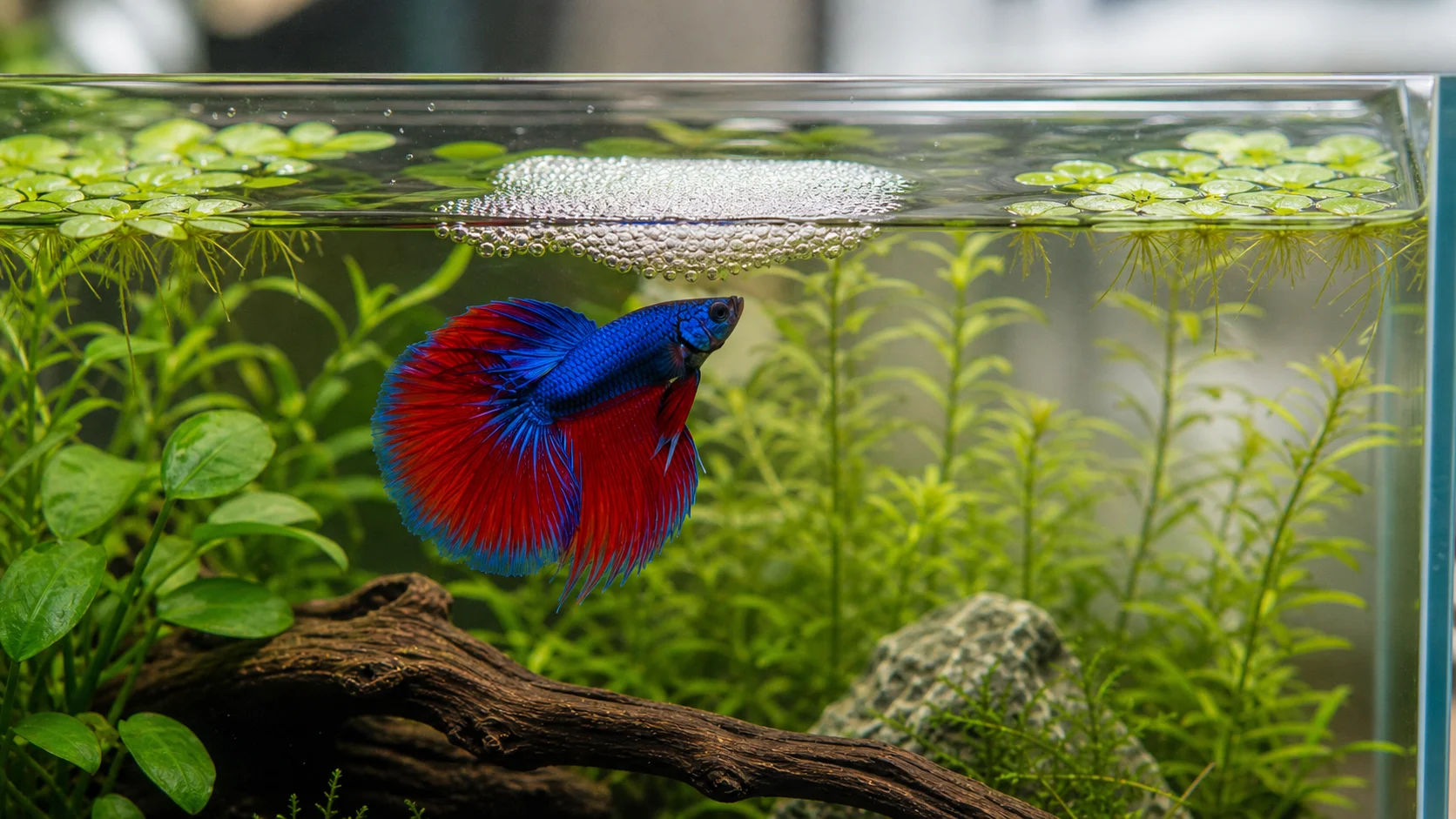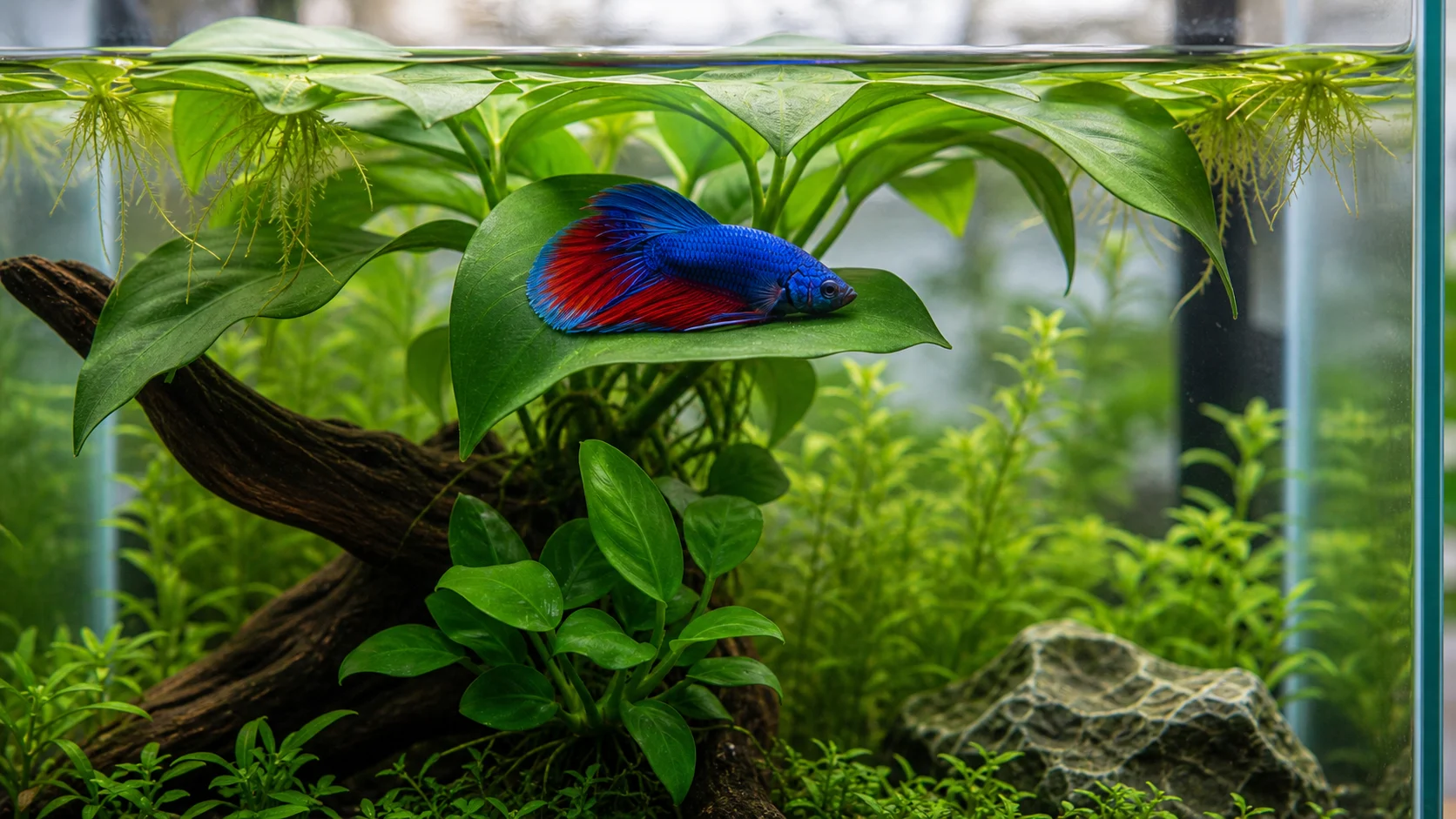

Quick answer: short bursts can be normal
A betta fish swimming up and down the glass is not always a problem. Many bettas do it when they see a person, expect food, explore a new tank, or notice movement outside the aquarium.
It becomes more concerning when the pacing is constant, frantic, or paired with clamped fins, hiding, not eating, gasping, stress stripes, rubbing, or bottom-sitting.
Normal excitement vs glass surfing
Normal excitement is usually brief and linked to something obvious, such as feeding time or someone walking near the tank. The fish settles again after a while.
glass surfing is more repetitive. The betta may pace the same wall again and again, swim rapidly up and down, or seem unable to relax. That pattern can point to stress, reflection, boredom, water problems, strong flow, or an exposed layout.
Common causes
Common causes include reflections, bright lighting, hunger cues, a bare tank, strong filter flow, small tank size, transport stress, recent water changes, tank mates, or poor water quality.
Context matters. A new betta may pace while adjusting. An established betta that suddenly starts pacing deserves water and temperature checks.
Check water and temperature first
If the behavior is new or constant, test ammonia and nitrite and confirm temperature with a thermometer. Clear water can still have unsafe chemistry.
Poor water quality, cold water, or unstable temperature can make a betta restless before more obvious symptoms appear.
Check reflections and light
Bettas may react strongly to their reflection. Reflections are often worse when the room is dark and the aquarium light is bright.
Try adjusting the light schedule, adding a background, reducing glare, and giving the fish plants or decor that break up the line of sight.
Check filter flow and cover
Strong current can make a betta pace, struggle, or keep searching for calmer water. The fish should be able to hover, rest, and eat without being pushed around.
A bare tank can also feel exposed. Add safe plants, smooth hides, or resting spots while leaving open swimming room.
What to check first
- Is the pacing brief or constant?
- Does it happen mostly near feeding time?
- Are ammonia and nitrite 0 ppm?
- Is temperature stable?
- Is the tank light causing reflections?
- Is filter flow pushing the fish?
- Are there clamped fins, gasping, hiding, or appetite changes?
Common mistakes
Common mistakes include feeding extra every time the fish swims at the glass, ignoring reflections, leaving strong flow unadjusted, and skipping water tests because the water looks clear.
If the betta is active and otherwise normal, observe the pattern. If the behavior is constant or paired with symptoms, troubleshoot the tank first.