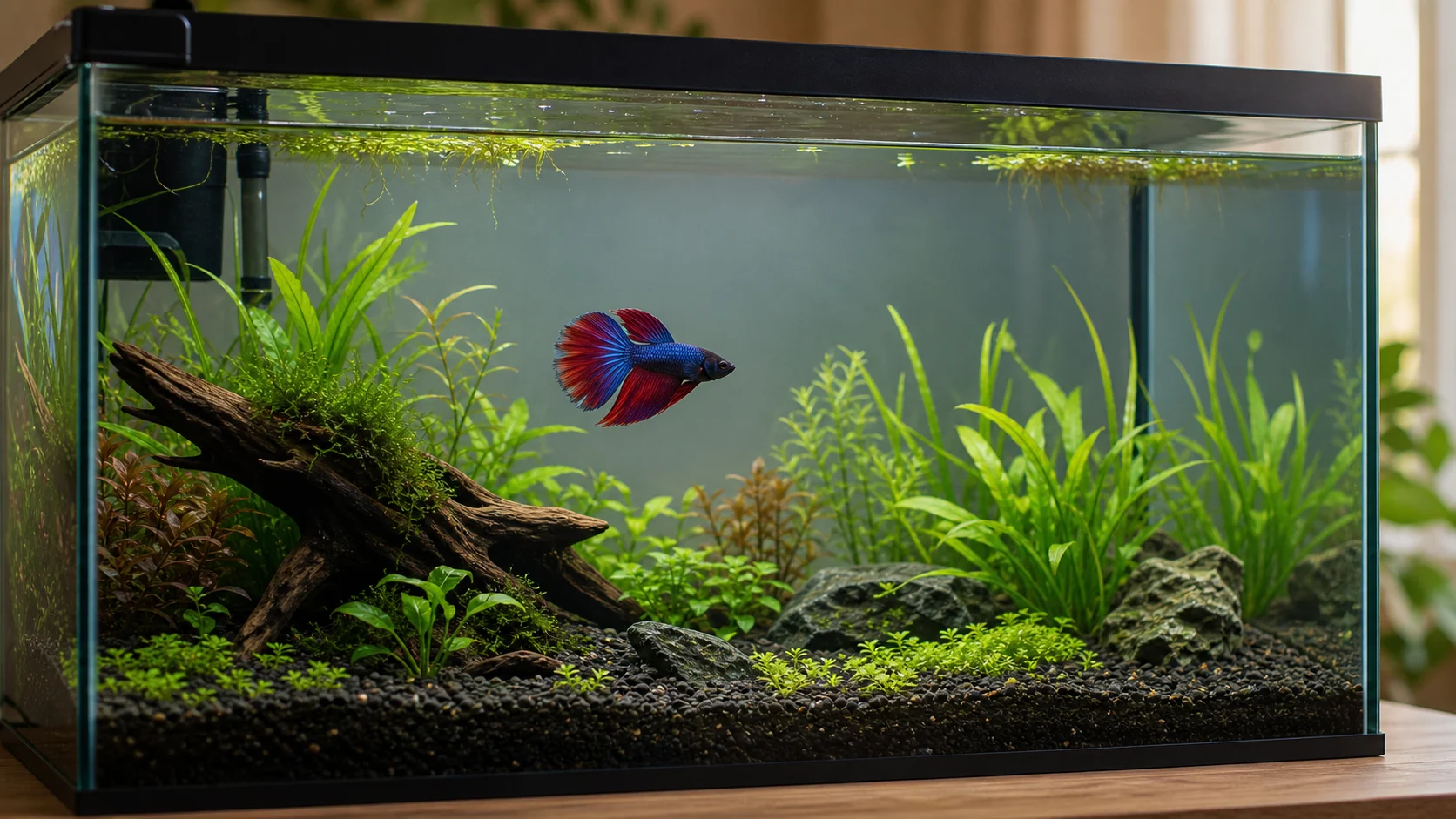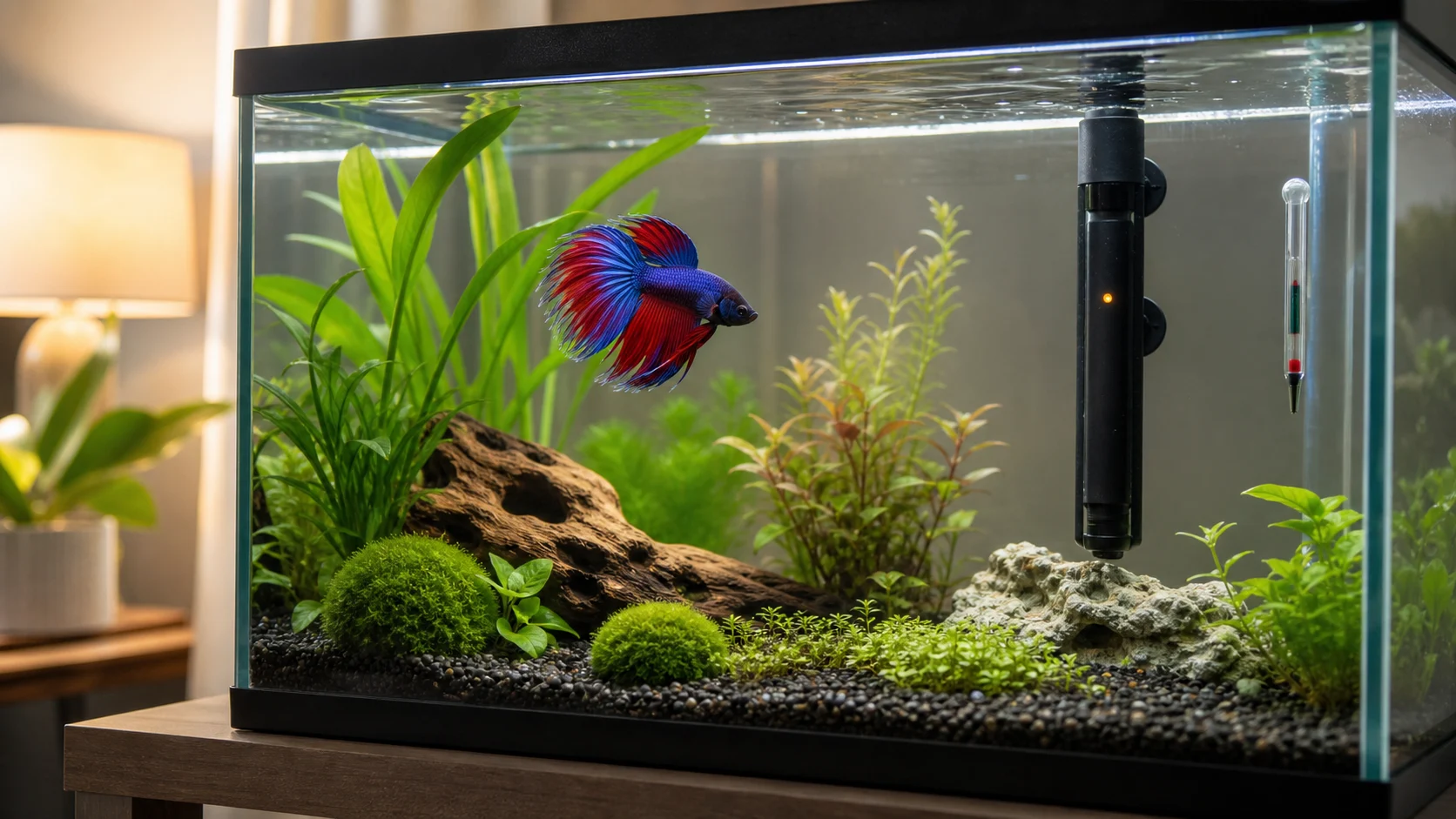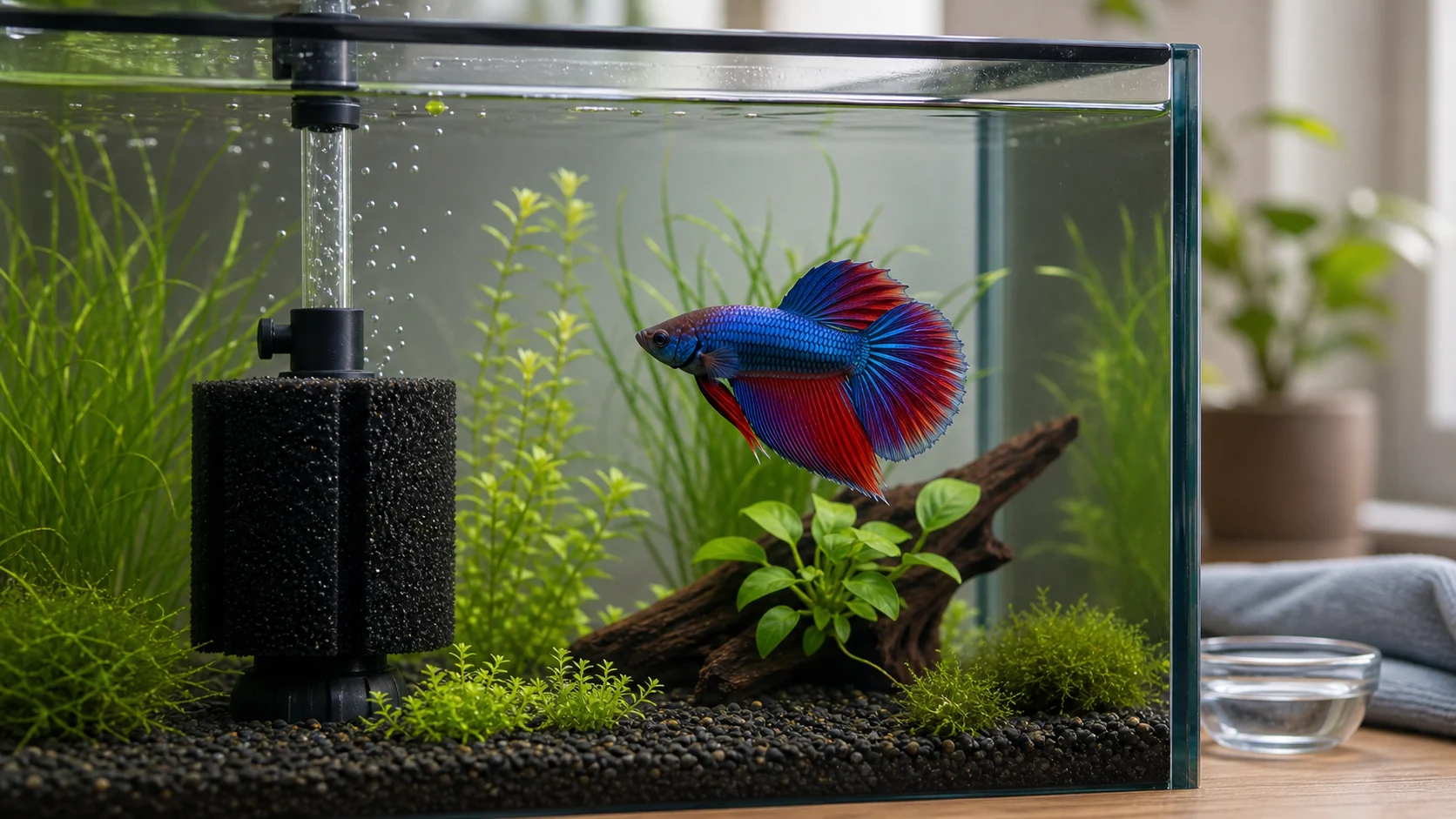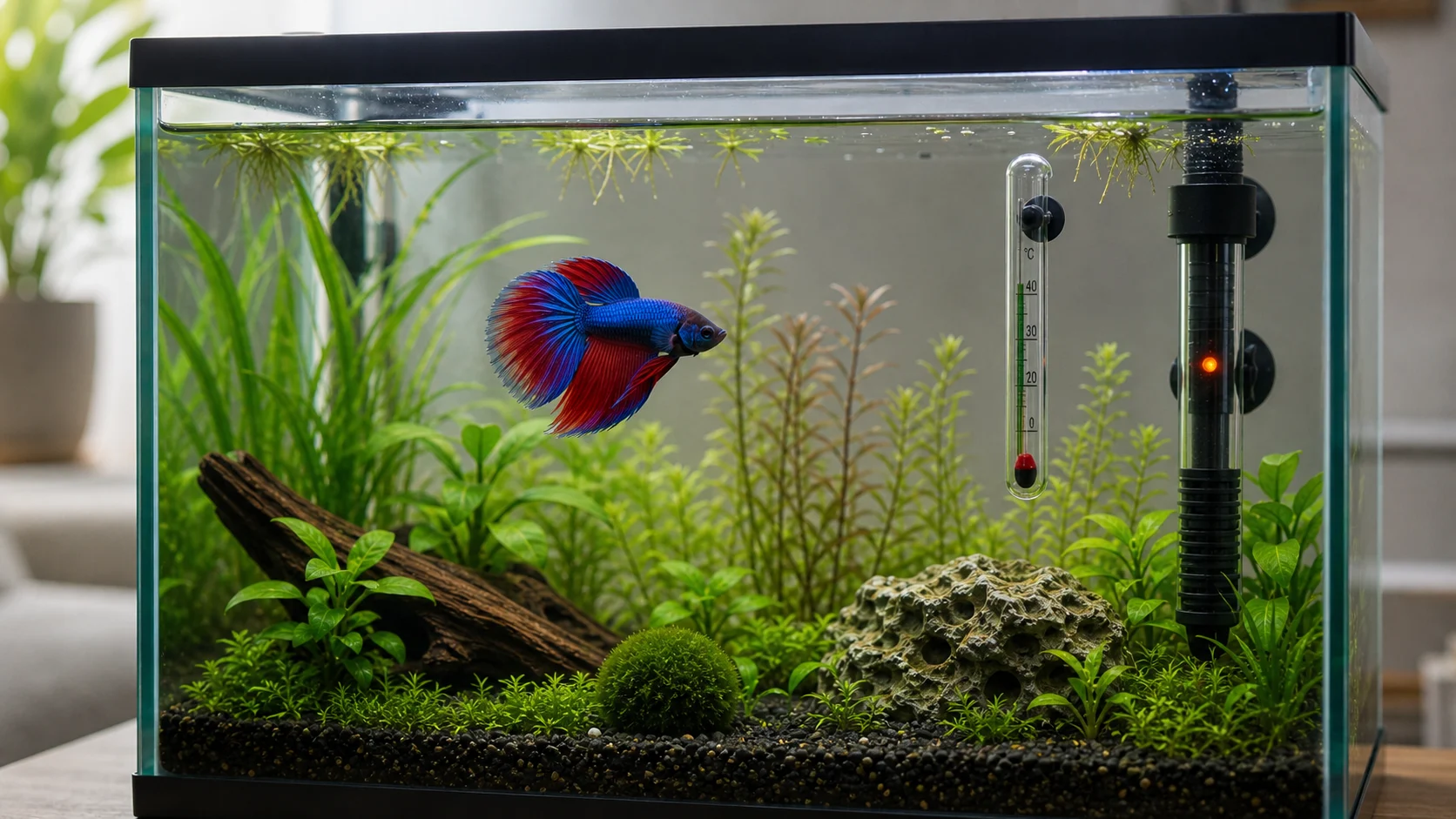
Quick answer: beginner betta care in 7 steps
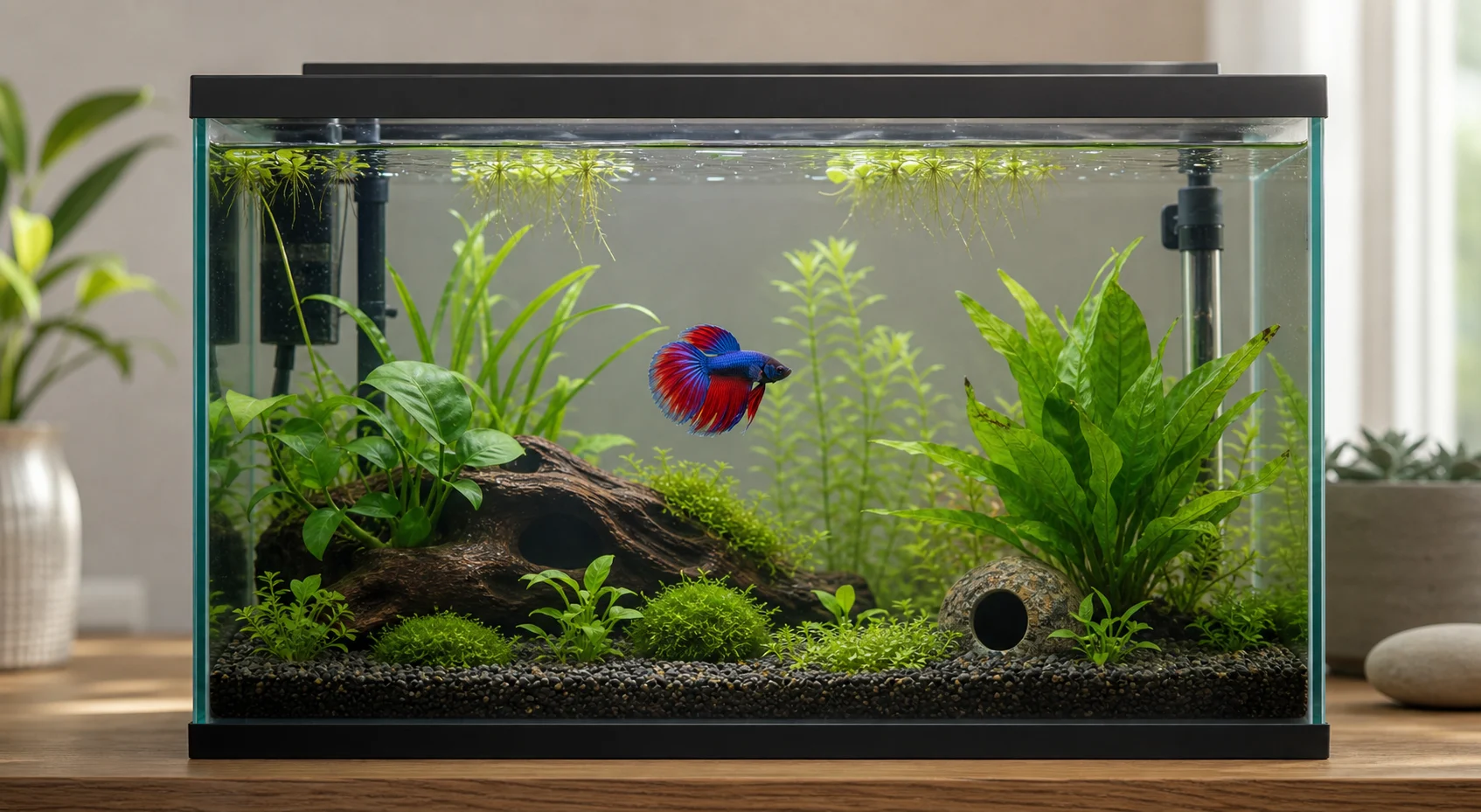
The best beginner betta care plan is simple: use a 5 gallon or larger tank, keep the water warm, run a gentle filter, cycle the aquarium, test water, feed small portions, and check the fish every day.
Most beginner problems come from tiny bowls, cold water, uncycled tanks, overfeeding, strong current, sharp decor, or guessing instead of testing. If a betta acts unusual, check water quality and temperature first.
1. Choose a 5 gallon or larger tank
A 5 gallon tank is a practical beginner minimum for one betta. It gives enough room for a heater, gentle filter, plants, hiding places, and more stable water than a tiny bowl.
A 10 gallon tank can be even easier if you have the space. More water volume gives beginners more margin for normal feeding and maintenance mistakes.
2. Keep the water warm and stable
Bettas are tropical fish. Many keepers aim for about 78 to 80 degrees Fahrenheit, but the most important beginner habit is stability.
Use a thermometer instead of guessing from room temperature. Aquarium water can be too cool overnight even when the room feels comfortable to people, so water temperature should be checked directly.
3. Use a gentle filter and cycle the tank
A filter helps hold beneficial bacteria that process fish waste. The flow should be gentle enough that the betta can swim, eat, and rest without being pushed around the tank.
Cycling the tank means building bacteria that convert ammonia into nitrite and then nitrate. In a safer cycled tank, ammonia and nitrite should read 0.
4. Condition and test the water
Use aquarium water conditioner when adding tap water, and test ammonia, nitrite, nitrate, and temperature. Clear water does not prove safe water.
Water testing matters most in new tanks, after water changes, after filter cleaning, or when the fish is not eating, breathing hard, clamping fins, hiding, gasping, staying at the top, or laying on the bottom.
5. Feed small portions
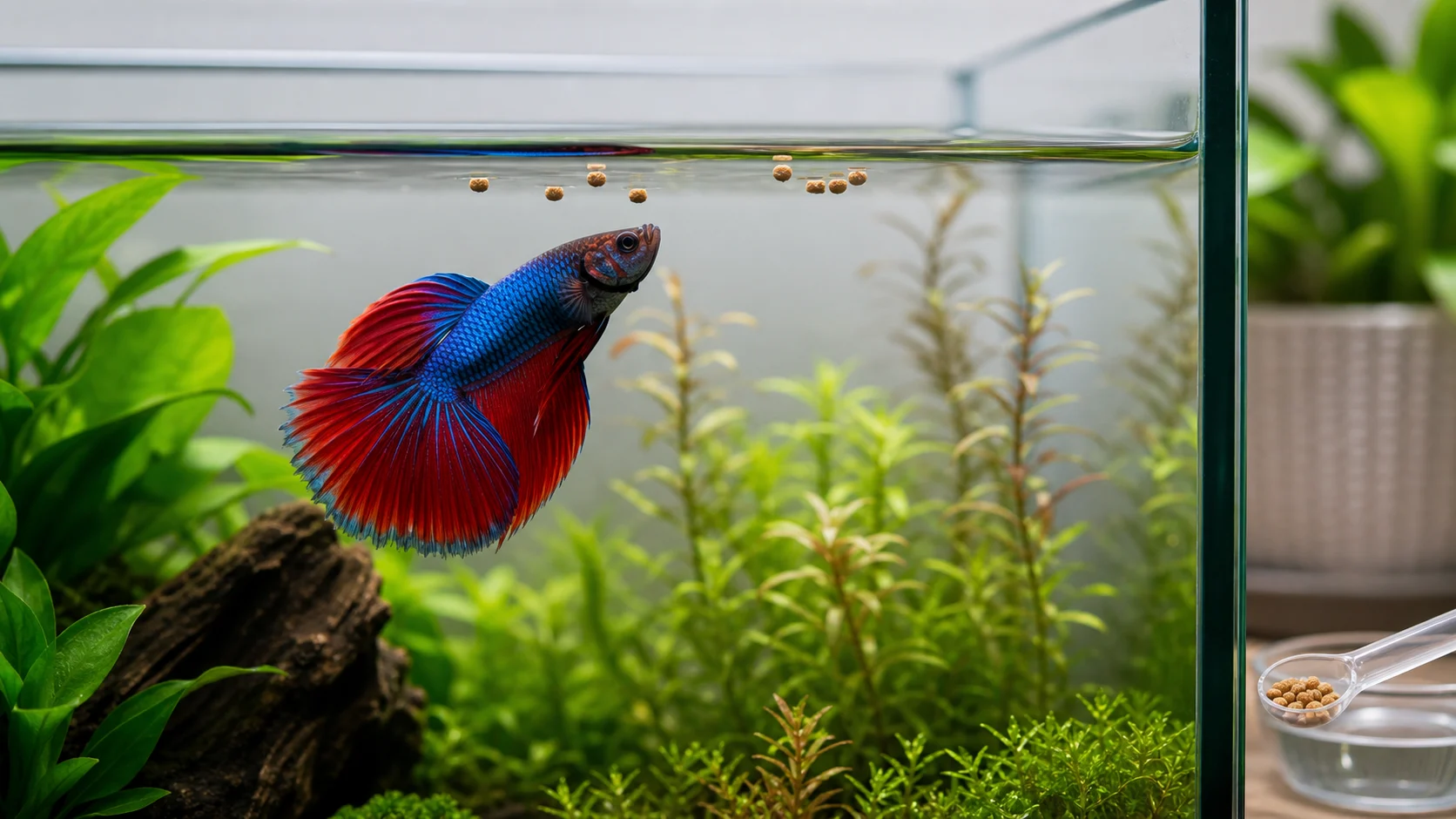
Use a quality betta pellet as the staple food and keep treats occasional. If you are unsure how often to feed, start with small portions once or twice daily, then remove leftovers.
Overfeeding is one of the easiest beginner mistakes to make. Extra food becomes waste, and waste can lead to poor water quality, bloating, appetite problems, and cloudy water.
6. Add safe cover and resting spots
Bettas need both open swimming room and safe cover. Live plants, silk plants, smooth hides, and broad resting leaves can make the tank calmer.
Avoid sharp plastic plants, rough decorations, tiny holes, and anything that can trap long fins. safe decor should feel smooth and should not snag delicate fabric.
7. Watch your betta every day
A healthy betta is usually alert, responsive, interested in food, and able to swim normally. Resting is normal, but sudden behavior changes should prompt a tank check.
Warning signs include not eating, heavy breathing, gasping at the surface, clamped fins, bottom-sitting, staying at the top, bloating, white spots, torn fins, pineconing scales, jumping out, or rapid color change.
Beginner betta care checklist
- 5 gallon or larger aquarium for one betta.
- Heater and thermometer for stable warm water.
- Gentle filter with cycled biological media.
- Water conditioner for tap water.
- Ammonia and nitrite testing, both aiming for 0.
- Small meals with uneaten food removed.
- Smooth plants, hides, and resting spots.
- secure lid with filter and cord gaps covered.
- Weekly maintenance guided by water tests.
- Daily checks for appetite, breathing, fins, swimming, and behavior.
First week with a new betta
During the first week, keep the environment calm and stable. Avoid changing foods repeatedly, rearranging the tank, deep-cleaning the filter, or adding tank mates while the fish is adjusting.
Check temperature daily, remove leftover food, and test ammonia and nitrite if the tank is new or the fish acts unusual. A quiet first week is usually better than constant tinkering.
What to buy first
Start with the essentials before decorations or tank mates: a suitable tank, adjustable heater, thermometer, gentle filter, water conditioner, test kit, staple betta food, smooth cover, and a secure lid.
This order matters because warm, stable, tested water prevents more beginner problems than any single decorative upgrade.
Common beginner mistakes
Common mistakes include buying a tiny bowl, skipping the heater, replacing all filter media, feeding too much, using sharp decor, leaving lid gaps, adding tank mates too soon, and treating symptoms before checking water.
The safest beginner routine is repeatable: warm stable water, gentle filtration, small meals, safe cover, regular testing, calm observation, and a covered tank.
What to check when something seems wrong
Start with ammonia, nitrite, and temperature. Those three checks catch many beginner problems that are invisible from the outside.
Then review recent changes: new water, new food, filter cleaning, bright lights, strong current, decor changes, uncovered lid gaps, or tank mates. Care improves fastest when you fix the actual stressor instead of guessing.